Do tech outages have you on edge? You're not alone
Published in News & Features
MINNEAPOLIS — Minnesota’s November disaster preparations usually focus on catastrophes from the skies.
Blizzards that sock you in for days. Ice storms that drop trees across power lines. Cold so bitter it bursts pipes.
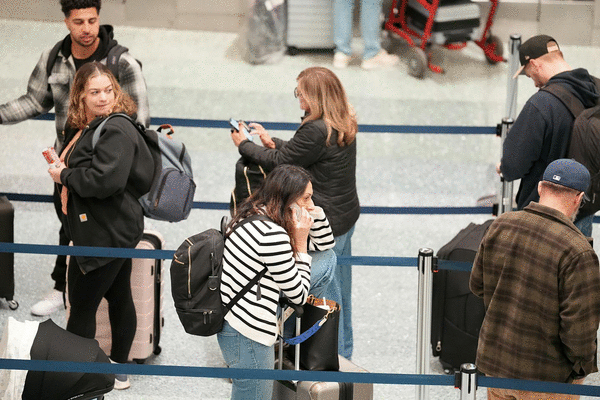
But lately catastrophes seem to come from all sides. Last week, a string of technology outages made people question whether they can trust their planes to take off, their email to open or their banking app to give them access to their money.
We walk around with all the horrors of the world doomscrolling on our phones. Which is how everyone found out Friday that a kid at the Cincinnati Zoo threw a knit hat in the air, the hat hit a ceiling fan and went flying, and Fiona the once-baby hippo ate it and died.
A new “Stress in America” report from the American Psychological Association found a nation ground down by economic, political and global uncertainty.
Eight out of 10 adults said they were stressed about the cost of living. And 72% said they’d heard so much bad news, bad news no longer shocks them. Not even the hippo news. The same percentage said stress is simply something they now have to live with.
Stress, anxiety and uncertainty are no longer disruptions to everyday life; stress has become the backdrop to American life.
If you’re feeling overwhelmed, if it feels like everything in America is a little off right now, you’re not alone.
And you don’t have to get through this alone.
Know the helpers
On Wednesday evening, neighbors gathered in the Roosevelt High School library for Ready Camp, a free disaster preparedness course the city of Minneapolis offers. These days, that means preparing for both tornadoes and technology crashes.
“The world’s crazy these days, with the airport shutdown and other things,” said Jennifer Yess, who signed up after she and her husband had to hastily evacuate their Richfield home when their neighbors’ house caught fire. “We weren’t very prepared for that.”
Outreach coordinator Patrick Ingram ran the class with an assist from Emergency Management Director Rachel Sayre.
“Imagine this,” he told the almost 20 participants in the evening class. “All our cellular networks are down. Power is out in the entire city. We are in the middle of a severe heat warning, which means we are probably over 100 degrees, and we have no idea when the power and cell service will be back on. ... How are you feeling?”
Stressed. The answers came from around the room. Overwhelmed. Anxious. Sweaty.
“There are things outside of our control,” Ingram said. “What we’re going to focus on tonight are the things that can be controlled.”
For the next hour and a half, Ready Camp ran through simple steps people can take now to make life a lot less stressful the next time it spins out of control. Emergency Management offers preparedness resources that range from severe weather readiness and pandemics to cyberhacking and staying safe in large crowds.
Most people know that it’s a good idea to have nonperishable food and bottled water in the house in case of a storm or to keep a blanket and emergency supplies the car in the winter. But what about paper copies of vital documents and medical records if the computers go down and your prescription needs a refill? Does the family have a meeting place if cell service stops working? What about a paper road map? Does the family emergency kit include pet food and games to help pass the time without internet and power?
Most of all, Ingram said, know who can help. The neighbor who has a generator and will let you charge your phone. Or the neighbor with a chain saw who can help with the downed tree in your yard.
‘It’s totally normal’
While Minneapolis was offering lessons in dealing with stress and building disaster resilience, Sabine Schmid, a clinical psychologist specializing in mood disorders, saw reasons for optimism in the “Stress in America” report.
“Stress isn’t inherently unhealthy,” said Schmid, a faculty member in the Psychiatry and Behavioral Sciences Department at the University of Minnesota. “It can motivate to help us engage and problem-solve. It’s a normal, healthy part of life. I also don’t think we’re living in a country where we should feel more afraid than before.”
The difference between stressed-out humans in 2026 and our stressed-out human ancestors worrying in caves about getting eaten by bears, is that our ancestors weren’t being flooded with information, alerts and 24-hour news coverage about bear attacks in caves across the planet.
“We live in a world where we’re exposed to more things to be afraid of, more often, and with fewer brain breaks,” said Schmid, who has studied technology overload and the human brain. “Uncertainty has always been a part of life. The question now is how we learn to live with it.”
The good news, she said, is that humans are capable of building resilience that buffers us against stress. Spending time with other people can build that resilience, she said. So can spending time in nature.
Most of all, she said, when you feel anxious or overwhelmed, be kind to yourself. Beating yourself up doesn’t make you tougher. It makes it even harder to cope.
“Adversity is part of life. Uncertainty is part of life. It’s totally normal,” she said. “That’s not a problem in and of itself. It can motivate me to prepare.”
Resilience, she said, is about adapting to the stress and uncertainty of the world without pulling away from it.
Staying engaged, getting out and meeting people and finding ways to help, she said “can actually make you feel better.”
©2026 The Minnesota Star Tribune. Visit startribune.com. Distributed by Tribune Content Agency, LLC





Comments