Measles cases are gaining a foothold again in Minnesota
Published in News & Features
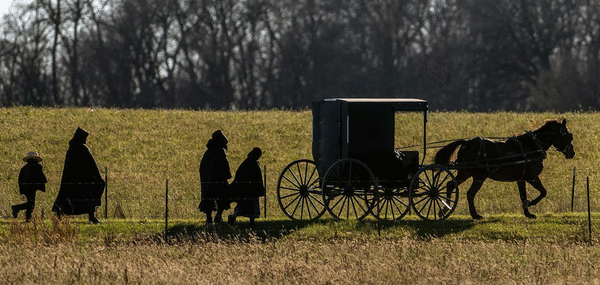
LONG PRAIRIE, Minn. — Talk to enough Amish residents in Todd County and you’ll hear a common refrain about the measles outbreak happening there.
“It’s just measles. Might as well get it over with,” said Emmanuel Schwartzentruber, who sells wooden chests and baskets from his farm west of Long Prairie, Minn.
Talk to the doctor treating the worst cases at Lakewood Health System’s hospital in nearby Staples and a much different perspective emerges.
“You usually think of measles with like fever and respiratory stuff, but these [patients] — there’s so much vomiting and diarrhea, and then the nausea and the mouth sores,” said Dr. Christine Albrecht, Lakewood’s chief medical officer. “They’re so sick when they come in. They’re just miserable.”
These diverging perspectives help explain how an infectious disease that had been declared eradicated in the U.S. in 2000 is gaining a foothold again, with 160 measles cases confirmed so far this year in Minnesota — the highest in almost three decades.
The total is driven by the Todd County cluster that has reached 136 cases, largely or entirely among Amish families that have rejected measles vaccinations on religious and cultural grounds.
The absence of measles for decades has made some people less afraid of infection and more afraid of vaccination, especially since the pandemic, when doubt over COVID-19 vaccines spread to other immunizations with well-established safety records.
Among children born in Minnesota in 2023, only 81% have received the first dose of measles vaccine by age 2. In Todd County, that rate is 62%.
Doctors are struggling to push back; many haven’t seen measles and can’t describe its severity. Albrecht said she hadn’t seen it since medical missions in Africa.
Now, her emergency room is treating one to four cases per week. Measles is known by its head-to-toe rash, along with fever and respiratory symptoms, but Amish patients are coming in with complications because they are trying to manage dehydration with water alone and it is leaving them low on electrolytes, the doctor said. Some are panting and gasping, because low electrolytes can disrupt lung function.
“Maybe if we make sure that the public is aware just how sick these people are, that will encourage them to get vaccinated,” she said.
The Pan American Health Organization is considering whether to change the status of measles in the U.S. from eliminated to endemic, meaning it could be a consistent threat once again. The 5,412 confirmed measles cases in the U.S. so far this year include 591 hospitalizations and at least six deaths.
“It’s just unbelievable that we’re back here,” said Patricia Stinchfield, a nurse practitioner and former infection control director for Children’s Minnesota.
Spread like wildfire
When the COVID-19 pandemic started, the U.S. had achieved a measles vaccination rate of 95% among children entering kindergarten.
That rate is considered herd immunity, meaning that so many people were vaccinated that they collectively stifled the spread of the measles virus. That in turn offered protection to the 2,000-or-so Amish residents of Todd County, regardless of their vaccination status, because the virus couldn’t find a pathway into their homes.
The measles virus behaves much as it did when it was first described in the 10th century, Stinchfield said. Amish communities haven’t changed much, either, she said, but a declining vaccination rate in the broader community is giving the virus new opportunities.
“If just one case gets into a large unvaccinated community like the Amish, it will spread like a wildfire.” said Stinchfield, who directs a measles collaborative for the National Foundation for Infectious Diseases. The organization seeks to increase vaccination by promoting its 97% effectiveness at preventing measles and its low rate of side effects.
The Minnesota Department of Health hasn’t described the people with measles beyond their counties of residence, and the fact that all but two were unvaccinated, because agency leaders don’t want to marginalize minority communities or suggest that other groups are safe.
“There’s risk for anyone who is not vaccinated,” a state spokesperson said.
Only three measles cases in Minnesota this year have been admitted to hospital beds with severe illnesses. That is lower than expected, given that 11% of U.S. measles cases have resulted in hospitalizations. But that tally doesn’t count emergency room visits at hospitals including Lakewood and CentraCare’s Long Prairie Hospital.
Amish residents and a doctor confirmed in interviews that the outbreak has hit their communities.
An Amish teacher was infected during out-of-state travel a month ago and transmitted the measles virus to students, who then carried it home and infected siblings and others, said Dr. Paul Van Gorp, a semi-retired physician who provides a monthly free clinic and home visits to Amish families. The teacher also visited her siblings who suffered infections as well, he said.
Van Gorp said he started receiving numerous phone calls around that time from Amish residents, some of whom share mobile phones that are set out in communal spaces. He convinced one woman to go to the hospital because measles caused severe dehydration.
“I’ve had many, many calls wanting to know what to do,” he said, “and I’ve had essentially zero success getting them vaccinated.”
Opposition to vaccines
Many Amish families reject technological advances, eschewing public electricity at their farms and traveling in horse-drawn buggies, and they place implicit trust in God’s will for their lives. The belief system results in an uneven approach to modern medicines, which some adherents reject and others view as instruments of God’s will.
Levi Lambright, 55, is a bishop for his Amish community west of Browerville. He said vaccines aren’t prohibited, but many families oppose them based on their faith and family traditions.
“My parents didn’t get it,” said Lambright, who was fixing a wagon to continue with the harvest on Thursday. “And that’s what they taught us.”
Families are taking the threat seriously, he said, and isolating themselves to protect others. Lambright’s son recently traveled to a store where he was told to keep his distance because people there had been exposed.
The measles virus is considered the most infectious agent on the planet. Its small size allows it to float in droplets in the air long after they have been spread by infected people when they cough, talk or sneeze. People typically are infectious before the telltale rash appears on their foreheads and descends their bodies, Stinchfield said, so prevention efforts often come too late.
Stinchfield said she has been reflecting on the outbreak in 1990, when Minnesota had 440 cases and three deaths in children from a Hmong immigrant community that generally supported vaccines but didn’t know who needed them or when.
That outbreak showed a single vaccine dose wasn’t enough for some people, she said, and led to the current federal recommendation that children receive two doses of the Measles-Mumps-Rubella (MMR) vaccine before kindergarten.
At Lakewood, doctors have been offering the first dose to infants, which is earlier than usual, because the measles virus is circulating.
Minnesota only reported 21 measles cases statewide this week, down from 58 last week, but expects to confirm more cases in coming weeks from the Todd County outbreak. Van Gorp said the official tally is an undercount, because some Amish individuals with mild symptoms are recovering at home without testing.
Harvey Gingrich, 24, had the same attitude as many of his Amish neighbors: he doesn’t want measles, but he’s not going to get vaccinated and he’ll deal with it if he gets sick. Still, he said he was mindful of infection risks Thursday during a large wedding, just down the road from his farm and family roofing business in Long Prairie.
“I don’t think any of the areas where these people came from were exposed to it,” he said. “But I guess we’ll find out.”
©2026 The Minnesota Star Tribune. Visit at startribune.com. Distributed by Tribune Content Agency, LLC.





Comments