Nvidia scandal creates risks for whole AI industry, not just CEO
Published in News & Features
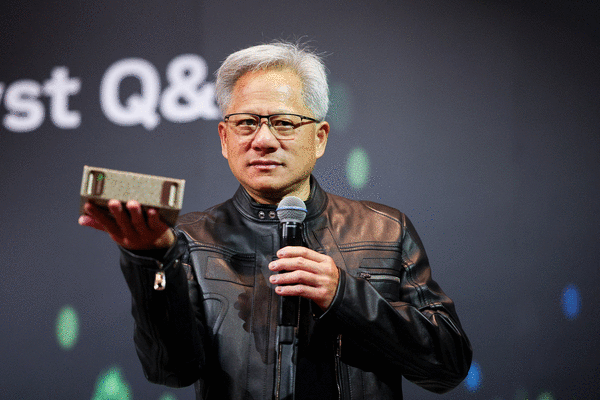
Nvidia Corp. Chief Executive Officer Jensen Huang’s affair with an alleged Chinese spy has sent the company’s stock plunging, become a focus of internal and government investigations and is now threatening to reverberate across the AI industry.
Nvidia shares slid as much as 8.8% on Monday, at one point erasing nearly $400 billion in market valuation, after Huang disclosed the romantic relationship Sunday in a memo to employees. The company’s board is assembling a committee of independent directors who will work with outside counsel to investigate reports of Huang being targeted for foreign intelligence.
With the stunning revelations, investors need to consider a range of possibilities that may affect not just Huang and Nvidia, but the entire artificial intelligence industry. Nvidia, the leading maker of AI chips, has used its financial strength to back dozens of major players, from frontier labs like OpenAI to cloud computing players including CoreWeave Inc. Huang has also been among the most forceful advocates for the benefits of AI, from Washington to Wall Street.
“It brings the stewardship of one of America’s most important companies, and the architect of the U.S. AI trajectory, under debate, as well as calling judgment into account,” Bernstein analyst Stacy Rasgon said in a note.
Huang had previously said there was nothing inappropriate about his relationship with the woman, who worked for a Singapore-based customer.
“I was unfaithful to my wife,” Huang, 63, said in the memo. “My actions hurt her and our children. There is no excuse for what I did. I am deeply sorry.”
It was a humbling moment for one of Silicon Valley’s biggest celebrities. Huang has crisscrossed the globe promoting artificial intelligence computing, drawing throngs of fans swept up in “Jensanity.” His relentless appearances, featuring science lectures, dad jokes and his signature leather jackets, have turned him into AI’s main cheerleader.
The incident threatens to further roil an AI market shaken by concerns about a slowdown in data center spending. Nvidia makes chips that are crucial to AI computing equipment and is one of the world’s most valuable businesses. Turmoil within the company risks reverberating through the broader industry.
It may, however, also present an opening for companies working on AI chips to rival Nvidia’s products. Though Nvidia remains the dominant maker of data center processors, it’s facing increasing competition from all sides, including its biggest customers. On Monday, for example, Alphabet Inc.’s Google announced it’s rolling out a broader array of AI chips, aiming to capitalize on its rapid ascent as a challenger to Nvidia. Its shares gained on the news.
Outside of its AI chip dominance, Nvidia has emerged as a key source of financing for AI infrastructure. Huang has worked with some of Wall Street’s biggest firms on a $500 billion effort to help companies rapidly build out their equipment, and he’s funneled money into bolstering the AI supply chain and fledgling customers.
“Jensen is a very unique CEO,” said Daniel Newman, CEO of the Futurum Group. “There is no known succession plan. There are no leaders in his company that would be the clear next to step up.”
Nvidia’s board said in its statement that it has confidence in Huang and “no reason to believe that either national security or Nvidia secrets were compromised,” but it promised the inquiry “will examine all available information.”
President Donald Trump defended Huang on Sunday, calling him a “fine person” and saying he should remain CEO.
“I have not spoken to him about it,” Trump told reporters. “I just know he’s a fine person, but you never know what is going on.”
Last week, key House Republicans requested a briefing with Huang to discuss his dealings with former Megaspeed International executive Alice Huang, also known as Huang Le.
The probe follows a series of reports that Nvidia’s leader was targeted by Alice Huang, who the U.S. government suspects was recruited by a Chinese spy agency. On Monday, the New York Times also reported that an investigation into Megaspeed was transferred from the Commerce Department to the Justice Department after a top Nvidia executive reached out.
The Nvidia CEO previously said he had a “normal” business relationship with the woman, who is no longer at Megaspeed. Chinese Foreign Ministry spokesman Guo Jiakun at the time called the characterization of the woman as a Chinese agent an unsubstantiated “smear against China.”
The board investigation will address reports that the chip magnate “has been the target of a foreign intelligence effort,” Nvidia said. “While the board has no reason to believe that either national security or Nvidia secrets were compromised, the board’s inquiry will examine all available information.”
In his memo, Huang said he will support the investigation. “I love our country and our company, and I am committed to protecting Nvidia and supporting America’s national security,” he said.
Nvidia’s co-founder — a leader famous for his hands-on and tireless management style — built the maker of graphics cards into arguably the world’s most important technology company. Nvidia’s highly prized accelerator chips are used to develop and run AI models, and the company has branched out into related fields, including computers, networking and software.
Huang’s interactions with fans have occasionally grown raucous. In the middle of one autograph session, a young woman asked him to sign her chest. After asking her if she was sure, he signed her brassiere while looking off to one side and asking, “Is that a good idea?”
Huang also has been a leading voice trying to calm fears about AI technology slipping out of human control. He has dismissed the need for the AI labs to slow down their work to ensure it doesn’t threaten humanity — even at a time when industry leaders such as Dario Amodei and Sam Altman have endorsed such an idea. He’s also argued that new regulations are unnecessary.
The Santa Clara, California-based company has no public succession plan, and there is no obvious heir apparent for Huang. He has repeatedly said he wants to continue in his role for decades and has created an informal organizational structure around him that eschews a conventional hierarchy. Instead, his direct reports are tasked with rapidly implementing his decisions.
Huang has said that this system gives his company the flexibility to react to rapid changes in technology and remain agile. But it’s also created a situation where there’s no replacement ready to step in and take over Huang’s relentless schedule.
The latest revelations “highlight the considerable key man risk that Nvidia faces,” Rasgon said. “Nvidia is not an ordinary company and Jensen is not an ordinary CEO; he IS Nvidia, clearly sets the long-term strategy and direction, and (with supposedly 60 direct reports) pulls most of the company’s strings himself.”
Concerns that sensitive information might leak via Nvidia’s contacts with China have fueled calls for investigations and greater scrutiny of Huang and the company, ratcheting up pressure in what has already been a difficult geopolitical balancing act. While Nvidia is allowed to ship a limited range of products to China under a licensing program granted by the current Trump administration, Beijing has restricted imports of the chips — an impasse that continues to curb the chipmaker’s sales in the world’s second-largest economy.
Huang has long sought to sell more of Nvidia’s AI processors in China, the largest market for chips. He’s argued that Nvidia and its peers should be allowed to serve the region to keep their products central to the development of AI. Closing off the market will risk turning China into a more powerful, independent force in artificial intelligence, he has said.
Investors have poured money into Nvidia, which reports earnings later this month, betting it will continue to be the main beneficiary of runaway spending on AI infrastructure.
The company reached a record market capitalization of nearly $5.8 trillion in October. That has slipped below $5 trillion, however, weighed down by concern about the sustainability of AI infrastructure build-out.
Megaspeed, based in Singapore, has been accused of breaking U.S. export restrictions and smuggling Nvidia chips to China.
Huang had told Bloomberg that his contacts with Megaspeed employees were typical of business relationships he has with many Chinese customers and executives.
_____
Here’s Huang’s full memo below:
Subject: A message to our company
I owe my family and all of you an apology.
I was unfaithful to my wife. My actions hurt her and our children. There is no excuse for what I did. I am deeply sorry.
Throughout my life, my family has given me love and support. They deserve my honesty and loyalty. Instead, I let them down and damaged the life we built together. I take full responsibility for what I did and the hurt I caused, and I accept the criticism that comes with it.
To my wife and family: I love you. I know an apology cannot undo what I have done. I hope our family will heal and that, over time, I can earn back your trust.
To my colleagues at NVIDIA, including those I have worked alongside for decades, and to our board, partners, and shareholders around the world: you deserve better from me.
Leading NVIDIA is the privilege of my life. My responsibility is to serve you and be worthy of your trust. I have fallen short of that responsibility. I am fully committed to NVIDIA and will work to earn back your confidence.
Regarding the national security concerns raised in news reports, NVIDIA’s Board of Directors has initiated an independent investigation. I support the investigation and will cooperate fully. I love our country and our company, and I am committed to protecting NVIDIA and supporting America’s national security. I am proud and grateful to be an American.
My family bears no responsibility for my choices. I do. Please give them privacy.
_____
(With assistance from Mayumi Negishi, Yasufumi Saito and Peter Elstrom.)
_____
©2026 Bloomberg L.P. Visit bloomberg.com. Distributed by Tribune Content Agency, LLC.




Comments