Did stormy weather put Learjet flight at risk? What the experts say
Published in News & Features
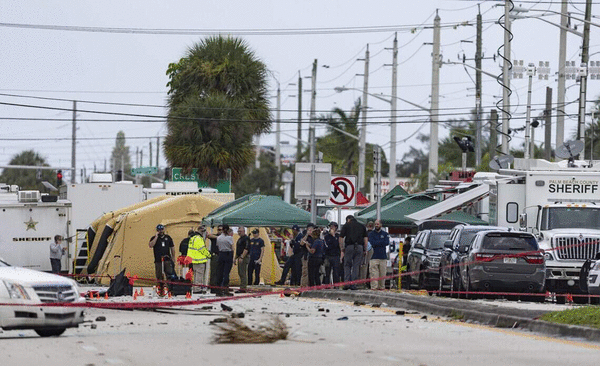
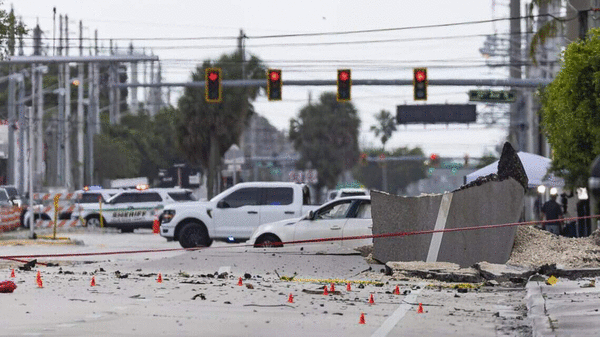
MIAMI — The captain of the Learjet that slammed into a South Florida street should have known that stormy weather in the area could put the flight at risk, a veteran commercial and military pilot said Monday.
“I’ve been doing this for 40 years I would not have been flying in South Florida yesterday,” said Matthew “Whiz” Buckley, who has flown professionally, first as a Navy F-18 Hornet aviator and then commercially for FedEx and American Airlines.
Severe thunderstorms rampaged through the region late Sunday morning into the afternoon. The captain of the Learjet surely knew the forecast before he and his co-pilot took off from Austin, Texas, en route to the Bahamas, Buckley said.
“I guarantee you that taking off out of Austin yesterday, they saw the weather in Florida. This isn’t hard,” Buckley, 57, told the Miami Herald. “If there’s any doubt, there’s no doubt.”
The weather was so bad across South Florida that many commercial flights were canceled and delayed, with some flights in the air diverted to other airports. Buckley said business jet crews often don’t heed the same warnings.
“There is a lot more real or perceived pressure in the corporate world,” he said.
Matthew Cappucci, an atmospheric scientist and senior meteorologist at MyRadar, said the plane entered a rapidly growing thunderstorm cell around 12:47 p.m.
“It’s likely the aircraft encountered some liquid moisture, which may have caused icing and severe turbulence,” Cappucci said.
Recordings of the last seconds of the flight reveal the co-pilot told air traffic controllers that the captain was frantically trying to regain control of the plane as ice built up on key pieces of equipment. Buckley said the Learjet captain was likely trying to get around or fly above the storm system, exceeding the safe speeds and altitudes of the plane.
“The Learjet is notorious. It’s got these little wings. They do not do good in high altitudes. So, you have turbulence, you got icing, and I guarantee you, it looks like they rolled,” Buckley said.
“Rule number-one with icing, don’t go into icing, right? The tops. They were in the mid 30s (thousand feet), I think 35,000, and that cell, that system, I think they were trying to get above it,” Buckley said. “I think it topped out in the low 40s. So, I think they were trying to fly above it or poke their way around it, and you can hear the young lady talking through it.”
At this point, Buckley said pieces of the aircraft likely began ripping off. The Learjet safely travels at around 345 to 460 mph, and the plane was exceeding 690 mph before it hit the ground, Buckley said.
“Something happened, and they just literally rolled over, and those Learjets aren’t fighter jets. As soon as they rolled over, things started going down hill really fast and the tail ripped off. When you slow down the video frame-by-frame, it doesn’t have its horizontal stabilizer. It’s gone,” said Buckley. “So, that captain could have been pulling back on that stick forever, and nothing was going to happen because they were a lawn dart at that point. Aerodynamically, it was not recoverable.”
Buckley, who is president of the veterans support nonprofit No Fallen Heroes Foundation, also said the co-pilot, who is 20, is being unfairly criticized in social media.
“People are throwing shade at this young lady. She did her job. The pilot flying is the pilot flying. The pilot not flying, in this case her, talks on the radio,” Buckley said.
Buckley also said the speed of the jet as it cratered into the ground determined what the scene looked like.
“A business jet going essentially straight down at almost supersonic speed, there’s not going to be anything left.”
_____
©2026 Miami Herald. Visit miamiherald.com. Distributed by Tribune Content Agency, LLC.






Comments