Khamenei empowers talks as Trump says Iran deal could happen
Published in News & Features
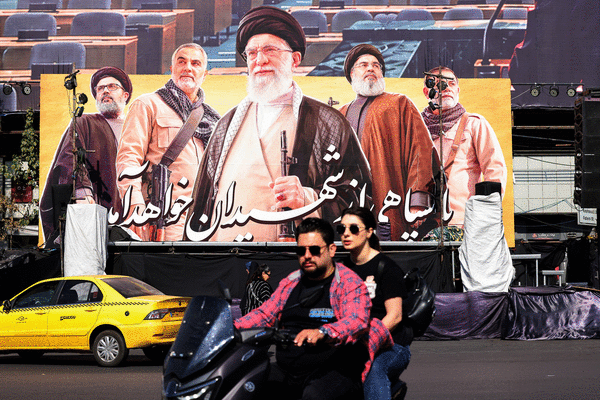
Iran President Masoud Pezeshkian said his government has been granted more authority by the country’s supreme leader to pursue peace talks, as President Donald Trump hinted at progress in negotiations.
The comments on Monday signaled a potential diplomatic opening as fears grow of renewed conflict with the U.S. and Israel.
“We are striving to resolve the issue through dialogue and, in this regard, the Supreme Leader has also granted certain powers to the government,” the state-run Islamic Republic News Agency cited Pezeshkian as saying on Monday.
The Iranian president did not clarify the extent of the new authority bestowed by Mojtaba Khamenei or whether it signals a broader shift in the Islamic Republic’s red lines in indirect negotiations with the U.S. Investors nonetheless took his remarks as a sign that a fresh round of fighting between Tehran and Washington could be averted through diplomacy.
Brent crude oil, the global benchmark, extended declines to nearly 10%, and was trading just below $106 a barrel at 3 p.m. in London.
Trump said later on Monday the White House was open to talks and suggested there had been progress, without offering any details or evidence.
“They want to make a deal, and that could happen,” he told reporters in Washington. He added that oil prices had fallen because “it looks like that’s coming together very nicely” and “people found out about it.”
Moments later, Trump mouthed “No,” when a reporter shouted a question about whether he would resume military strikes on Iran after Tuesday’s midterm elections.
The U.S. president has repeatedly said he would resolve the Iran conflict one way or the other, occasionally threatening to resume strikes after the U.S. midterm elections. Throughout the war, Trump has repeatedly threatened new strikes or military escalation, as well as claimed diplomatic progress, without any substantial developments.
Regional countries are stepping up diplomatic efforts to prevent a renewal of fighting between the U.S. and Iran after months of relative calm. Senior officials from Saudi Arabia, Turkey and Pakistan traveled to Tehran last week, while Qatari mediators held talks with Iran in Tehran and Doha over the weekend.
Major differences remain between the warring sides. Tehran wants a U.S. naval blockade of its ports lifted, sanctions eased and frozen assets released before reopening the strategic Strait of Hormuz to maritime shipping. Washington is demanding concessions related to Iran’s nuclear program.
“Given the sensitivity of the current situation, consultations and deliberations have become highly intensive,” Iran Foreign Minister Abbas Araghchi told IRNA during a visit to Turkmenistan.
“We have presented our terms and plan, and everything depends on Washington’s political rationality,” he said. “If they intend deception and military operations, they will face a response harsher and heavier than before.”
For some, the differences are too wide for either the U.S. or Iranian government to bridge without significant concessions.
“There is nothing new here. The Supreme Leader has given the government a narrow negotiating mandate, with clear red lines,” said Ali Vaez, a senior analyst and director of the Iran Project at the International Crisis Group.
“Tehran is willing to negotiate an end to the war, but it wants more than a pause before the next round of hostilities. It seeks a durable peace that restores its deterrence,” he said.
Khamenei has ordered his top military commanders to prepare for renewed confrontation with the U.S. and Israel and expand Tehran’s options for retaliation, even as his top diplomat signaled progress in diplomatic talks.
That has fueled fears among Gulf Arab states that a better-prepared Iran could unleash an even more destructive war across the region, leaving them to pick up the pieces.
Axios reported earlier that Trump told Israeli Prime Minister Benjamin Netanyahu that he remains open to allowing more time for a diplomatic solution to the conflict.
_____
With assistance from Iain Marlow.
_____
©2026 Bloomberg L.P. Visit bloomberg.com. Distributed by Tribune Content Agency, LLC.



Comments