SpaceX Starship makes it to orbit for the 1st time
Published in News & Features
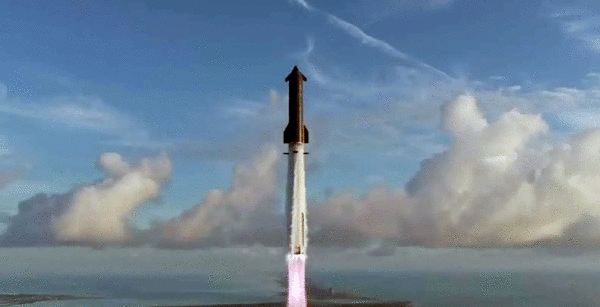
SpaceX launched its Starship and Super Heavy rocket on Monday morning and made it to orbit for the first time ever despite losing one of its engines on its trip up to space.
“Insertion. Starship is orbital,” was the callout from mission control during the company’s livestream followed by cheers from employees watching the event.
“Huge milestone for the Starship teams, one that we’ve been looking to get to for a couple years now,” said SpaceX commentator Dan Huot.
Teams nearly called off the orbital attempt. The concern was whether the upper Starship stage could make the final boost into orbital space after losing one of its six engines during its initial climb after launch.
Liftoff from the company’s Texas launch site Starbase of the heavy-lift rocket came at 8:46 a.m. EDT.
The orbital milestone comes on what is the 14th launch of the powerful rocket. It could pave the way for operational launches later this year from Kennedy Space Center, where the company has been building a launch tower at Launch Complex 39-A.
The previous 13 launches have all had suborbital flight plans. Starship officially took over the title of most powerful rocket to ever make it to orbit from NASA’s Space Launch System rocket used on Artemis missions.
The 33 Raptor engines on the Super Heavy booster created nearly 17 million pounds of thrust on liftoff, which is nearly double that of SLS.
Starship’s fight plan also included deployment of the first operational Starlink V3 satellites into its already massive constellation. This mission had 26 of the largest version of the Starlink satellites ever made. The first satellite deployed before 9:30 a.m. and the entire payload was out within 30 minutes.
The company made contact with all 26 satellites soon after.
The company did not attempt a recovery of the Super Heavy booster on land as it had done three times previous, but instead brought it down for a controlled landing over water off Texas’ Gulf coast.
“It’s been a wildly successful day so far,” Huot said.
The upper stage Starship’s original goal was to make six orbits around the planet with eventual splashdown in the Pacific Ocean off the west coast of Chile that would have been 10 hours after launch.
But managers instead opted to go for the first landing option, and in the northern Pacific near Hawaii after one orbit about three hours after launch.
Drone cameras once again captured the Starship’s final descent as it hovered in place over the ocean before tipping over and creating a fireball, all to the cheers of those watching on SpaceX’s stream. The water landing explosion has become a standard for these test flights, although the Starship on the 13th mission actually survived the tip over into the water and is currently being towed back to Texas.
“Not quite an extra soft splashdown like we had on the last one but Starship in the water nonetheless,” Huot said. “What a day.”
He noted the launch today came 18 years to the day that SpaceX had its first ever successful orbital launch, a Falcon 1 rocket back on Sept. 28, 2008.
“That was the day that set us up for everything else that we’ve had since. That day laid the foundation for everything we did today,” he said. “So pretty cool milestone.”
_____
©2026 Orlando Sentinel. Visit at orlandosentinel.com. Distributed by Tribune Content Agency, LLC.






Comments