Trump revokes Obama-era order that served as framework for Chesapeake Bay restoration
Published in News & Features
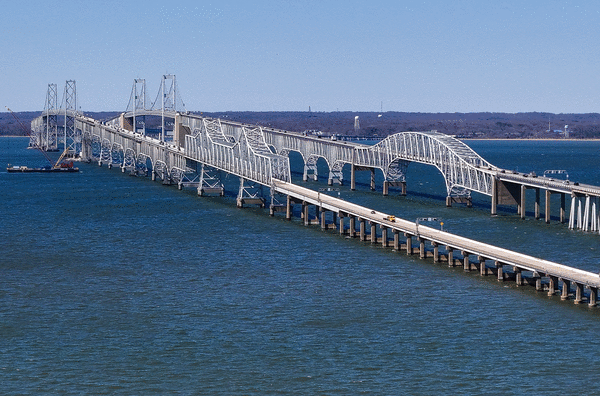
BALTIMORE — President Donald Trump issued an executive order this week revoking an order that has mandated states and municipalities to contribute to improving the health of the Chesapeake Bay for 17 years, claiming the order allowed for unnecessary taxes, according to a White House news release.
The Obama-era executive order from 2009 provided a framework for restoring the bay by directing state and federal agencies to develop pollution control strategies and make full use of the Clean Water Act, among other measures to protect the bay. It created implementation programs, spearheaded by the Environmental Protection Agency and other departments, and required annual action plans and progress reports to be published.
Nutrient pollution from sewage treatment plants, city streets, development sites and other sources prompted the creation of the Obama administration’s Chesapeake Bay Protection and Restoration order, deeming the bay a “national treasure” with both social and economic value.
The order cited “rain taxes,” or stormwater management fees, as a financial burden that many localities have implemented following the 2009 order, with Trump’s administration calling this a financial burden due to a lack of clarity in the 2009 order’s requirements.
Stormwater runoff is one of the most harmful pollutants to the Chesapeake Bay; water picks up contaminants and travels through creeks, rivers and the bay, according to the Chesapeake Bay Foundation.
Baltimore County passed a stormwater fee in 2013 to fulfill a state legislature mandate that required a fee to pay for projects that benefit the bay’s water quality. Property owners have to pay between $21 to $39 annually, and business property owners pay a fee based on the amount of impervious surfaces, which block water from entering the ground.
Six states and Washington, D.C. have collectively made significant progress in restoring the bay, reaching or nearly reaching their goals for sediment and phosphorus reduction and meeting just over half of their goal for nitrogen reduction.
The Maryland Department of the Environment reported that underwater grasses in the whole bay increased by 7% in the last year, with Marland’s share of the bay showing a 13% increase in grasses.
The bay’s annual dead zone, which does not have enough oxygen for organisms to survive, is also projected to be the smallest since 1985, according to Trump’s order.
In an effort to create new best practices, Trump’s order requires agencies that support the bay’s health to ensure resources directly address water quality issues instead of other activities that don’t further goals.
States — Maryland, Virginia, Pennsylvania, Delaware, New York and West Virginia — and Washington, D.C. must also coordinate with the EPA to balance promoting the health of the bay without raising costs for residents.
In a Wednesday news release, the Chesapeake Bay Foundation wrote that the recent executive order could jeopardize decades of progress made to restore the bay. States worked in partnership with the federal government to protect the bay for more than 20 years before the 2009 executive order was signed, according to the foundation’s release.
“Repealing [the order] weakens this historic federal-state partnership at exactly the moment we need greater accountability and collaboration,” said Hilary Harp Falk, the foundation’s president and CEO. “Its replacement undermines the federal government’s role while eroding the ability of states and local governments to fix problems ranging from pollution to flooding.”
The bipartisan Maryland Congressional Delegation released a joint statement Thursday emphasizing the vital importance the bay has across the state and region and the impact the 2009 order had on the productivity of the bay.
“Now more than ever, we need continued federal partnership and support for Chesapeake Bay restoration, not efforts to roll back all the progress we’ve made,” the delegation wrote. “Removing the coordinated federal backing that advances the watershed protection and restoration goals of the Chesapeake Bay Watershed Agreement risks undermining the future health of the Bay along with the businesses and communities that depend on it.”
The City of Annapolis released a statement Thursday noting that they will continue to limit harmful runoff into the Chesapeake and abide by pollution limits set by the EPA, adding that progress made to restore the bay should be a reason to continue the work, not dial it back.
“Federal policy may evolve, but in Annapolis we will not let local stewardship falter,” the release said. “The health of the Bay depends on persistent action and Annapolis will continue to lead the way.”
-------------
©2026 The Baltimore Sun. Visit at baltimoresun.com. Distributed by Tribune Content Agency, LLC.





Comments