ABC sues FCC, alleging Trump-fueled retaliation in TV license fight
Published in News & Features

ABC went to court Tuesday in an attempt to halt the Federal Communications Commission’s early review of its TV licenses, alleging the move is an attack on the broadcast outlet’s right to free speech.
The Disney-owned network asked a U.S. District Court to issue a temporary restraining order to stop the FCC’s action. The agency says it is investigating ABC stations over whether the company’s diversity and inclusion policies are in violation of federal anti-discrimination laws.
But the suit alleges that the FCC is retaliating against ABC due to President Donald Trump’s dissatisfaction with the network’s coverage of his administration. Trump has frequently threatened to have TV station licenses pulled when he believes he is treated unfairly on news and talk programs.
The suit is the latest escalation in the ongoing battle between the FCC and the broadcast TV industry, which is still regulated by the agency despite its waning influence due to competition from streaming and social media platforms.
Trump remains a heavy consumer of traditional TV and, as the ABC suit states, has frequently threatened to use the government’s leverage in attempts to intimidate news and talk show outlets he deems unfriendly.
In late December, Trump posted on X that “If Network NEWSCASTS, and their Late Night Shows are almost 100% negative to President Donald J. Trump, MAGA, and the Republican Party, shouldn’t their very valuable Broadcast Licenses be terminated? I say YES!”
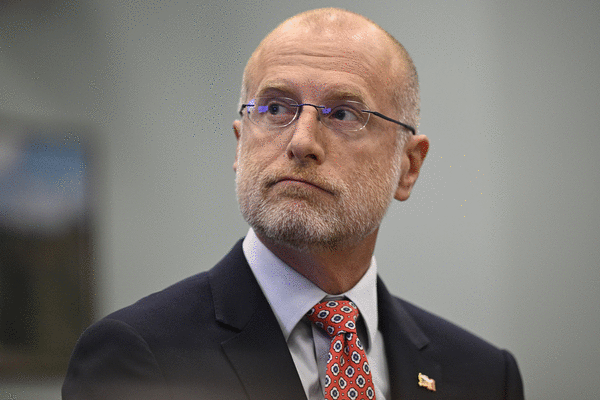
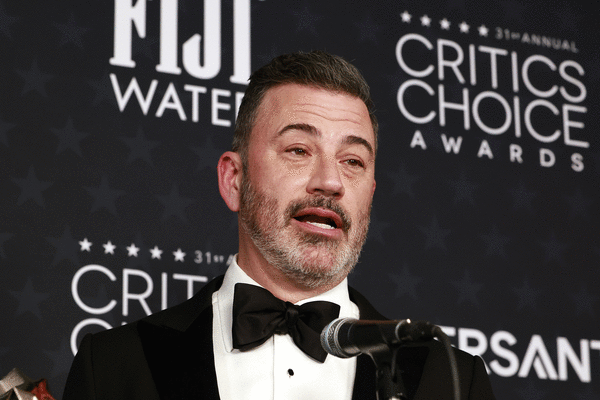
The suit alleges the FCC “has not been shy about openly coercing ABC into changing its programming,” citing comments made last fall by FCC Chairman Brendan Carr about late-night host Jimmy Kimmel’s remarks about the president.
“We can do this the easy way or the hard way,” Carr said. “These companies can find ways ... to take action ... on Kimmel or there is going to be additional work for the FCC.”
Shortly after Carr made those remarks, two large TV station ownership groups had their ABC affiliates pull Kimmel off the air for a week after conservative blowback over the host’s comments regarding the shooting death of right-wing activist Charlie Kirk.
The licenses for eight ABC-owned TV stations, including KABC in Los Angeles, were originally scheduled for renewal between 2028 and 2031. The suit said the current review is “extraordinarily early” and “that timing underscores the Commission’s true purpose: coercing and retaliating against a network that refuses to bow to the Administration’s demands.”
ABC’s suit notes that the early license review was announced days after Kimmel satirized the White House Correspondents Association dinner in an April 23 skit. The comic said first lady Melania Trump was “glowing like an expectant widow.”
Two days later, a gunman attempted to enter the dinner at the Washington Hilton before he was stopped by Secret Service agents. Trump tied the incident to Kimmel’s sketch and again called for his firing.
Trump recently called for ABC’s TV licenses to be revoked after the network did not carry his July 16 primetime Oval Office address on election fraud. Carr said the network’s decision would be taken under consideration in the license review process.
Broadcast outlets have long had the option to determine whether to carry a presidential address based. ABC presented Trump’s speech on its news streaming platform, as did NBC.
Carr has also questioned whether “The View” should be classified as a news program, which is exempt from the equal-time rule for political candidates who appear as guests.
ABC has asked the FCC to rule on the status of “The View,” which received an exemption from the rarely enforced equal-time provision in 2002.
ABC has maintained that “The View” books politicians based on newsworthiness and not partisanship. The program has not presented a candidate currently running for office since February, when Democratic U.S. Senate nominee James Talarico appeared.
Anna Gomez, the loan Democrat on the FCC, expressed support for ABC’s legal action.
“I have long called on companies to push back against this kind of government intimidation, and I’m glad Disney has shown courage and stepped up,” Gomez said in a statement. “This should be a welcome sign for every broadcaster who has felt the weight of this overreaching government pressure in silence.”
ABC’s aggressive defense comes after it settled a lawsuit filed by the president over inaccurate statements ABC News anchor George Stephanopoulos made about E. Jean Carroll’s sexual assault civil suit that the president lost in court.
ABC agreed to pay Trump $15 million in December 2024 to end the legal fight — sparking an outcry among free speech advocates, who believed the network would have won the case.
CBS also capitulated to Trump last year when it paid $15 million to settle his complaint over a “60 Minutes” interview with his 2024 opponent former Vice President Kamala Harris. Parent company Paramount agreed to the settlement in order to clear the regulatory path for its merger with Skydance Media.
ABC’s suit says that even Trump-supporting Republican legislators have expressed concerns over Carr’s actions, suggesting the FCC’s scrutiny of broadcast content could be violating the right to free speech.
“Sometimes the FCC scares me right now,” Sen. John Kennedy, R-La., said at a Senate Judiciary Committee earlier this month. “I don’t like some of the stuff that is said on television, but what business is it of the FCC?”
Daniel Suhr, president of the Center for Individual Rights, a conservative public interest law firm, criticized the ABC suit, saying the FCC’s investigation into Disney’s hiring practices is warranted.
“Disney can wrap its rhetoric in the First Amendment all it wants, but that doesn’t give Disney a right to corporate racial discrimination,” Suhr said in a statement.
Mike Proulx, vice president and research director for the advisory firm Forrester, said the conflict between the FCC and ABC may have media conglomerates rethinking their commitment to broadcast TV which has long been losing ground to streaming video platforms.
“Media companies must weigh the political and regulatory uncertainty attached to licensed broadcast properties and whether that, along with continued losses in viewers and ad revenue, is worth it,” Proulx said.
©2026 Los Angeles Times. Visit at latimes.com. Distributed by Tribune Content Agency, LLC.



Comments