Russian regions face new fuel crunch as Kyiv hits refineries
Published in News & Features
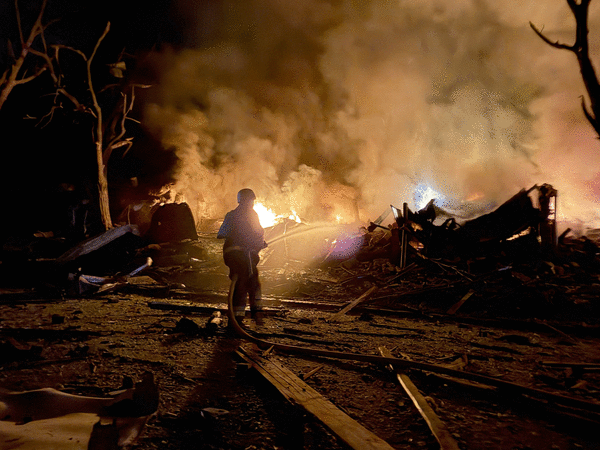
Several regions of Russia are facing fuel shortages again after Ukraine resumed almost daily attacks on oil refineries in the country.
The Kaluga region neighboring Moscow will introduce a rationing system for cars from Saturday based on license plates, according to regional Governor Vladislav Shapsha. The Astrakhan region on the Caspian Sea coast plans to limit fuel sales to 40 liters per vehicle and temporarily restrict operations at a number of city gas stations, Governor Igor Babushkin said late Thursday.
Earlier this week, the Orenburg region in Russia’s Urals introduced a rationing system that allows sales based on vehicle license plates, limits gasoline and diesel sales per driver at the pump and bans the filling of fuel canisters.
That came after Ukraine’s drone strike on the Orsk refinery in the region that’s some 1,500 kilometers (932 miles) southeast of Moscow. Officials said repairs could take as long as six months.
“We’re preparing for the worst-case scenario,” regional Governor Yevgeny Solntsev said Thursday, adding that Orenburg will need fuel supplies from other areas of Russia.
Ukraine has returned the focus of its drone strikes from oil tankers to fuel-producing plants after a brief lull in July that allowed Russian refineries time to make repairs and boost processing rates. Alongside government measures that included an export ban for most gasoline and diesel as well as subsidies for imported fuel, the interlude helped ease a nationwide fuel crunch that had left many drivers waiting for hours in huge lines at filling stations.
By the start of this month, regions across Russia had increased fuel allocations or even ended limits on purchases, while prices for gasoline and diesel fell at the pump.
The resumption of Ukrainian attacks is putting supply under pressure again. So far this month, Kyiv has already attacked 11 out of 34 large refineries, mainly linked to major oil producers in Russia, according to a Bloomberg tally of public statements from both countries. The latest strike on Friday hit the Ust-Luga gas processing-complex on Russia’s Baltic coast.
Most of the facilities that were hit were also targeted earlier this year.
Some regions located much closer to Moscow or the border with Ukraine warned of lower fuel deliveries earlier this week, after several refineries supplying gasoline and diesel to the European part of Russia were damaged in Ukrainian attacks.
That could trigger another spike in fuel prices, presenting a potential political headache for the Kremlin as it prepares for parliamentary elections across Russia next month.
Spreading fuel rationing
Energy giant Rosneft PJSC reduced gasoline supply limits to the Kostroma region over the weekend following an Aug. 6 strike on the Yaroslavl refinery, one of the largest in Russia, Governor Sergey Sitnikov said Monday.
The governor of Voronezh region some 470 kilometers south of Moscow also warned this week of worsening supplies of fuel.
“There are no indications that it will improve in the near future,” Alexander Gusev said, adding that the situation was exacerbated by companies redistributing fuel supplies to other parts of the country “where the problem is even more acute.”
The neighbouring Lipetsk region reinstated a rationing system based on vehicle license plates on Thursday, with the rules in force at filling stations run by Gazprom PJSC, Lukoil PJSC, Rosneft and Teboil, regional Governor Igor Artamonov said.
©2026 Bloomberg L.P. Visit bloomberg.com. Distributed by Tribune Content Agency, LLC.






Comments