Neighbors in Independence, Missouri, sue to stop construction of $150 billion AI data center
Published in News & Features
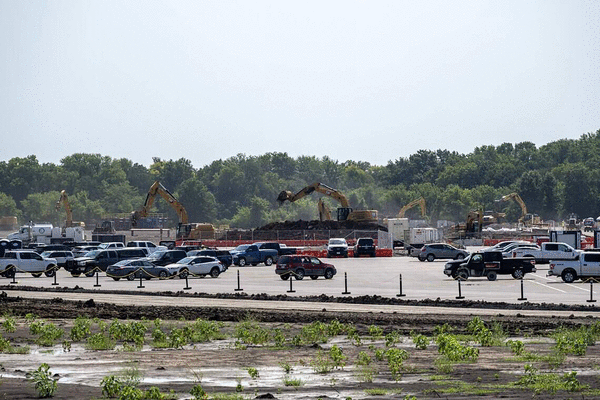




KANSAS CITY, Mo. — Months after work began on a $150 billion hyperscale artificial intelligence data center in northeast Independence, Missouri, a group of neighbors is suing to stop the 400-acre project in its tracks.
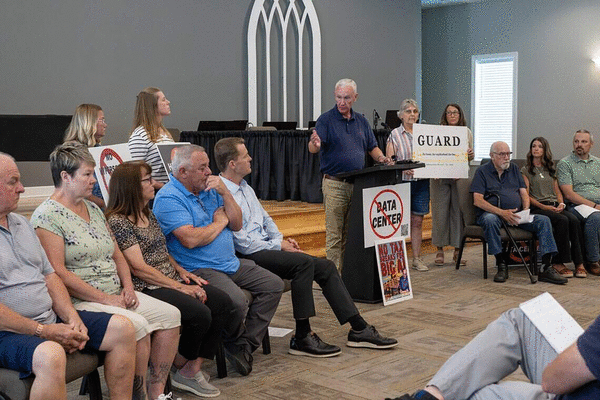
Four residents affiliated with the Independence Guard Alliance filed a lawsuit Thursday asking a Jackson County judge to order a halt on all construction of the Nebius data center in progress on Bly Road.
The 52-page suit includes 16 separate indictments and names the City of Independence and Independence Power Partners as defendants. It also names Missouri ADC Holdings LLC, a corporate entity that represents Nebius property in Independence.
Bly Road residents Howard Hoff, Mary Hoff, Dawn Hahnfeld and Milan Sinclair, who live next to each other on the road across from the data center site, are acting as plaintiffs. They are backed by the Independence Guard Alliance, a watchdog group formed this year by those who live closest to the Nebius site.
“I just wish we could have got in and stopped it before it got this far,” Mary Hoff told The Kansas City Star.
The suit focuses on actions taken by the Independence City Council in the months before the body’s March 2 vote approving more than $6 billion in tax breaks and other funding mechanisms for Nebius. The council’s 5-2 vote effectively green lit the data center program but garnered significant backlash. Independence residents have since voted out two of the councilmembers who voted for the tax breaks and are currently seeking to recall a third.
Attorneys for the Bly Road neighbors allege that the city’s early dealings with Nebius included multiple violations of the Independence City Charter and the Missouri Sunshine Law, which regulates open meetings and public records rules.
They also allege that the current plan for bringing electricity to the data center — and funding the generation of large amounts of power — diverges from long-term planning documents previously published by the city.
“We are against the city government that has decided our homes, our lives, our roads, our air and our future is theirs to gamble with, without asking us first and allowing us to have a say in the matter,” Bly Road resident and Guard Alliance member Kelly Garrett said.
“...We’re done being an afterthought. We are speaking now through our attorneys. We suggest you, the city leaders, listen.”
Nebius, a Dutch AI services company, broke ground in May on the data center, which the company intends to turn into its flagship United States location.
The land was rezoned for industrial use in 2022. Nebius was the fifth commercial tenant to enter into talks with previous property owner Northpoint Development; other potential buyers included another, smaller data center, as well as pharmaceutical manufacturing giant Eli Lilly.
Residents of Bly Road found out that Nebius was seeking to build a data center across from their homes in November 2025, when heavy machinery arrived to begin tilling the earth. Nebius purchased the land from Northpoint in December 2025.
The lawsuit seeks not only to halt all construction at the data center, but to win some sort of compensation for residents whose lives have been upended by the project. It cites more than 300 separate incidents, itemized concerns or specific city rules which plaintiffs allege Nebius or the city have ignored or violated during the approval process for the data center.
The suit focuses in part on a lack of transparency by local government officials, which attorneys Steve Jeffery and Aaron Cook allege were severe enough to repeatedly break public records law. Four Independence council members signed non-disclosure agreements when the city first entered talks with Nebius.
However, the lawsuit argues, the Nebius project was then discussed behind closed doors to an extent that council members failed to adhere to public records law around open government meetings. In other cases, the lawsuit reads, the city failed to return public records requests about the project within the legally allotted time.
The lawsuit alleges that the city, Northpoint and Nebius had started discussing the project in May 2024, and that some city officials started signing NDAs in August 2025, months before details of the proposal reached residents.
Some council decisions around the data center were illegally completed without allowing for a session of public comment, the suit alleges, and others were discussed in private meetings that should have been publicized or recorded under local and state law.
“The public is completely in the dark over months and months of negotiations between government officials and the data center operators,” Jeffery said Thursday. “...(Local officials) want to exclude their local residents from remaining involved in the process, and they have a complete lack of concern for the impact that these folks are experiencing on a daily basis.”
Sherae Honeycutt, a spokesperson for the city of Independence, said the city “disagrees with the characterization of its actions and believes the approvals and processes related to this project were handled in accordance with applicable law.”
Nebius spokesman John Sutter declined to comment on specific allegations made in the lawsuit, but said Nebius “remains committed to complying with all applicable laws and regulations, and being a responsible partner for the community.”
The lawsuit challenges the city’s decision to zone the data center land for industrial use when it is surrounded by agricultural and residential areas. It argues that based on the activity actually taking place there, the site should be classified as heavy industrial, which would place Nebius under a stricter set of rules and restrictions around what they could do on the land.
It further alleges that the “massive, disproportionate tax breaks” awarded by city officials do not align with the current Independence economic development plan and therefore should never have been approved, Cook said.
“Because we believe those numbers don’t line up with the city’s economic plan, our lawsuit asks to put a stop on financing,” Cook said.
Additionally, under the city charter, if an outside entity introduces a new way to generate power and the city makes any profit off of that new infrastructure, they are required to use part of the new revenue to lower residents’ energy payment rates.
Plaintiffs are alleging that Nebius failed to uphold this requirement in the power creation and funding structure it negotiated with the city, Jeffery said.
“The city negotiated electricity rates at a fraction of what the rest of us pay, and signed non-disclosure agreements to keep their own citizens in the dark,” Independence Guard Alliance cofounder and Bly Road resident Daniel Moorehead said. “They have made their priorities clear. It is our job to make sure the judge sees them just as clearly.”
Jeffery said that the Bly Road neighbors’ lawsuit is the third such large legal action taken against a data center project in Missouri. Similar lawsuits are underway against an Amazon data center in Montgomery County and against a CRG data center in St. Louis suburb Festus. Jeffery is also on the legal team for the latter lawsuit and told The Star that the issues on the table in Festus overlap significantly with those in Independence, particularly with local officials signing complex NDAs.
“The allegations in the lawsuits, they all seem to be the same,” Jeffery told The Star. “These developers, they all follow the same playbook.”
The Guard Alliance retained Jeffery and Independence-based attorney Aaron Cook in May. The group is currently fundraising for what both lawyers and organizers say could be a long and costly legal battle.
Jeffery said he thinks the group’s greatest challenge will be timing.
“Weeks and weeks go by, even if things happen, before you can get in front of the court again,” Jeffery said. “That’s just the nature of the way the legal system works.”
Mary Hoff and other residents have repeatedly shared that the presence of the data center has greatly destabilized their livelihoods by introducing noise and light pollution, along with worries about long-term personal and environmental health and immediate concerns about whether their homes will lose value.
“A community doesn’t get frustrated over nothing,” Garrett said. “We get frustrated when we’re betrayed.”
The lawsuit reiterates some of these concerns, alleging that the city arbitrarily allowed significant industrial construction without instituting proper plans to protect residents from long-term damage. Meanwhile, Cook noted, Bly Road has been overrun with lost construction trucks, clouds of dust and debris and frequent construction noises in the middle of the night.
“The lawsuit asserts that the construction is proceeding in a destructive way ignoring city construction rules and the rights of neighbors,” Cook said. “...As far as we understand, the city has arbitrarily allowed construction to proceed without set limits on noise pollution, air pollution, or without final site plans or building plans.”
As Guard Alliance members presented the details of the lawsuit Thursday, Howard Hoff grew too emotional to speak, stepping down from the podium in tears. Mary Hoff circled her sprawling back lawn in a golf cart, staring at the bulldozers visible from her sloping driveway. She and Howard had hoped to sell their property and use some proceeds to buy an RV and travel, she said, before the data center arrived across the street from the couple’s nest egg.
“It should never have gotten this far,” Mary Hoff told The Star. “The little bit of money the city’s going to make to do this to the valley, it’s insane.”
©2026 The Kansas City Star. Visit kansascity.com. Distributed by Tribune Content Agency, LLC.






Comments