Fed holds rates steady, three officials dissent favoring a hike
Published in News & Features
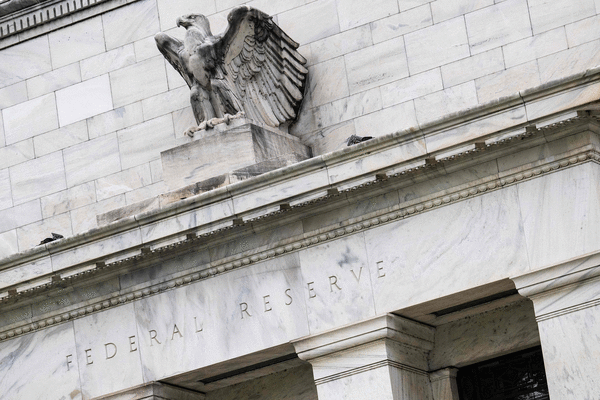
Federal Reserve officials left interest rates unchanged, but a fractured vote signaled growing conviction among some policymakers that higher rates are needed to curb resurgent inflation.
The Federal Open Market Committee voted 9-3 to hold the benchmark federal funds rate in a range of 3.5% to 3.75%. Dallas Fed President Lorie Logan, Cleveland’s Beth Hammack and Minneapolis Fed chief Neel Kashkari dissented in favor of raising rates by a quarter percentage point.
The committee’s post-meeting statement was otherwise identical to the one issued following their June meeting. Officials repeated their pledge to “deliver price stability.”
The vote marked the fifth straight time officials have opted to leave rates unchanged. But the dissents suggest it could become more challenging for Fed Chairman Kevin Warsh, who took the helm in May, to continue holding if inflation fears grow.
Warsh is scheduled to take questions from reporters at 2:30 p.m. in Washington. The S&P 500 pared losses following the decision. Two-year Treasury yields fell.
Follow the reaction in real time on Bloomberg’s TOPLive blog
Warsh has vowed to restore inflation to the Fed’s 2% target, but stopped short of saying he would raise rates to do so.
Several officials have said policy is well positioned for the moment, but also signaled they could back rate increases if price pressures don’t ease soon. The Fed’s preferred inflation gauge has accelerated in recent months, hitting 3.4% in the year through May. Officials will get fresh inflation data Thursday.
Mounting pressure
A weaker-than-expected reading of inflation in June took some pressure off policymakers to raise rates this week. U.S. consumer prices fell last month for the first time in six years as gasoline prices declined during an interim in the Iran war. A separate report showed producer prices also rose by less than expected last month.
Still, officials are facing mounting price pressures after a re-escalation of the war sent Brent crude soaring past $100 a barrel. While oil prices have declined again in recent days, Brent remained near $90 Wednesday morning.
Uncertainty around the conflict, combined with a new slate of tariffs and an AI-fueled demand boom, have added to fears inflation could remain elevated for an extended period.
The labor market, meanwhile, has seen months of modest but steady employment growth and a stable unemployment rate.
That combination prompted Logan earlier this month to call for modestly higher rates. Hammack also chimed in, saying inflation was a bigger concern than employment.
The Fed’s post-meeting statement repeated that economic activity is expanding at a “solid pace,” and again noted capital investment and productivity growth are strong. Officials also continued to characterize inflation as elevated relative to the central bank’s 2% target.
Hike speculation
A few economists predicted before the meeting that Warsh might surprise investors by backing a rate increase. Pricing in federal funds futures put the odds as high as 40% in the days before the gathering.
Some Fed watchers judged such a move would be politically astute, given that a rate hike closer to the November midterm elections could prompt blowback from President Donald Trump.
Trump has repeatedly called for lower rates, including this Monday. Warsh, whom Trump nominated for the Fed job earlier this year, has said he would keep policy decisions independent of political influence.
©2026 Bloomberg L.P. Visit bloomberg.com. Distributed by Tribune Content Agency, LLC.



Comments