Predawn Florida skies served up 'space jellyfish' from SpaceX launch
Published in News & Features
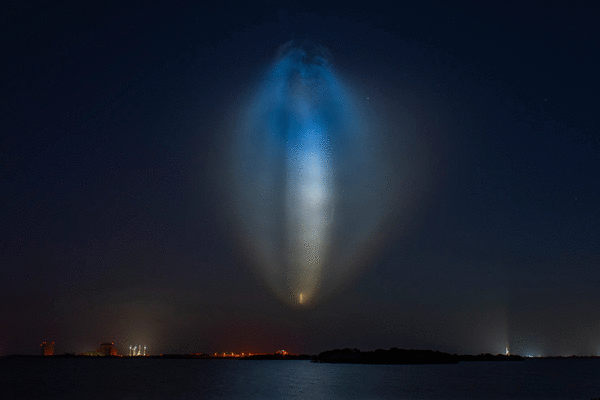
ORLANDO, Fla. — A SpaceX Falcon 9 launch using a booster that has now flown three dozen times created a “space jellyfish” effect in the predawn skies over Florida on Thursday.
The rocket lifted off at 5:25 a.m. from Cape Canaveral Space Force Station’s Space Launch Complex 40 on the Starlink 10-42 mission with 29 more of the company’s broadband internet satellites.
The glow of the rocket’s plume morphed as it climbed higher into the atmosphere. As the first and upper stages separated, it created a flowing, orange-and-blue nebula lighting effect reminiscent of a jellyfish seen across much of Florida.
“That’s not a UFO,” reads a post on the “Space Jellyfish Alerts” account on X. “The rocket and its expanding exhaust plumes are being illuminated by the sun, which may produce lingering noctilucent clouds.”
The clear skies across the state meant the effect could be seen from afar.
“Incredible space jellyfish! My kids were excited to wake up early to catch the SpaceX Falcon 9 launch. We’re viewing from Palm Beach County,” reads another post on X from the user @ErinnFL.
The first-stage booster for the mission flew for a record-extending 36th flight and made a recovery landing downrange in the Atlantic on the droneship A Shortfall of Gravitas.
The booster had previously been used on two human spaceflights — Crew-3 and Crew-4 — as well as two cargo resupply launches to the International Space Station among others. It made its first launch on June 3, 2021.
The company is aiming to reuse boosters as many as 40 times, and has three others with more than 30 launches under their belts.
It marked the 597th reflight of a Falcon booster. The company was made its first booster recovery in 2015.
This was the 46th launch from all providers from the Space Coast in 2026 with all but seven from SpaceX.
Jeff Bezos’ Blue Origin is the only other rocket company that has made booster recoveries with its New Glenn rocket. So far, it has managed two successful landings out of three launches. The fourth launch, though, is awaiting the reconstruction of the rocket’s launch pad at Canaveral’s Launch Complex 36, which was destroyed during a test hot fire earlier this year.
Other companies plan for eventual rocket recovery landings as well including Stoke Space and Relativity Space from Cape Canaveral, but their rockets are not expected to launch until at least 2027.
_____
©2026 Orlando Sentinel. Visit orlandosentinel.com. Distributed by Tribune Content Agency, LLC.






Comments