Baltimore's Inner Harbor sees another wave of dead fish turn up
Published in News & Features
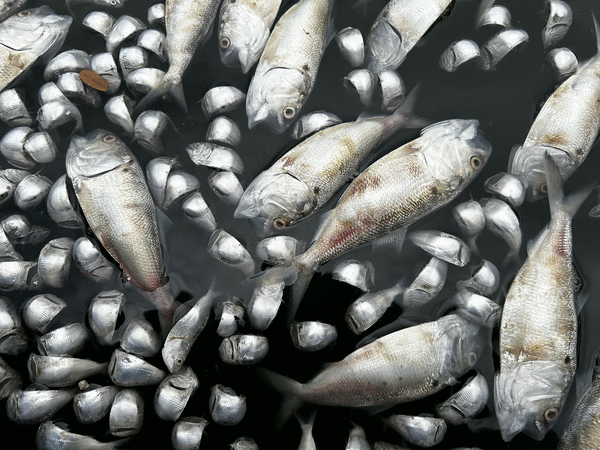
BALTIMORE — Walking around Fells Point this week, Baltimore residents were greeted by the stench of rotting fish and sulfur as dead fish floated in the Inner Harbor in what has become a yearly trend.
These “fish kills” have been happening with increasing regularity. In a similar event last August, roughly 120,000 fish turned up dead in the harbor between Harbor Point and Fort McHenry.
A spokesperson for the Maryland Department of the Environment said they were aware of this week’s event but had no additional information to share.
“The osprey are going to be happy,” said Alice Volpitta, Blue Water Baltimore’s Baltimore Harbor Waterkeeper. “But this is really harmful to tourism and the people who live in the area.”
Blue Water Baltimore, a nonprofit dedicated to restoring the Inner Harbor, estimates that there are at least 1,000 dead fish this week, including Atlantic menhaden, white perch and blue crabs. The organization first heard about the dead fish Tuesday through its pollution hotline.
The fish died because oxygen levels drop in slow-moving, warm water, Volpitta said. The strong sulfur smell and green color of the water indicate a “pistachio tide,” which happens when a cold snap causes oxygen-poor water from the bottom of the harbor to rise to the surface, bringing hydrogen sulfide and other low-oxygen water with it.
The dead fish will eventually be eaten — by wildlife — or decay. As bacteria break down the organic matter, they consume even more oxygen, further worsening the low-oxygen conditions that caused the fish kill.
“This does not have to be the new normal,” said Volpitta. “I worry sometimes that people see fish kills over and over and over again and these pistachio tides happening more and more often, and people start to lose hope.”
If proper precautions are taken on land, these events would not happen as often, Volpitta said. By cutting down on sewage overflows and fertilizer runoff, the baseline conditions will be more resilient and oxygen drops less likely.
“Humans and anthropogenic sources are definitely exacerbating the problem,” Volpitta said. “The turnover event wouldn’t be so deadly if we didn’t have a big dead zone at the bottom of the harbor to begin with.”
_____
©2026 Baltimore Sun. Visit baltimoresun.com. Distributed by Tribune Content Agency, LLC.






Comments