Trump to pick Telecom lawyer to lead DOJ's antitrust division
Published in News & Features
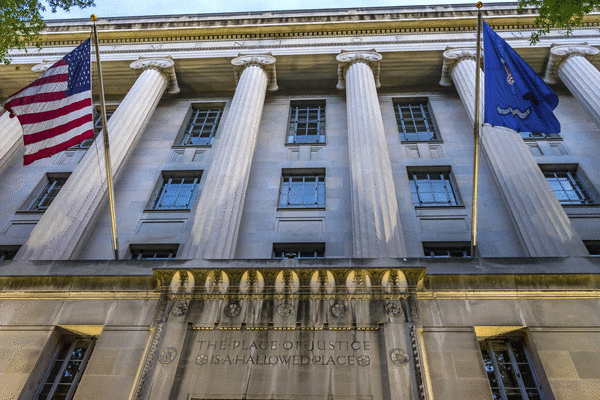
WASHINGTON — The White House is poised to nominate Adam Candeub, the general counsel at the Federal Communications Commission, to take over as the Justice Department’s antitrust chief, according to people familiar with the plans.
Justice Department staff members were informed this week to expect the nomination in the near future, according to one of the people. Candeub met with President Donald Trump earlier this week, according to the people, who asked not to be named discussing plans that are not yet public.
A veteran of the president’s first administration, Candeub also authored a section of Project 2025, the Heritage Foundation report that served as a roadmap for much of Trump’s second term so far.
A White House official declined to confirm Candeub as the pick, saying they do not get ahead of Trump on any potential personnel announcements. Candeub and spokespeople for Justice Department did not immediately respond to requests for comment.
Candeub’s nomination would require Senate confirmation, which could take several months. The antitrust division has been led by acting chief Omeed Assefi since February after the ouster of Abigail Slater, who the Senate had confirmed as the antitrust division’s leader.
Assefi also led the division for the Trump administration in an acting role before Slater’s confirmation. He is set to leave the Justice Department later this month.
Associate Attorney General Stanley Woodward, the Justice Department’s No. 3 official, has been running the antitrust division’s day-to-day operations ahead of Assefi’s exit, according to an internal Justice Department memo from earlier in June seen by Bloomberg.
In 2020, Candeub served as acting head of the U.S. National Telecommunications and Information Administration, where he spearheaded efforts to reinterpret legal protections for technology companies under the Communications Decency Act.
Candeub and others argued that a provision of the 1996 law known as Section 230, which confers sweeping immunity on tech companies for content posted on their platforms, shouldn’t apply to decisions they make to remove or moderate content.
Candeub, formerly a professor at Michigan State University Law School, authored a chapter about the Federal Trade Commission in Project 2025. In his chapter, Candeub argued for federal regulators to defer more antitrust enforcement to state attorneys general, and focus on issues related to Big Tech and illegal collusion related to environmental, social and governance investing goals.
(Kelcee Griffis contributed to this report.)
©2026 Bloomberg L.P. Visit bloomberg.com. Distributed by Tribune Content Agency, LLC.



Comments