Minneapolis woman ripped from car during federal surge files civil rights complaint with DHS
Published in News & Features
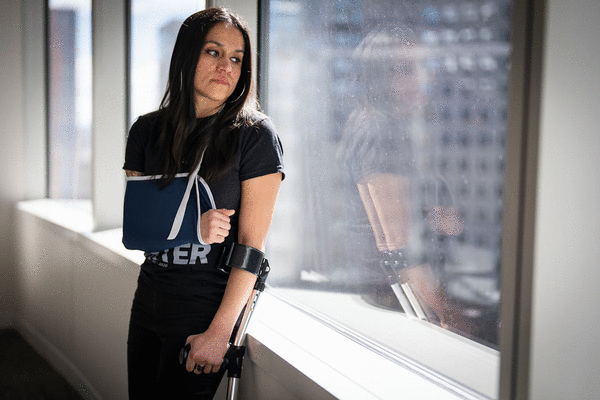
A Minneapolis woman who went viral after videos circulated of federal immigration agents dragging her from her car has filed a new complaint with the Department of Homeland Security’s civil rights office over allegations of excessive force and constitutional violations.
The attorneys for Aliya Rahman, who was ripped from her car in January during Operation Metro Surge, filed a complaint Tuesday with the DHS office of Civil Rights and Civil Liberties (CRCL), which has been gutted under Donald Trump’s administration.
The formal complaint, which is separate from the tort claim that Rahman filed in April, demands that DHS investigate Rahman’s case and make significant policy changes to avoid future potential cases of excessive force by agents.
But Rahman’s attorneys worry DHS will not seriously investigate or respond to the complaint because of how small the civil rights office has become since Trump took office in 2025. This division is tasked with investigating complaints of civil rights abuses and making recommendations for changes to avoid misconduct.
In an interview, Rahman’s attorney Jessica Gingold said even if the complaint doesn’t lead to policy changes, it’s critical to raise public awareness about the existence of a civil rights office within DHS.
“It’s important people demand that some of this amazing amount of money that is being thrown by Congress toward this agency is thrown toward making sure that a person who is going to their doctor’s appointment doesn’t end up unconscious on a detention center floor,” Gingold said, referring to Rahman’s recounting of her detainment.
By June 2025, the DHS civil rights office had been cut in size – from roughly 150 employees to about 22, according to the Robert F. Kennedy Human Rights Center. The center sued DHS over a previous attempt to completely shutter the civil rights office as well as others handling oversight in DHS.
The office has become only smaller over the past year and is now in the single digits, Gingold said. The new complaint demands the civil rights office be restaffed to its original size.
In a Tuesday statement, a DHS spokesperson said the CRCL division still performs its “legally required functions, but in an efficient and cost-effective manner and without hindering the Department’s mission of securing the homeland.”
The spokesperson did not respond to questions about the current size of the civil rights office.
The spokesperson alleged that under Joe Biden’s administration, several DHS offices handling oversight “obstructed immigration enforcement by adding bureaucratic hurdles and undermining DHS’s mission.”
Gingold, however, said the reductions raise major concerns about protecting Americans’ civil rights.
“It’s not an accident that right now we have more ICE and CBP agents on our street than ever before, and yet fewer people who are really charged with ensuring they’re doing so lawfully,” Gingold said.
The new complaint stems from Rahman’s detainment on Jan. 13, when she was driving in south Minneapolis on her way to a doctor’s appointment and happened upon a scrum. Federal agents were clashing with protesters near an immigration-related arrest. Rahman was pulled from her car after she alleges agents shouted conflicting orders to get out or to drive away from the crowd. The incident left her with torn shoulder tendons and lingering mental trauma, she said in interviews with the Minnesota Star Tribune.
Along with the allegations of excessive force in the complaint, the agents also discriminated against Rahman based on her disability, the complaint alleges. Rahman has autism and in 2024 suffered a traumatic brain injury.
DHS, however, described Rahman as an “agitator” and alleged she “ignored multiple commands by an officer to move her vehicle away from the scene,” leading to her being arrested for “obstruction.” While DHS maintains Rahman obstructed federal agents, she has never been charged.
While there’s concern from the attorneys that the complaint won’t be handled correctly, they hope Rahman’s case will show others who believe they were unlawfully detained by agents that they can also file a civil rights complaint.
“Most people want to see this stop, want to see policies change, want to see practices change, want to see the laws being followed and on paper this should be a way to do that,” Gingold said.
_____
©2026 The Minnesota Star Tribune. Visit startribune.com. Distributed by Tribune Content Agency, LLC






Comments