Heat waves can leave homes dangerously hot – even for young, healthy adults
Published in News & Features



Most people know that heat waves can be dangerous. What they may not realize is that the heat indoors can be much worse than outdoors.
When the power goes out and air conditioning stops, a house starts to function like a greenhouse. Heat enters through windows and walls and has nowhere to go. Air stagnates.
Within hours, indoor temperatures can climb well above what the thermometer shows outside, especially on upper floors and in rooms with south-facing windows. Over longer periods, especially if temperatures don’t cool off overnight, conditions can become lethal.
Most heat-related deaths occur indoors. When a heat dome sent temperatures soaring in the Pacific Northwest in 2021, 98% of the more than 600 deaths in British Columbia happened inside homes. Washington and Oregon also saw high numbers of deaths in homes that lacked air conditioning.
In Europe, where only 1 in 10 households have air conditioning, heat waves killed an estimated 60,000 people in 2022 and 47,000 in 2023, largely inside buildings never designed for these temperatures.
People of all ages are at risk in heat waves like these. I spent eight years at the University of Texas at Austin studying how buildings respond to extreme heat. In a recent study, my team assessed the heat risk in every single-family home in Austin.
We found that even younger, healthy adults face far more risk than they realize.
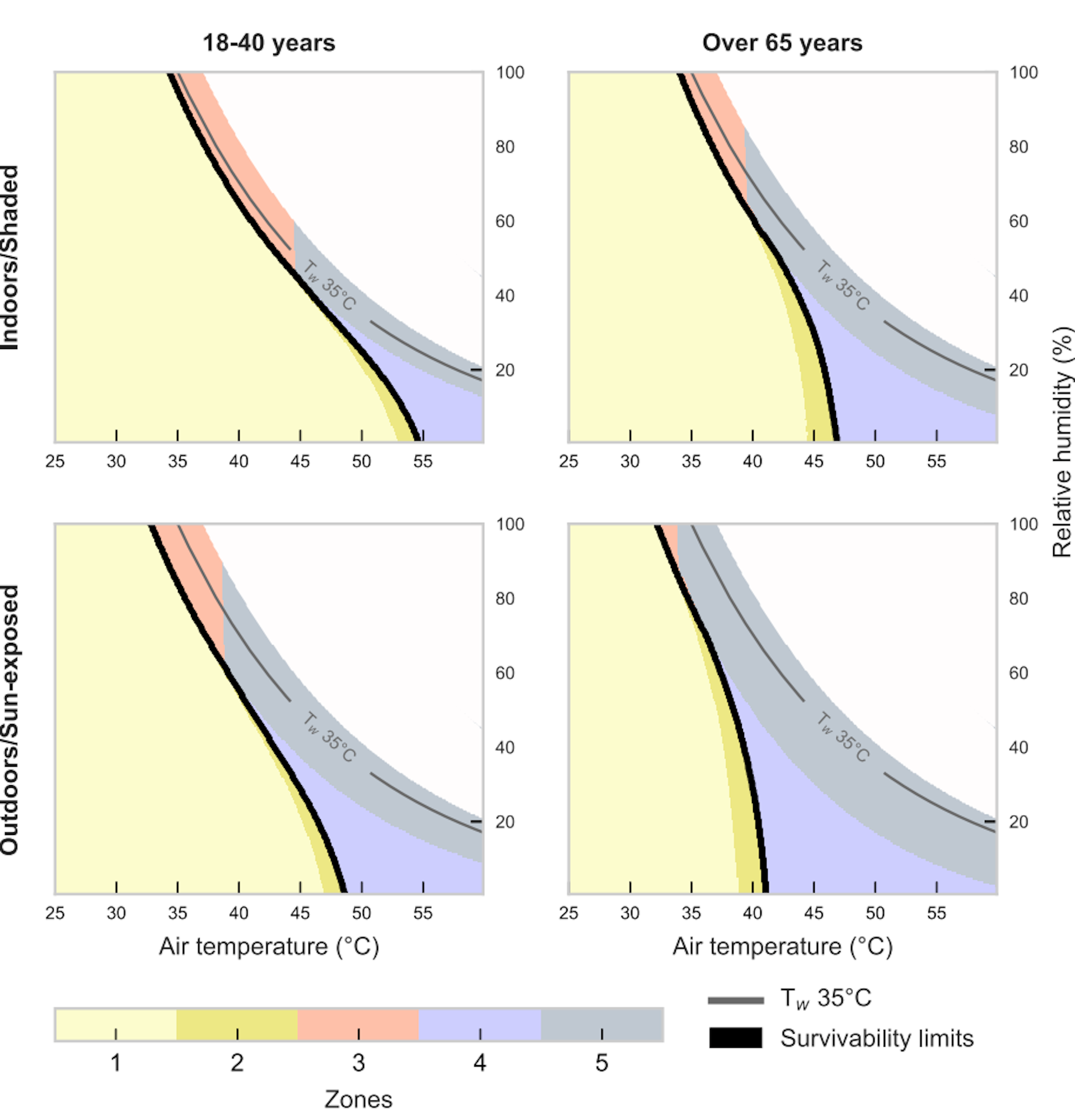
Your body maintains a core temperature of about 98.6 degrees Fahrenheit (37 degrees Celsius). To cool down, it pushes blood to the skin and sweats. But when air temperature is high, that convective cooling weakens. When humidity is also high, sweat cannot evaporate.
If the body has no way to release heat, core temperature rises. If the core temperature increases past about 104 F (40 C), the body’s thermoregulation starts to fail. Past 109 F (42.8 C), death becomes likely.
What makes indoor heat especially dangerous is that it does not let up at night in homes that lack air conditioning. Outdoor temperatures typically drop after sunset, and someone outside can get a few hours of recovery. But a poorly insulated home that has been absorbing heat all day releases that heat slowly, keeping indoor temperatures elevated through the night. A person inside the home never gets a break.
After two or three nights of this, even healthy people start to be at serious risk for heat-related illnesses.
People tend to underestimate indoor heat for a few reasons.
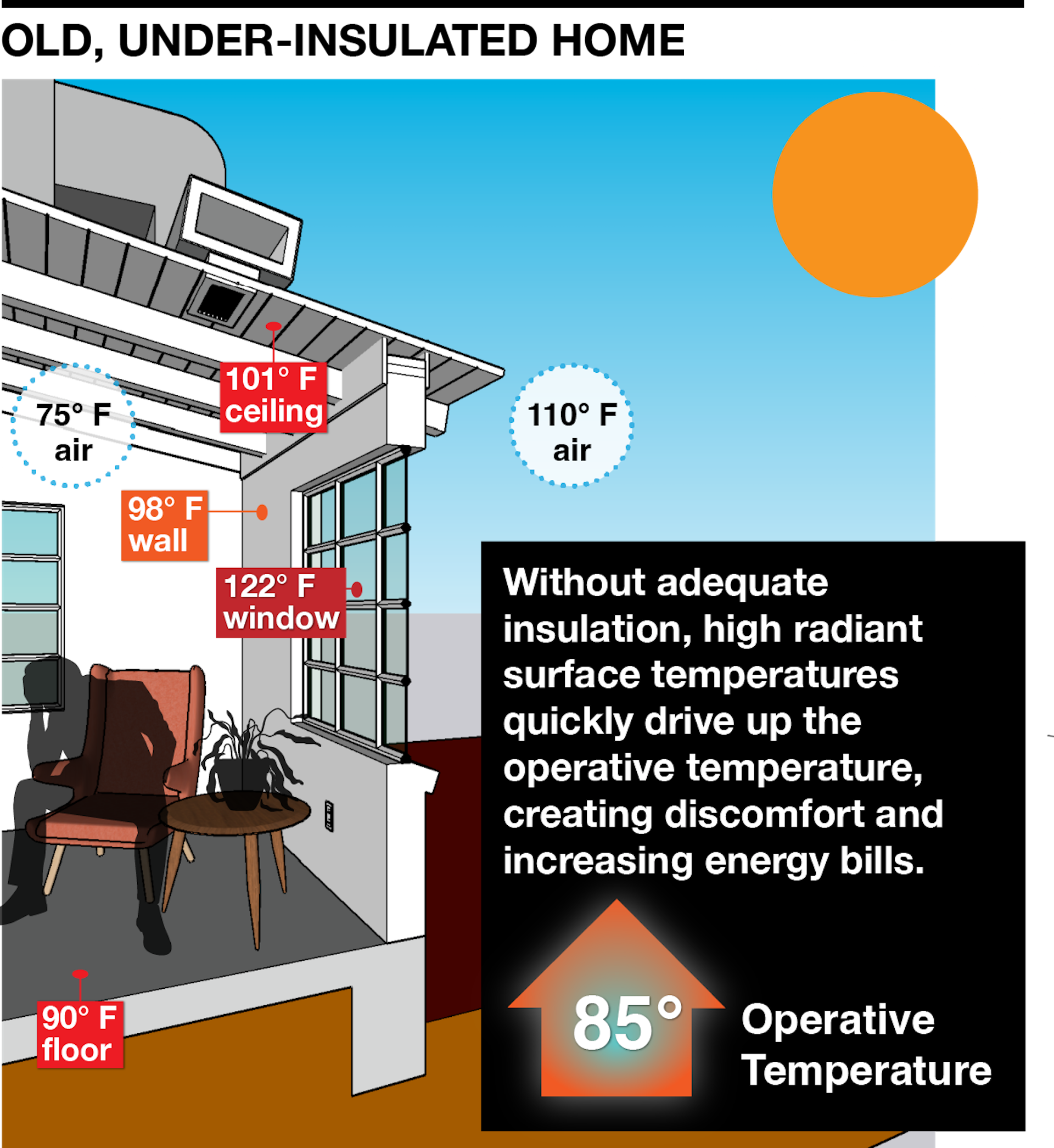
One is that the thermostat typically sits on one wall in one room. It does not tell what the temperature is in an upstairs bedroom or near a sun-facing window. In older, underinsulated homes, the actual felt temperature can exceed 90 F (32.2 C) even when a thermostat reads 75 F (23.9 C). The hot walls, ceilings and windows can radiate heat directly onto your body.
Another reason is that people assume all homes respond to heat the same way. However, a newer home with double-pane windows and good insulation acts like a thermos, keeping heat out for a longer time. An older home with single-pane windows and cracks in the walls heats up fast.
Two houses on the same street, exposed to the same outdoor conditions, can have completely different temperatures inside. And in a blackout, where neither home has cooling, those differences can become a matter of life and death.
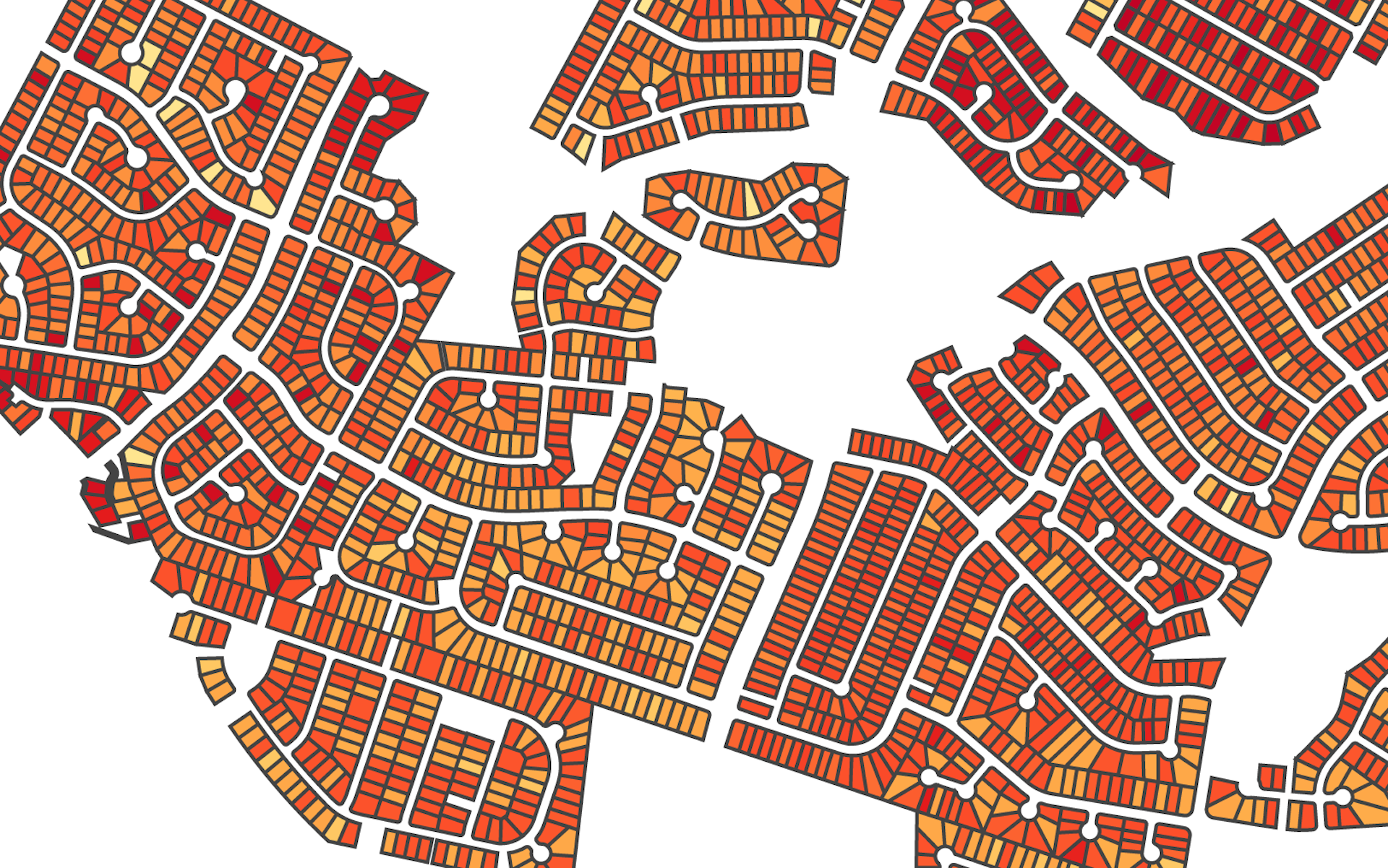
Our study combined two datasets. From Austin’s tax appraisal records, we pulled basic property information, such as the year the home was built, the size and the number of stories for each of the city’s 213,000 single-family homes. We then matched each home to the most similar energy simulation models in a U.S. Department of Energy database that contains thousands of detailed, physics-based building energy models representing the U.S. residential building stock.
Using those models, we simulated each building’s indoor temperatures over time during a three-day heat wave and power outage with outdoor temperatures above 110 F (43 C).
We found that 85% of homes got hot enough to pose a significant risk of death for an elderly occupant. But what surprised us was the risk to younger people.
Under today’s climate conditions in Austin, about 15% of homes already have the potential to get hot enough without air conditioning to pose serious heat risks to healthy adults. Under future warming scenarios, that number jumps to as high as 65% if average summer highs reach 104 F (40 C). Further, climate projections for Austin show that heat waves will double in frequency by the end of the century.
We found three types of buildings and accompanying risks:
Resilient homes, which are newer and well insulated, tended to have temperature and humidity conditions that would be survivable for an elderly occupant throughout the simulated heat wave with blackout.
Critical-risk buildings, which are mostly older homes, became dangerous almost immediately.
And then there was the middle group – homes where temperatures rose slowly during the simulated blackout, day by day, possibly giving occupants a false sense of security until it was too late.
Texas has already seen conditions like our case study’s – a heat wave paired with a power outage. In 2024, a derecho knocked out power for nearly 900,000 Houston households while the heat index climbed to 100 F (37.8 C). Seven weeks later, Hurricane Beryl cut power to 2.6 million homes, leaving them without power for over three days, with temperatures over 90 F (32.2 C).
If you can’t get cooling at home, there are steps you can take that can help.
Move to the lowest floor of your home, where it will be coolest. Close the blinds and curtains on sun-facing windows. Drink water constantly to stay hydrated, which is essential for regulating body temperature.
If you’re facing a blackout, be sure to also check on elderly neighbors, especially those living alone. You can also try to find a public cooling center; many cities now open them during heat emergencies.
Longer term, upgrades such as reflective window film, attic insulation and lighter-colored roofing can reduce how much a home heats up. After the 2021 heat dome, British Columbia’s coroner recommended updating building codes to address heat.
Our own findings point in the same direction: We propose that new homes should be required by building codes to maintain conditions in which at least light physical activity remains possible for all occupants for at least 72 hours during a power outage.
As summers get hotter with climate change and blackouts become more frequent, the risks of people suffering heat illnesses will only continue to rise.
This article is republished from The Conversation, a nonprofit, independent news organization bringing you facts and trustworthy analysis to help you make sense of our complex world. It was written by: Zoltan Nagy, Eindhoven University of Technology
Read more:
Blackout risks are rising – why neighboring power grids can’t just send extra electricity where it’s needed
Why older homes feel warmer than the thermostat suggests – and what to do about it
How hot is too hot for the human body? Our lab found heat + humidity gets dangerous faster than many people realize
Zoltan Nagy does not work for, consult, own shares in or receive funding from any company or organization that would benefit from this article, and has disclosed no relevant affiliations beyond their academic appointment.







Comments