DOJ moves to join challenge of Colorado's visa process for crime victims
Published in News & Features
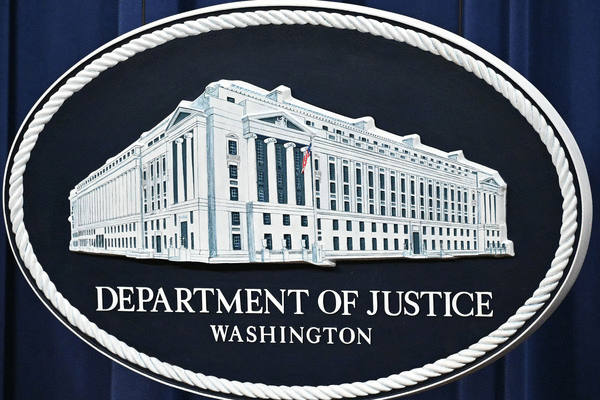
DENVER — The U.S. Department of Justice wants to join a local lawsuit challenging a 2021 Colorado law that sought to streamline the process for crime victims who are not U.S. citizens to apply for legal status within the country.
Attorneys with the Office of the Attorney General filed a motion Tuesday to join with Douglas County Sheriff Darren Weekly and 23rd Judicial District Attorney George Brauchler in their January lawsuit against Gov. Jared Polis and other state officials over the law.
The local officials argued that the state law unduly limits law enforcement officers’ discretion when crime victims apply for what is known as a U visa, a visa set aside for non-citizen victims of crime who cooperate with law enforcement and meet other conditions.
The Department of Justice called Colorado’s law “deeply unfair” and argued in the motion to intervene Tuesday that the federal government’s law supersedes state law.
“The United States has an obvious interest relating to the integrity of the federal U-Visa program; that interest could be impaired or impeded by a ruling in Colorado’s favor,” the motion states.
Crime victims seeking U visas must have their applications certified by a law enforcement agency — that is, local officials must state that the applicants were victims of qualifying crimes and that they are helping in the investigation or prosecution of those crimes.
Federal immigration officials make the final decisions on whether or not visa applications are granted. Under federal law, victims seeking U visas must show that they have suffered physical or mental abuse due to a qualifying crime that happened in the U.S., they possess information about that crime, and they have been helpful or will be helpful to the prosecution.
In 2021, Colorado legislators changed state law to require that state officials consider only a victim’s helpfulness and whether they were subject to a qualifying crime when deciding whether to certify a victim’s application for a U visa. The state law also requires that officials consider a victim to be helpful unless there is documentation that the victim refused to cooperate with the case.
That shift undermines federal goals for the U visa program, the DOJ said in a news release Tuesday.
“Congress created a scheme to incentivize cooperation with law enforcement while relying on local official discretion to ensure that only deserving applicants receive U visas,” Associate Attorney General Stanley Woodward said in the news release. “But Colorado is favoring the unhelpful alien over the crime victim who helps promote public safety and order. Federal law does not tolerate that backwards policy.”
No more than 10,000 U visas can be issued in any given year nationwide, creating a competitive process to receive one.
Between 2019 and 2025, 55 Colorado law enforcement agencies and district attorneys’ offices reported receiving 1,368 requests for U-visa certifications, according to records kept by the Colorado Division of Criminal Justice. The agencies signed off on 1,118 of those requests — approving about 82%.
_____
©2026 MediaNews Group, Inc. Visit at denverpost.com. Distributed by Tribune Content Agency, LLC.






Comments