Analysis: Trump's Netanyahu problem is latest key hurdle to Iran deal
Published in News & Features
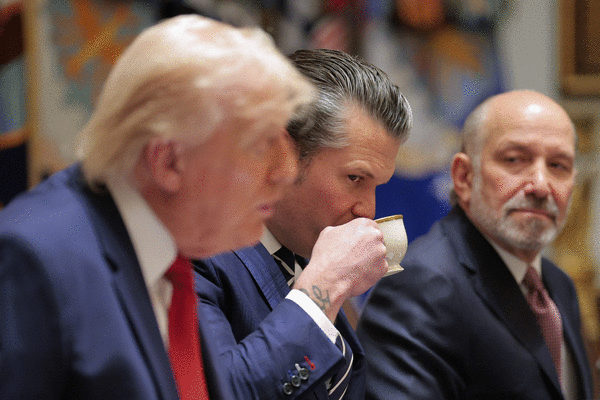
WASHINGTON — President Donald Trump has spent months projecting confidence that a deal to end the Iran conflict is within reach. Israel’s determination to press ahead with its own objectives underscores his tenuous control over the outcome of the crisis.
The latest diplomatic rupture followed days of Israeli military escalation against Hezbollah in Lebanon, prompting a phone call between Trump and Israeli Prime Minister Benjamin Netanyahu. The leaders offered differing accounts on what was agreed — with the U.S. president initially suggesting a broader truce than his counterpart was willing to declare.
The episode cast a fresh spotlight on an element of the war Trump has largely refused to acknowledge: The U.S. and Israel have very different ideas about what an end to the war should look like. That divide is jeopardizing the fragile, long-running negotiations between Washington and Tehran, which insists that Lebanon must be part of any peace agreement.
While Trump has repeatedly cast Iran as desperate for a deal, the Islamic Republic said Monday that talks through mediators were suspended. Trump on Tuesday denied that talks had stopped. The apparent move by Tehran came after Netanyahu threatened new strikes on the Lebanese capital Beirut. Israel has said its campaign against Hezbollah, an Iran-backed militia that is considered a terrorist group by the U.S., is central to its own security and the region’s.
There were signs of continued clashes in the region as both sides tried to influence the outlines of a lasting peace. U.S. Central Command said it had disabled an unladen oil tanker traveling toward Iran’s Kharg Island on Tuesday “by firing a Hellfire missile into the ship’s engine room.” Meanwhile, Kuwait said it was intercepting drone and missile attacks overnight Wednesday morning local time.
Oil prices edged higher for the second straight session as traders focused on real world oil flows over the contradictory narratives from the U.S. and Iran over peace talks. Both global benchmarks rose by more than 1% with Brent crude ending the session at $96 a barrel.
The U.S. and Israel started the war together, launching joint attacks on Iran at the end of February, but the signs of a rift between them could now complicate Trump’s efforts to end it. According to an Axios report, this week’s heated phone call included expletives from Trump and an accusation of ingratitude directed at Netanyahu.
The White House didn’t respond to a request to confirm the Axios report. The Israeli embassy in Washington didn’t immediately respond to a request for comment on any rift with the U.S.
“Iran is trying to drive a wedge between the United States and Israel and frankly has enjoyed some success in doing that,” said Michael Singh, former National Security Council senior director for the Middle East during George W. Bush’s presidency.
Trump also faces the challenge of convincing observers — including oil-market traders — that he can break out of a cycle of repetition in the conflict.
As a tentative U.S.-Iran ceasefire was brokered in early April, Israel ramped up its campaign in Lebanon, then Iran threatened to quit talks. Trump held a call with Netanyahu, and the Israeli leader offered a pledge to halt attacks — a pattern of events that has more or less repeated itself over the last two days.
U.S. and Iranian negotiators are also still grappling with several other critical questions, including freedom of navigation through the Strait of Hormuz, the future of Iranian funds frozen abroad and the scope of any broader regional security arrangements.
ABC reported Tuesday that Trump was pushing Iran to make specific nuclear concessions as part of a preliminary deal. The White House didn’t immediately respond to a request for comment on that report.
Iran has denounced Israel’s deepening invasion of Lebanon and said it might increase restrictions on traffic in the strait, close the Bab el-Mandeb strait as well, and strike Israel directly.
American allies in the Arab world and Europe have also called for a halt to the Lebanon conflict. Fighting continued there overnight, with attacks reported by both sides. More than 3,000 people have been killed and about 1 million displaced.
Trump emerged from the Monday call declaring that Israeli forces would not move against Beirut and suggesting a broad ceasefire had been struck between Israel and Hezbollah.
Netanyahu confirmed a tentative ceasefire in northern Lebanon while affirming that Israel would keep up operations in the southern part of the country. Trump later followed with a post that focused on his stated success in convincing Netanyahu to turn “his troops around” from Beirut.
_____
(With assistance from Courtney Subramanian, Devika Krishna Kumar, Meghashyam Mali and Ben Holland.)
_____
©2026 Bloomberg L.P. Visit bloomberg.com. Distributed by Tribune Content Agency, LLC.






Comments