Oil in Venezuela, research in Cuba: Inside Epstein's ties to Latin America
Published in News & Features
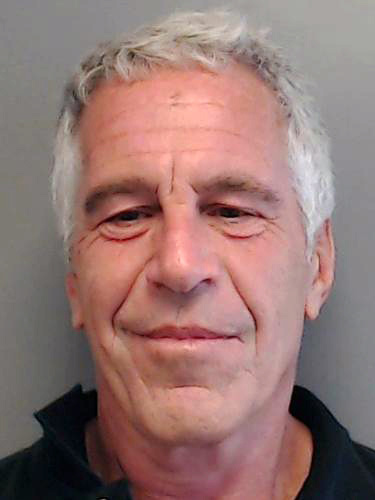
Disgraced financier and registered sex offender Jeffrey Epstein had numerous relationships with the rich and powerful across South America and the Caribbean, a Miami Herald investigation has found.
When Venezuelan strongman Hugo Chávez nationalized the ports at Puerto Cabello in 2009, Epstein advised the chief executive of the Dubai multinational that had operated it on how to navigate the situation.
Epstein also discussed business ventures with Francisco D’Agostino, an influential Venezuelan businessman who has relationships with both the Nicolás Maduro regime and the country’s opposition. D’Agostino was under U.S. sanctions from 2021 to 2025 for brokering oil deals for the country’s state-controlled energy company.
Epstein and D’Agostino also often discussed sexual exploits and exchanged derogatory comments about women, emails between them show. For instance, in an email correspondence in October 2012, they described a woman as a financial bond they could “trade” and split the commission.
In another missive a few months later, D’Agostino asked Epstein about a young woman he had met on the financier’s private island the previous year.
Epstein replied that she was “here and naked.”
The Herald’s reporting is based on the millions of pages of records released earlier this year by the U.S. Justice Department. The findings highlight how the financier was constantly cultivating relationships with influential figures and using them to add to his fortunes.
D’Agostino was introduced to Epstein by hedge fund manager Todd Meister.
In 2012, Meister pitched Epstein on a project to “acquire, develop and operate up to 1,000 MW of solar energy plants” in the Atacama Desert in Chile. An investment deck stated that upon completion, the venture projected revenues exceeding $30 million within a decade.
Meister told the Herald that the venture did not come to fruition and that he never had any business relationship with Epstein. He described the investment deck as a “preliminary document” that he had sent Epstein because the financier “seemed to look at emerging markets and opportunities that were not mainstream.”
Epstein’s footprint in the Caribbean, the Herald found, extended beyond Little St. James — his private island where he allegedly raped and sexually assaulted countless women and girls.
In 2003, he traveled to Cuba and met the late Fidel Castro. And in 2017, Epstein helped fund a state-backed neuroscience conference in Havana.
A conference in Havana
In March 2003, he traveled to the island nation with his accomplice and former partner, Ghislaine Maxwell, and the former president of Colombia, Andrés Pastrana Arango.
“[W]e met Fidel Castro,” Maxwell told Acting Attorney General Todd Blanche in an interview last year.
The Herald did not find any evidence of Epstein discussing anything related to politics or business with the Cuban strongman.
Roughly 15 years after that trip, Epstein’s long-held dream of financing a “giant conference in Havana” came true.
He provided funds for the NeuPsyco Congress, a Cuban state-backed international neuroscience conference, in Havana in November 2017.
Epstein got involved via Hong Kong researcher Gino Yu, whose work into consciousness and “special abilities” he was already financing.
But the financier was unhappy with the results and complained that he was not getting proper reports and considered the endeavor a waste of his time and money.
“I have yet to see how one dollar of my [C]uba project was spent. [N]ot one dollar, not one paper,” he wrote to the late British neurophysiologist Peter Fenwick, who was among the attendees. Fenwick assured him that it was a success.
“Conference excellent,” Fenwick wrote back. “Many young Cubans with neuroscience posters and papers who it was nice to encourage. Some senior Cuban scientists with remarkable discoveries.”
The Herald tried contacting Yu through the Hong Kong Polytechnic University where he currently teaches but did not receive any response.
The records suggest that was the last time Epstein funded any academic project in Cuba.
Drug plane?
Among the planes he was exploring buying was one belonging to South Aviation, Inc., a Fort Lauderdale company owned by Argentine businessman Federico Machado.
U.S. federal prosecutors indicted Machado in 2021, charging him with conspiracies to commit cocaine trafficking, export violations and wire fraud.
The indictment, detailing roughly $350 million in criminal activity, alleged that he and South Aviation were part of a scheme to purchase and illegally register airplanes in the U.S. The jets would then be lent to organized crime syndicates across Latin America, which used them to transport cocaine destined for the U.S. The illicit proceeds were used to buy more planes.
Whether the jet Epstein was interested in was also used in illicit activities is unclear. Epstein ultimately decided not to proceed with the purchase.
Machado, who was extradited by the U.S. from Argentina late last year, is now in federal custody and awaiting trial. He faces up to life in prison.
The Herald reached out to Machado for comment via his attorneys in the U.S. but did not receive any response.
Trouble in Puerto Cabello
Chávez had ordered all of Venezuela’s ports to be expropriated. The ports whose private owners did not comply would be seized by the military.
At the time, Puerto Cabello, a port roughly 200 miles west of Caracas, was being run by a private company called DP World.
“As I write this, our operations have ceased to be under our control,” the company’s highest-ranking official in the region wrote in an email to DP World’s top executives on Aug. 1 that year.
DP World’s CEO at the time, Sultan Ahmed bin Sulayem, with whom Epstein had shared a decades-long relationship, turned to Epstein for advice.
The financier claimed it was actually the Cubans who had pushed Chávez to expropriate the ports.
Epstein advised bin Sulayem to travel to Cuba, win over the Castro regime and then have them convince the Venezuelans to let DP World operate the ports again.
Bin Sulayem and his team, the records show, planned to travel to Havana in late September that year and meet with Cuban officials at the historic Hotel Saratoga.
Neither Bin Sulayem nor DP World responded to the Herald’s requests for comment.
The ports of Puerto Cabello remain under the control of the Venezuelan regime.
Black gold of the Orinoco
D’Agostino, the records show, planned a Caracas trip for Epstein in 2012 and promised him an armored car and security contingent during his stay there.
A proposed itinerary shows that he wanted to introduce Epstein to some of the most influential figures in the country at the time.
They included Alejandro Andrade, Chávez’s personal aide; Henry Ramos Allup, D’Agostino’s brother-in-law and the leader of the Venezuelan opposition at the time; Baldo Sansó, financial adviser to the state-controlled oil company Petroleos de Venezuela SA; and Yuchi Cen, a Chinese diplomat.
D’Agostino told the Herald that Epstein’s planned trip to Venezuela did not take place. He did not answer why.
During a Nov. 19, 2012, lunch meeting with Epstein, D’Agostino discussed a business opportunity with him — oil.
The correspondence and a copy of a nondisclosure agreement reviewed by the Herald show that the discussion was about Venezuelan company Derwick Associates’ joint venture with PDVSA to explore the oil fields along the Orinoco River in the southern part of the country — the largest petroleum reserves in the world.
Derwick Associates’ chairman is Alejandro Betancourt López, whom D’Agostino introduced to Epstein.
The records suggest that one of the topics of discussion at D’Agostino’s meeting with Epstein was the Foreign Corrupt Practices Act, a federal law aimed at preventing the bribery of foreign officials for business gain.
Two years later, the Wall Street Journal reported that the Justice Department was probing Derwick’s business dealings in Venezuela for potential corruption — an allegation that Derwick has denied. The Manhattan district attorney’s office was also investigating the company for potential violations of New York banking laws, the report said.
In 2017, the Venezuelan regime, having passed into Maduro’s hands after Chávez’s death, also announced an investigation into the company for the “spectacular overpricing” of Orinoco oil contracts, according to Reuters.
The U.S. imposed sanctions on D’Agostino in 2021 for coordinating the trade of Venezuelan oil on behalf of PDVSA, which it accused of being the Maduro regime’s “primary conduit for corruption to exploit and profit from Venezuela’s natural resources.” The Trump administration lifted the sanctions against D’Agostino last year.
“I met Mr. Epstein only a few times to discuss business opportunity in Venezuela oil sector that did not materialize [sic],” D’Agostino said in a statement to the Herald. “I decided not to engage in any dealings with Mr. Epstein subsequently.”
Betancourt’s Miami-based attorney told the Herald that D’Agostino had introduced his client to Epstein but that Betancourt never did business with him and did not attend the November meeting.
“After the initial introduction, Mr. Betancourt never spoke to or corresponded with Epstein, nor did Epstein ever invest with my client,” he said. “Mr. Betancourt had no relationship with Epstein, business or personal.”
The Justice Department and the Manhattan district attorney’s office did not answer the Herald’s questions about whether Epstein was also part of their probes into Derwick.
Federal officers arrested Epstein in July 2019 on sex-trafficking charges. He was found dead in federal custody in Lower Manhattan a month later on Aug. 10, 2019.
---------
—Miami Herald staff writer Antonio Delgado contributed to this story.
©2026 Miami Herald. Visit at miamiherald.com. Distributed by Tribune Content Agency, LLC.



Comments