Another bill upping Capitol Police retirement age passes the House
Published in News & Features
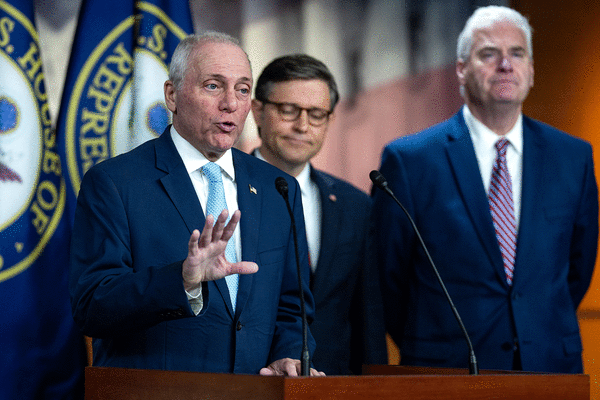
WASHINGTON — For the second time in less than four weeks, the House passed a proposal that could raise the retirement age for Capitol Police officers, part of an effort to address persistent staffing issues that have plagued the agency.
The House cleared a bill by voice vote Tuesday that could allow Capitol Police officers to work until they turn 62 — a departure from a previous measure it advanced last month that aimed to up that age to as high as 65.
“We need to make sure that we not only can keep attracting new officers to the force, but when you’ve got officers in the prime of their career, that everybody agrees are worthy of keeping on, that they have that flexibility,” Majority Leader Steve Scalise, R-La., said on the floor.
The new version was passed in the Senate last week and was led by Sen. Mitch McConnell, R-Ky., who chairs the Senate Rules and Administration Committee. It now heads to the president’s desk.
Under current law, officers are forced to retire at 57, but the Capitol Police Board can exempt them until they turn 60. The bill would give the board the power to set a new waiver age “not less than 57 years of age and not more than 62 years of age.”
The bill the House passed last month would do the same thing as the one passed Tuesday, save for its higher age. Neither piece of legislation would mandate a new waiver cap; instead, they simply give the Capitol Police Board the option to change it. The board consists of the House and Senate sergeants-at-arms and the architect of the Capitol, plus Capitol Police Chief Michael Sullivan as a nonvoting member.
It’s the latest effort to address the force’s significant staffing challenges in recent years as threats to lawmakers climb and the agency struggles to compete with other law enforcement agencies that may offer more enticing benefits.
Around 60 sworn officers are currently working on a retirement waiver, according to the House Administration Committee, more than double the size of a typical class of recruits.
“Unless we pass this statutory change, each of these officers will be forced to retire within the next few years. These forced retirements will only compound the staffing shortage issue that we’re facing within the Capitol Police force,” House Administration Chair Bryan Steil, R-Wis., said on the floor Tuesday.
The union representing Capitol Police officers said both McConnell’s bill and the previous proposal, which was led by Steil, were good first steps toward addressing the agency’s staffing problems, but urged Congress to do more.
“The authority of the age waiver by the USCP Board to 62 or even 65, will help a little with the manpower issues we face on a daily basis, but Congress needs to look at retaining experienced trained officers for years to come,” Capitol Police union chairman Gus Papathanasiou said in a statement.
Papathanasiou said parts of the federal retirement system are relics of a bygone era, making it hard for the force to keep up with state and local police departments. He also said he wants to see overtime pay count toward retirement benefit calculations to entice officers to stay, which has been a thorny issue for the force over the years.
“What may have worked in the 1980s and 1990s doesn’t cut it in today’s law enforcement environment,” he said. “To just hire a police officer here at USCP so they can lateral to another agency is just throwing away recruitment and hiring money.”
_____
©2026 CQ-Roll Call, Inc., All Rights Reserved. Visit cqrollcall.com. Distributed by Tribune Content Agency, LLC.






Comments