Current News
/ArcaMax
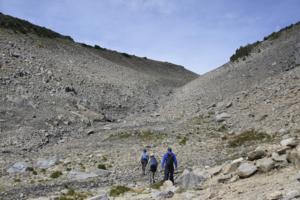
St. Mary's Glacier melted away. Will Colorado's iconic snowfield ever return?
DENVER — St. Mary’s Glacier is gone.
And it may never return to its glory days as an iconic snowfield above 10,000 feet in Clear Creek County, where it drew year-round skiers and graced postcards mailed home by thousands of tourists who visited Colorado’s mountains.
The remaining bits of snow and ice melted away this past week, leaving ...Read more

An immigration crackdown, a tragic death and an impossible goodbye
Ismael and Guadalupe never imagined they would have to watch their teenage daughter’s funeral from 2,000 miles away. But last month, the parents gathered with their three younger children in the front room of their St. Paul home to say goodbye to Kimberly, a 16-year-old daughter who dreamed of a life in the U.S.
Flowers and candles formed a ...Read more

A generation of kids suffer as Trump destabilizes immigrant families
The little girl stared up at Norma Gómez from the doorway of her neighbor’s apartment, her sad, brown eyes suddenly flashing with hope.
“Are you the person who’s going to bring my mom back?” she asked.
Gómez struggled to find an answer. It was a December morning, and she’d brought food, diapers, baby wipes, and clothes — items ...Read more

Newsom signs California's first standalone post-production tax credit
In another push to revitalize California’s film and TV industry, Gov. Gavin Newsom on Saturday signed the state’s first standalone post-production tax incentive.
The new incentive is aimed at bringing back jobs for the industry’s editors, sound mixers, composers and visual effects artists. It will allow a 35% to 50% credit on qualified ...Read more

There was a possible measles exposure at Philadelphia International Airport
PHILADELPHIA — Philadelphia health officials are warning travelers of a possible measles exposure at Philadelphia International Airport early this week.
The Philadelphia Department of Public Health is notifying travelers and others, who may have been exposed. This incident is unrelated to the recent measles exposures at the Children’s ...Read more

Chadian troops arrive in Haiti as police say they arrest Floridian who had AR-15
Hundreds of additional Chadian soldiers are arriving in Haiti to bolster the United Nations-backed gang fighting force, which remains badly short of troops and equipment as the volatile Caribbean country attempts to hold its first general elections in more than a decade.
The soldiers are being deployed in groups: one contingent arrived Friday ...Read more

Nick Reiner fights to access $1.6 million trust from parents he's accused of murdering
Nick Reiner is still fighting to get access to his family trust from behind bars.
“Nick still has not been able to access even $5 from his trust to buy basic subsistence items from the jail commissary,” Reiner’s attorneys Anita Wu and Geoffrey Neri wrote in court filings, obtained by PEOPLE. They further noted that Reiner’s efforts to ...Read more

Man arrested after allegedly pepper-spraying fellow filmgoer for using phone during movie
LOS ANGELES — A 34-year-old man was arrested this week after he pepper-sprayed another moviegoer at a Burbank AMC theater for using a cellphone during a film, police said.
Lt. Brent Fekety, a Burbank Police spokesman, said officers were summoned about 5:30 p.m. Tuesday to the AMC 16 theater, which is nestled in the middle of the bustling ...Read more

Hormuz oil shipments hit six-month high, US commander says
Oil and liquefied natural gas shipments through the Strait of Hormuz in the past two weeks reached the highest level in six months, signaling that U.S. naval protection and mine clearance efforts are “paying off,” a regional U.S. commander said.
“Clearly, momentum is building,” Admiral Brad Cooper, head of U.S. Central Command, said in ...Read more
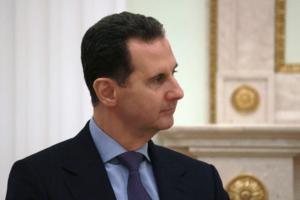
California judge sentences former Syrian prison boss to 60 years for torturing inmates
A federal judge in California has sentenced a former Syrian prison warden to 60 years for torturing inmates and lying to immigration officials to get into the United States.
A jury convicted Samir Ousman Alsheikh, 74, in March of conspiracy to commit torture, three counts of torture, one count of visa fraud and one count of attempted ...Read more

He was allegedly asleep as his Tesla drove on a Bay Area freeway. Turns out there's not a law against that
A Tesla’s driver was pulled over for apparently sleeping at the wheel on Interstate 80 in Solano County, the California Highway Patrol said.
Because California’s vehicle code has no specific law against that, he was cited for “unsafe speed.”
“What’s the safe speed for being asleep? Zero miles per hour,” said Scott Heitman, an ...Read more
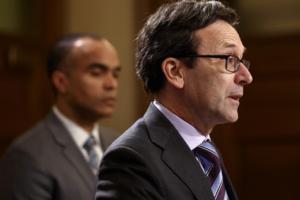
Washington state unions spend big to keep 'millionaires tax'
Washington's public-sector unions are throwing down millions of dollars to keep the state's new high-earners income tax in place and fight an initiative seeking to repeal it.
The Washington Education Association plopped $2 million last week into the campaign against Initiative 645, bringing its total to $3 million and making the teachers union ...Read more

The fall of once-mighty McClatchy newspapers underscores California's news crisis
Dan Walters describes working for The Sacramento Bee several decades ago as "like living in Sweden."
The newspaper had a bustling office in California's capital replete with a cafeteria, a gas station, a credit union, and a medical clinic, where staff could get their vaccinations and seek care for typing-related hand injuries, recalls the ...Read more

Amid SAT debate, new data show more UC first-years are failing math classes
SACRAMENTO, Calif. — For months, a sizable group of University of California professors has been demanding the reinstatement of standardized test requirements in the undergraduate admissions policy. Their main reason? A widening gap in mathematics ability among students in their classrooms.
New data presented at the UC Board of Regents ...Read more
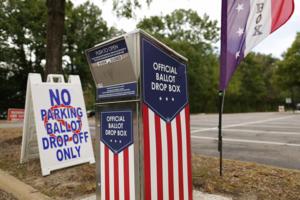
Va. registrars, voter groups work to ease confusion over mail ballots
Voting by mail remains an option for the upcoming November elections, but recent efforts by the Trump administration to tighten mail-in requirements have left questions among some voters, particularly U.S. military and overseas citizens who rely on the method.
The U.S. Supreme Court on Monday blocked a new U.S. Postal Service rule that would ...Read more
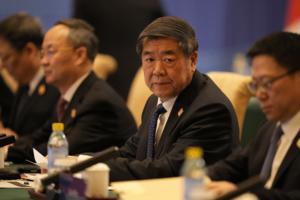
US, China trade teams set to huddle in New York on AI, Iran
U.S. Treasury Secretary Scott Bessent and China’s Vice Premier He Lifeng will lead talks on trade and other pressure points Sunday in New York ahead of next week’s summit between the leaders of the world’s two biggest economies.
The negotiators will lay the groundwork for a high-profile meeting between President Donald Trump and Chinese ...Read more
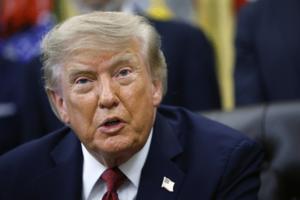
Trump to name AI czar while rejecting safety risks as a hoax
President Donald Trump said he would name an artificial intelligence czar as he continued to push tech companies to race ahead with development despite growing fears safety.
He rejected concerns that the quickly evolving technology may pose risks to humans as a hoax, comparing it to the alarm over climate change and the scandals that led to his...Read more

Carrot Top hospitalized in Las Vegas after apparent suicide attempt
Carrot Top, the mop-topped prop comedian who has entertained audiences since the early 1990s, was taken to a Las Vegas hospital after an apparent suicide attempt, according to a report by TMZ.
In a statement to the entertainment website, a representative for the 61-year-old entertainer — whose real name is Scott Thompson — said that he was ...Read more

Carrot Top hospitalized in Vegas after alleged suicide attempt: report
Carrot Top has been hospitalized following an alleged suicide attempt, according to a report.
The comedian, whose real name is Scott Thompson, was rushed to the hospital ahead of his performance at the Luxor Hotel & Casino on Friday night, TMZ reported, citing sources. His show, part of his long-running Vegas residency, was canceled as a result...Read more
CNN, MS NOW barred from White House after ban by Trump
WASHINGTON — MS NOW, CNN and Politico said their journalists were denied access to the White House grounds on Saturday after President Donald Trump said he would bar the outlets.
CNN called the move “an illegal assault” on the constitutional rights of news organizations to report without hindrance from government and all three outlets ...Read more
Popular Stories
- 'Babies are dying': How Pennsylvania's measles outbreak changed the vaccine mindset of this Amish country midwife
- 'A black box': Watchdog hopes to pry loose Hope Florida court records
- Community colleges will be able to grant more bachelor's degrees under law signed by Newsom
- Flock cameras controversy set for Senate hearing
- How would Prop. 5 change recall elections if approved by California voters?
Comics