Australia to invest in anti-drone defenses as Iran shows potency
Published in News & Features
Australia will invest billions of dollars to establish anti-drone defense systems as the wars in Iran and Ukraine underscore the potency of unmanned vehicles in a rapidly evolving global security environment.
Defense Industry Minister Pat Conroy announced two contracts on Tuesday in the first tranche of that effort: one is with Melbourne-based Sypaq for small interceptors and the other with AIM for a laser-weapon to shoot down aerial attack drones. The contracts totaled A$30 million, with the government planning to outlay up to $5 billion on these and similar weapons.
The investment reflects the changing nature of warfare demonstrated first in Ukraine and then in Iran where drones have emerged as potent new attack weapons that are very expensive to combat. The U.S. and others have been using multi-million dollar missiles to shoot down drones that cost Iran just thousands of dollars to make and deploy.
Alternatives like interceptor drones or lasers not only cut costs, but leave pricier missile defenses available for more complex threats.
“This is rebalancing the cost-benefit ratio in the interest of the Australian Defence Force,” Conroy said when he announced the contracts.
The new anti-drone weaponry is part of Australia’s biggest peacetime increase in defense spending, which will see an extra A$53 billion over the next decade. This includes new frigates for the navy, a new air defense system, long-range strike weapons, as well as increasing use of unmanned weapons in the air and at sea.
Australia aims to improve its deterrence capabilities via drones and missiles to complement a planned fleet of nuclear-powered submarines due to be delivered in the 2030s under the Aukus deal with the U.S. and Britain.
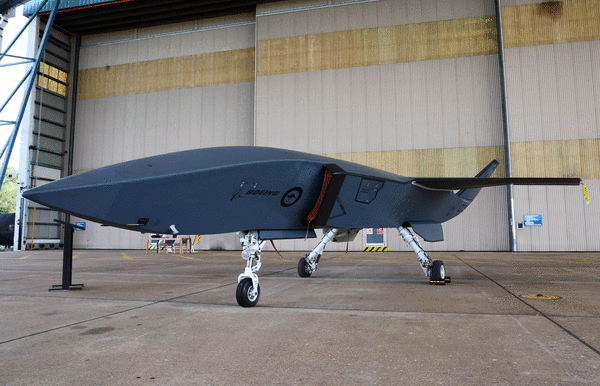
Last year, the government announced it would be spending billions of dollars to develop the “Ghost Shark” unmanned submarine, with the first units expected to enter service this year. It’s also working to deploy an unmanned fighter jet called “Ghost Bat,” with manufacturer Boeing Co. now looking to sell these to Germany as well as Australia.
Australia is upgrading its military capabilities to try to counter China’s expanding military footprint in the Asia-Pacific region. A major government report into the state of the nation’s forces in 2023 found the military was not “fit for purpose” in the current strategic environment.
©2026 Bloomberg L.P. Visit bloomberg.com. Distributed by Tribune Content Agency, LLC.






Comments