US, Iran pursue new talks as Tehran weighs pause in Hormuz shipments
Published in News & Features
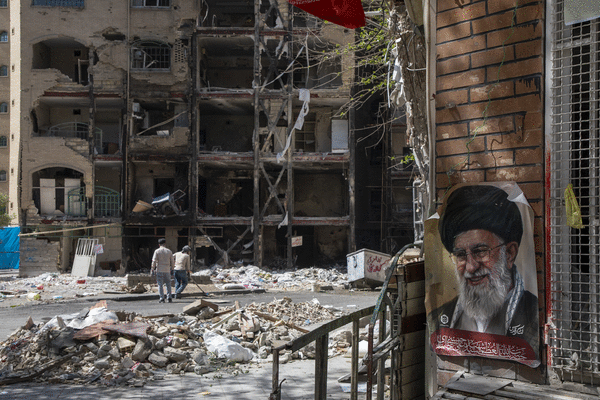
The U.S. and Iran are weighing a second round of peace negotiations, with Tehran considering a pause in shipments through the Strait of Hormuz to help ease the path toward further talks.
The objective is to hold more discussions before a truce announced April 7 expires next week, according to people familiar with the matter. One idea is to return to Pakistan, where an initial round took place last weekend, they said, though other venues have been discussed.
U.S. President Donald Trump is pressing ahead with a naval blockade of Hormuz to curb the Islamic Republic’s oil exports, as the battle for control of the strategic waterway intensifies. Iran may hold off testing the strength of the move in the short term, other people familiar with the matter said Tuesday, a move that could serve to ease tensions.
“We’ve been called this morning by the right people, the appropriate people, and they want to work a deal,” Trump said at the White House on Monday, hours after the U.S. Navy began implementing the blockade of Hormuz to prevent vessels transiting to and from Iranian ports and coastal areas.
Oil prices fell and stocks rose as expectations rose for an accord that could end the more than six-week war. Brent crude traded 1.3% lower at almost $98 a barrel on Tuesday. The S&P 500 futures edged higher after the U.S. benchmark erased its war-driven losses on Monday.
The latest push shows the two sides haven’t given up on diplomacy after their first round of direct talks in Pakistan failed to produce an agreement. Negotiating teams could return to Islamabad later this week, Reuters reported, citing sources it didn’t identify, while adding that no firm date has been set.
Switzerland said it’s ready to provide diplomatic support to efforts to end the conflict amid speculation discussions could take place in Geneva. The traditionally neutral country hosted talks about Iran’s nuclear program before the U.S. and Israel started bombing the Islamic Republic on Feb. 28.
The war has left thousands dead, damaged infrastructure and disrupted energy flows beyond the Persian Gulf, rattling markets and triggering fears of a global inflation crisis.
Surging prices of products such as jet fuel and gasoline are already squeezing consumers, the International Energy Agency said on Tuesday, pointing toward the first annual decline in global oil demand since 2020.
Fighting has largely paused since shortly after the April 7 truce was agreed. The exception is in Lebanon, where Israel is continuing its military campaign against Iran-backed Hezbollah.
Talks between Israel and Lebanon are due to take place in Washington on Tuesday in an effort to resolve the conflict, which has killed more than 2,000 people and displaced a million more, according to the Lebanese government.
Trump’s blockade of Hormuz represents a further test of the ceasefire’s durability. About a fifth of the world’s oil and liquefied natural gas was shipped through the strait before the start of the war on Feb. 28.
“We can’t let a country blackmail or extort the world,” Trump said, warning Iran against charging fees for vessels to transit the strait.
A ship under U.S. sanctions and linked to China is making its way through Hormuz, testing the blockade. The Rich Starry, a medium-range tanker, is trying for the second time in less than 24 hours to exit the waterway.
Saudi Arabia, a key U.S. partner, is pushing Washington to halt the blockade, fearing it could prompt Tehran to escalate tensions and disrupt other regional shipping routes, the Wall Street Journal reported, citing Arab officials it didn’t name.
Blocking shipments through the strait poses risks for China, which remains Iran’s largest oil customer and a key trade partner. Beijing has called for an immediate ceasefire, warning that a blockade threatens global trade.
Trump repeated claims that negotiations had failed due to Iran’s insistence on maintaining a nuclear program and stressed that any deal would require Tehran to abandon its atomic ambitions.
Vice President JD Vance, who led the U.S. delegation in the first round of talks, left the next step to Tehran.
“We did make some progress in the negotiation,” he said in a Monday interview on Fox News, adding that the talks helped clarify red lines. Asked about another meeting, Vance said the question was “best put to the Iranians, because the ball really is in their court.”
The New York Times, citing people familiar with the talks, reported that the U.S. proposed a 20-year suspension of nuclear activity, while Iran countered with a plan to halt it for as many as five years — similar to an offer made in February.
Iran blamed the collapse of talks over the weekend on the U.S., but left the door open for more negotiations. President Masoud Pezeshkian said Iran was prepared to continue discussions within a framework of international law, according to a statement on a government news portal.
Trump had warned shortly after the deadline passed that the U.S. would target Iranian ships using the same tactics it did against alleged drug-running boats in the Caribbean Sea in recent months.
“What we have not hit are their small number of, what they call, ‘fast attack ships,’ because we did not consider them much of a threat. Warning: If any of these ships come anywhere close to our BLOCKADE, they will be immediately ELIMINATED,” he said in a social-media post.
Still, Trump looked to downplay concerns around a potential additional shock to global energy markets, claiming in a separate post that 34 ships had transited the strait on Sunday. Bloomberg reported earlier that 19 vessels passed through the waterway in either direction on Sunday.
The U.S. has warned it will intercept or divert vessels leaving Iran, while allowing neutral ships to pass, though they may be searched for contraband. The blockade will be enforced against vessels entering or departing Iranian ports, U.S. Central Command said.
___
©2026 Bloomberg L.P. Visit bloomberg.com. Distributed by Tribune Content Agency, LLC.





Comments