Gardening
/Home & Leisure
/ArcaMax
The Greener View: Tree-Buying Tips
Tree-Buying Tips
Q: We are moving to a new state and don't know much about the trees that grow there. Can you give us some tips on what to look for? We have looked at some top 10 lists for trees to grow in the area, but they are confusing and list plants that we would never use in our current landscape.
A: Check with the town that you are ...Read more
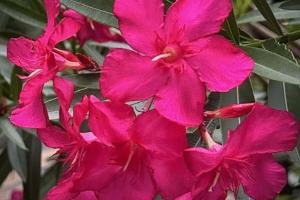
On Gardening: Austin Pretty Limits will have you two-stepping in the garden
If you’ve got sun and want a touch of the tropics and baskets full of blooms, then Austin Pretty Limits oleander is for you.
Let’s address your cold hardiness concerns first. Austin Pretty Limits is cold hardy from zones 8 and up. That’s a large swath of the country that can grow the shrub with ease. The rest of the country can grow ...Read more

On Gardening: Austin Pretty Limits will have you two-stepping in the garden
If you’ve got sun and want a touch of the tropics and baskets full of blooms, then Austin Pretty Limits oleander is for you.
Let’s address your cold hardiness concerns first. Austin Pretty Limits is cold hardy from zones 8 and up. That’s a large swath of the country that can grow the shrub with ease. The rest of the country can grow ...Read more
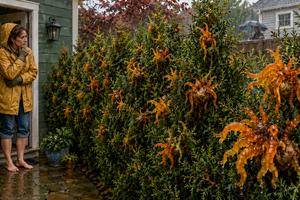
The Greener View: Orange Marmalade Octopi Invade Junipers
Q: There are a bunch of slimy, disgusting orange growths all over my junipers next to my patio. Please tell me they are not going to kill my junipers as they are shielding us from a bad neighbor's view.
A: There are more than 7,000 rust fungus species affecting plants. Many of the species are very host-specific and can't be transmitted to non-...Read more
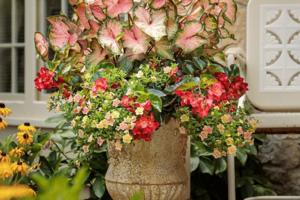
On Gardening: There is Magic in the garden this year
There is a new flower showing up at garden centers that is pure Magic. In fact, its official name is Superbells Magic Double Grapefruit. If you aren’t familiar with the name, it is a calibrachoa, a petunia relative. Double gives reference to flowers that, in this case, look like miniature roses.
Magic is your key descriptor telling you that ...Read more
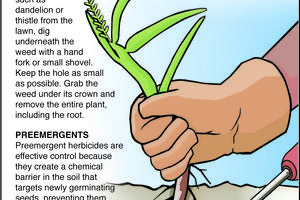
The Greener View: Can You Kill Dandelions Without Herbicides?
Q: I have four acres of lawn grass that has plenty of weeds. Is there a good way to kill dandelions without herbicides?
A: I am sorry to say there are no cost-effective, dandelion weed-killing products or techniques that aren't herbicides.
The following comments can be applied to just about any weed in the lawn or garden. First, keep the "good...Read more
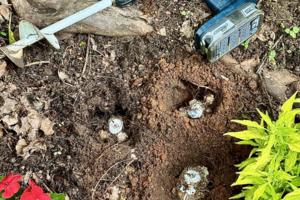
On Gardening: Heart to Heart Chinook named 'Caladium of the Year'
The Garden Guy surfed the web and stumbled across a photo you most likely have never seen. It featured three Proven Winners National Plants of the Year in a wonderful combination. The flowers were the Safari Dusk Jamesbrittenia or South African phlox, which is the "Annual of the Year." The combo also featured Supertunia Hoopla Vivid Orchid (the ...Read more
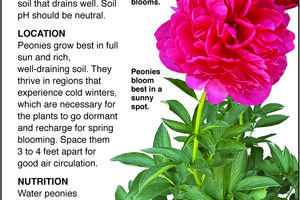
The Greener View: New Peonies Grandma Would Love
Q: I have some old peonies that flop over every spring, so I use a wire frame to keep them straight up. I saw some peonies in a landscape the other day that have very sturdy-looking stems that don't seem to need a frame. Any idea on what they are?
A: I don't know for sure what variety they are, but many newer hybrids on the market do have ...Read more
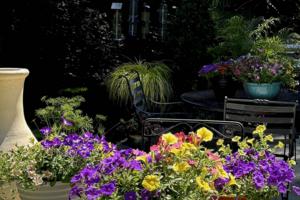
On Gardening: Flora, fauna and fragrance with Supertunia petunias
As gardeners we think about flora and fauna, but I would like to suggest one more thing. And that is fragrance. Fragrance is one of those memory makers. Memories for the children who grow up with garden fragrance and for spouses celebrating anniversaries. It’s not just the memories of the flowers' beauty, but also that Mom and Dad grew them ...Read more
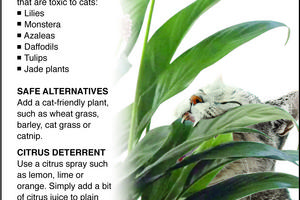
The Greener View: Lilies Can Kill Cats
Q: Don't know if an editor cut out the data, but how can Jeff Rugg do an article on Easter lilies and not mention that they are toxic to cats? Even eating one part of a flower will kill a cat. This is under-promulgated data!
A: You are right. The fact that Easter lilies and many other types of lilies are toxic to cats is not mentioned as often ...Read more
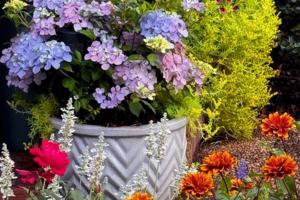
On Gardening: Your flower fest begins with Fairytrail Fresco
The garden season in Georgia has already been a blast and Fresco has been my favorite. You no doubt are pondering what Fresco is. Well,
Fresco is a new hydrangea making its debut this year. So, I better get the correct name front and center. It is Fairytrail Fresco Cascade Hydrangea.
So, the fact that The Garden Guy is telling you that I have ...Read more
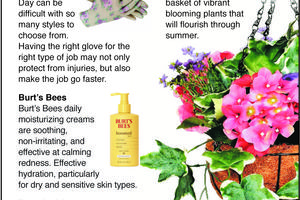
The Greener View: Mother's Day for Gardening Moms
If you have a mother or are married to a mom who is a gardener, this article is for you. If you are the gardening mom, then leave this article where someone you know can read it.
Mother's Day is May 10. If it is not yet May 10, then keep reading. If it is after May 10, you need more advice than this article can give you.
One thing that moms ...Read more
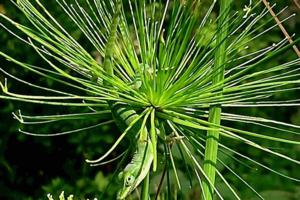
On Gardening: Queen Tut papyrus brings the best of art, architecture
In recent years, Queen Tut papyrus has become one of my favorite thriller plants for my mixed container designs. If you are wondering how I can consider a grass-like plant as a thriller while surrounded by colorful flowers, then I challenge you to grow it. You too will see that it is not only a thriller but the ultimate in art and architecture. ...Read more
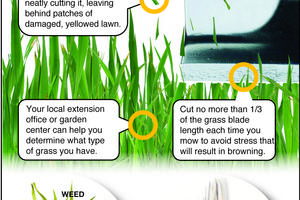
The Greener View: Proper Lawn Mowing Height
Q: We moved to another area of the country, and the lawn grass is totally different. The grass variety here would be a weed in my former lawn. It is also being mowed much lower than our old lawn, but the company doing the mowing says it is the proper height. Is it OK to mow a lawn higher?
Q: There are several reasons that lawn grasses should be...Read more
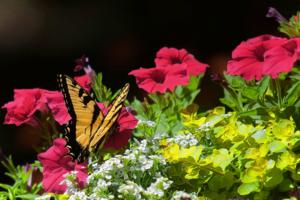
On Gardening: Supertunia Vista family gets another winner
Planting season has begun in earnest in the South and, as they say, it will be matriculating your way wherever you live. I visited a garden center this week and it took my breath away with the giant selection. There was the new Supertunia Vista Cool Jazz Petunia too.
With the addition of Cool Jazz, the Vista group has grown to seven and now ...Read more

Review: Zach Galifianakis' charming 'This Is a Gardening Show' gives you food for thought
"This Is a Gardening Show" is a gardening show hosted by Zach Galifianakis, who is not kidding when he says (and says again) that "the future is agrarian." (Or, more critically, "the only future is agrarian.") Premiering Wednesday, which not coincidentally is Earth Day, on Netflix, the six-part series spotlights the cultivation or gathering of ...Read more
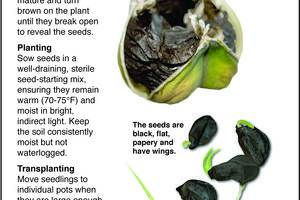
The Greener View: Amaryllis Seeds and Flooded Vegetable Gardens
Q: About a month ago, I harvested two seed pods from a beautiful waxed Amaryllis that was done flowering. The pods are in the refrigerator. One opened and the seeds are black, so maybe they are not good. I prepared a few flowerpots with expanded shale and potting soil.
What do I do with them? Please let me know the next steps. The original bulb...Read more
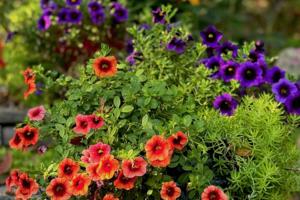
On Gardening: Celebrating the Year of the Sedum
The National Garden Bureau has chosen 2026 to be the Year of the Sedum. It is always the year of the sedum at The Garden Guy’s house. As I pulled photos for this column, I was stunned by the beauty, and in this case, it is Lemon Coral sedum.
I quickly came up with 30 photos, which is about 25 too many, but I’ll submit around 9 and see what ...Read more
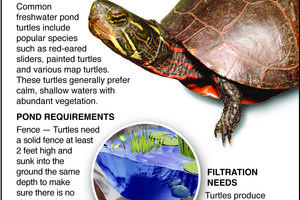
The Greener View: Pond Turtles and Dragonflies
Q: We have fish and plants in our backyard pond, but now we would like to add turtles and dragonflies. How do we get them in the pond, and are they safe to have?
A: Some wild animals will find their own way into the pond, and others you have to add. Some wild animals are not invited, such as alligators in the South and moose or otters in the ...Read more
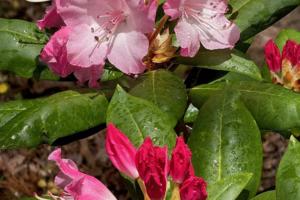
On Gardening: Dandy Man Color Wheel is a garden dream come true
It is indeed a Dandy Man, but let me explain.
Tim Wood, known by many as "The Plant Hunter," made some comments on LinkedIn. It was regarding the Dandy Man Color Wheel rhododendron. He said it was a rhododendron hyperythrum hybrid. Why is that important? It gives the plant disease resistance, particularly to rhizoctonia. It also gives it ...Read more
Inside Gardening
Related Channels

America's Test Kitchen
By America's Test Kitchen

ArcaMax Chef
By ArcaMax Chef

Ask The Builder
By Tim Carter

Ask The Vet
By Dr. Lee Pickett

Celebrity Travel
By Jae-Ha Kim

Dear Monty
By Richard Montgomery

Do It Yourself Or Not
By Gene and Katie Hamilton

Eric's Autos
By Eric Peters

Everyday Cheapskate
By Mary Hunt

Focus on the Family
By Jim Daly

Georgia Garvey
By Georgia Garvey

Here's How
By

Jeff Rugg
By Jeff Rugg

Lenore Skenazy
By Lenore Skenazy

Living Space
By Kathryn Weber

My Pet World
By Cathy M. Rosenthal

Real Estate Matters
By Ilyce R. Glink and Samuel J. Tamkin

Recipes by Zola
By Zola Gorgon

Rick Steves' Europe
By Rick Steves' Europe

Taking The Kids
By Eileen Ogintz

Travel & Adventure
By Various authors

Travel Troubleshooter
By Christopher Elliott
Comics