Automotive
/Home & Leisure
/ArcaMax

UAW, GM axle supplier Dauch remain stuck in negotiations amid strike
Negotiators for striking United Auto Workers members and automotive supplier Dauch Corp. remain at odds in contract talks, the union said Friday.
"Welcome to another day of bargaining with a company that doesn't listen for s***," said Josh Jager, bargaining chair for UAW Local 2093, in a video posted to social media.
He added: "We will ...Read more

Will high gas prices change the auto industry again?
WASHINGTON — Gas prices have remained high due to the U.S.-Israeli war with Iran. But are they high enough to alter the business of the American auto industry?
Previous oil shocks driven by conflict in the Middle East have contributed to watershed moments in U.S. automotive history, first setting the table for fuel-efficient foreign ...Read more
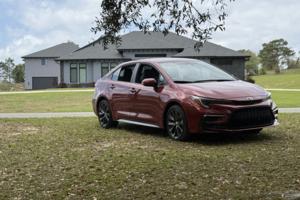
Auto review: Toyota Corolla is the commuting sedan for 2026
As automakers vehicle lineups continue to swell and diversify, a simple fact remains: Consumers will always need commuter vehicles.
The sedan market continues to diminish in 2026, but Toyota seems determined to claim the biggest piece of the pie.
This week, we present the 2026 Corolla SE, Toyota’s entry-level, stripped-down commuter fit for ...Read more
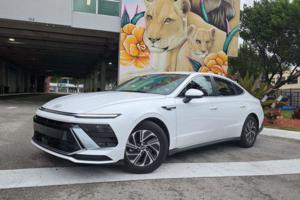
Auto review: Affordably chic, Honda Civic vs. Hyundai Sonata
MIAMI — Sleek, roomy and high-tech, today’s mainstream sedans are proof that affordability still exists in a U.S. market where average vehicle purchases have soared over $50K.
Take the terrific $30,945 Hyundai Sonata Blue Hybrid and $27,890 Honda Civic Sport I just flogged around Miami and Detroit.
Who needs a luxury badge?
Midsize Sonata...Read more
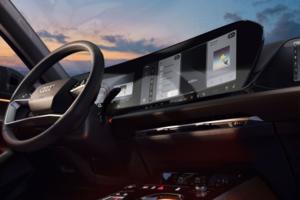
Auto review: The 2026 Audi A5 is a sensible sedan that earns admiration without a hint of tastelessness
The 2026 Audi A5 is what happens when a nation famous for precision engineering, orderly recycling, and incredible punctuality decides to build a car for people who enjoy driving, but don’t feel the need to announce it with a wing the size of Nebraska. It’s not loud or flamboyant; it doesn't pretend to be a rolling nightclub. It doesn’t ...Read more
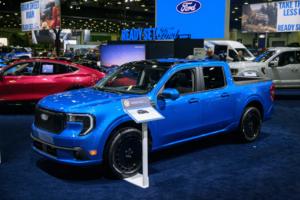
Ford recall tells owners not to drive certain Bronco Sports, Mavericks
Ford Motor Co. is advising owners of certain Bronco Sport SUVs and Maverick pickup trucks not to drive their vehicle over the potential of a incorrectly installed part that could result in a driver losing control of steering.
The recall is on 2022-2026 Bronco Sports and Mavericks, affecting 4,653 vehicles. Dealers are being instructed to ...Read more

Dauch CFO cites 'active negotiation'; UAW says no meeting since strike start
DETROIT — The negotiation process with the United Auto Workers over its strike at the auto components plant in Three Rivers run by the Detroit-based company formerly known as American Axle is "very active," its chief financial officer said Wednesday.
But the Detroit-based union says the parties haven't returned to the bargaining table since ...Read more
China catching up to US on autonomous driving tech, experts warn
Market conditions in China, regulatory changes there and its brands' speedy vehicle development threaten to put the United States behind in developing autonomous driving technologies, experts say.
Direct comparisons are rare, given the lack of Chinese vehicles in the United States and data-sharing restrictions between the two nations. But that'...Read more
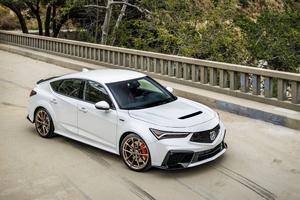
Eric's Autos: 2026 Acura Integra
What is the difference between an Acura Integra and a Honda Civic? More finely, is there any difference between an Acura Integra and a Honda Civic -- other than the price?
What It Is
The Integra is a sporty small sedan sold under the Acura label that is closely related to the less expensive Honda Civic. There are numerous differences that go ...Read more
UAW strike hits GM truck supplier American Axle
Nearly 1,000 United Auto Workers-represented employees of American Axle/Dauch Corp. went on strike Monday at the supplier's Three Rivers, Michigan, factory after the union and company failed to reach a new contract deal.
Members of UAW Local 2093 hit the picket line just after midnight with more workers scheduled to join later Monday at the ...Read more
Ford rolls out service marketing campaign as US vehicle age climbs
Ford Motor Co. for the first times in years is launching a comprehensive marketing campaign for parts and service as the average age of a vehicle on the road nears 13 years, and the automaker seeks to increase revenue share from the aftermarket.
The "Real Parts. Real Pros. Real Easy." promotion launched Monday on streaming TV, social media and ...Read more
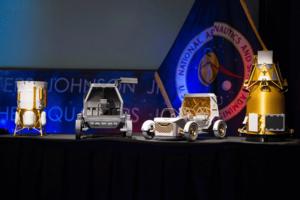
General Motors to make batteries for NASA's new manned moon rover
General Motors Co. will help develop batteries for new manned rovers to be driven by NASA astronauts on the moon.
NASA awarded private space startup Lunar Outpost $220 million on Tuesday to build the Pegasus vehicle with help from GM, Goodyear Tire & Rubber Co. and tech company Leidos.
NASA plans for astronauts to drive the rover on the moon ...Read more

General Motors' Tech Center still future-focused after 70 years
Seventy years after the opening of the General Motors Technical Center in Metro Detroit, company President Mark Reuss says GM's "nerve center" plays an even greater role at the automaker now.
Roughly 25,000 people are currently employed there — the most of any white-collar GM site despite a series of layoffs — as part of an intentional ...Read more
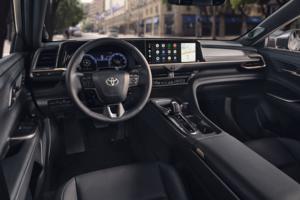
Auto review: Impossible to ignore, hard to explain: the 2026 Toyota Crown
If the 2026 Toyota Crown sedan proves anything, it’s that when it comes to design, Toyota buyers will tolerate absolutely anything as long as it starts every morning and doesn’t frighten their accountant. The old Avalon may have been dull, but at least it looked like a proper flagship sedan. Its replacement, the Crown, looks like a design ...Read more
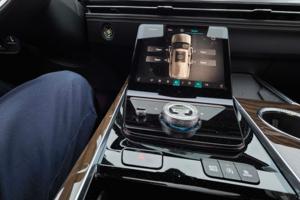
Auto review: In the Cadillac Escalade, there's always a button for that
STERLING HEIGHTS, Michigan — With 420 horsepower and a satisfying roar, the 6.2-liter pushrod V-8 engine under the hood of my 2026 Cadillac Escalade Platinum Sport tester would usually be my obsession.
But eight is a trivial number in the Platinum Sport model.
What has my attention in the Platinum Sport are the dozens of buttons that operate...Read more
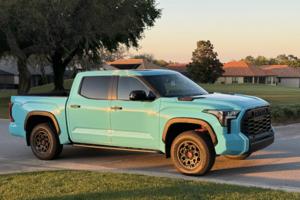
Auto review: 2026 Toyota Tundra TRD Pro conquers … everything
Wrapped in Wave Maker blue paint, the redesigned 2026 Toyota Tundra is here in Grasso’s Garage.
Our weeklong tester, a 2026 Hybrid TRD Pro 4×4, was terrific. We noticed excellent comfort, great exterior appeal, and tons of utility — just a few reasons the 2026 Tundra satisfies consumers.
Powering our 2026 Tundra TRD-Pro tester was an i-...Read more
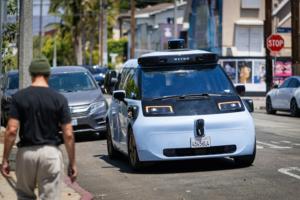
Waymo launches services with cheaper robotaxis in Los Angeles
Waymo is rolling out a new driverless taxi to help the company expand into more cities and tackle tougher driving conditions, including snowy roads, the company announced Wednesday.
The new vehicle, dubbed the Ojai, will begin serving select customers in Los Angeles, San Francisco and Phoenix in the coming weeks. Rides will be free of charge as...Read more
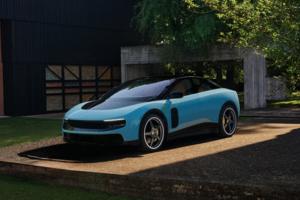
Angry Ferrari fans say the Italian company's new EV is too Californian
Ferrari’s first-ever fully electric vehicle triggered some fans who said it looks more like an iPhone than an Italian supercar.
The $640,000 Ferrari Luce, which was unveiled on Wednesday, looks like a distant relative of many Apple products. It was built with the help of Jony Ive, the person who designed the look and feel of the Cupertino ...Read more
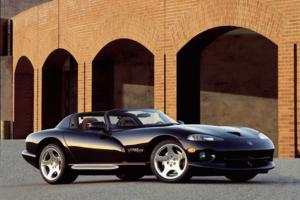
A Dodge Viper successor? We got a peek at the new Copperhead sports car
DETROIT -- For about 25 years, the Dodge Viper stood at the pinnacle of the brand's lineup as a ridiculous V-10-powered muscle car fused with sleek sports car styling.
Now, the brand is planning to bring back something similar with a "hyper muscle car" called the Copperhead SRT. Stellantis NV executives briefly showed a mock-up of the car to ...Read more
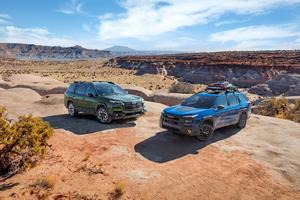
Eric's Autos: 2026 Subaru Outback
Subaru has really rolled the dice with the 2026 Outback. For one, it no longer looks like an Outback -- because it no longer looks like a wagon. It has been restyled to look more like a crossover SUV.
It's also a lot more expensive.
The Outback used to be one of Subaru's more affordable models, with a base price under $30,000.
...Read more
Inside Automotive
Popular Stories
- Auto review: The 2026 Audi A5 is a sensible sedan that earns admiration without a hint of tastelessness
- Auto review: Toyota Corolla is the commuting sedan for 2026
- Will high gas prices change the auto industry again?
- Auto review: Affordably chic, Honda Civic vs. Hyundai Sonata
- UAW, GM axle supplier Dauch remain stuck in negotiations amid strike
Related Channels

America's Test Kitchen
By America's Test Kitchen

ArcaMax Chef
By ArcaMax Chef

Ask The Builder
By Tim Carter

Ask The Vet
By Dr. Lee Pickett

Celebrity Travel
By Jae-Ha Kim

Dear Monty
By Richard Montgomery

Do It Yourself Or Not
By Gene and Katie Hamilton

Eric's Autos
By Eric Peters

Everyday Cheapskate
By Mary Hunt

Focus on the Family
By Jim Daly

Georgia Garvey
By Georgia Garvey

Here's How
By

Jeff Rugg
By Jeff Rugg

Lenore Skenazy
By Lenore Skenazy

Living Space
By Kathryn Weber

My Pet World
By Cathy M. Rosenthal

Real Estate Matters
By Ilyce R. Glink and Samuel J. Tamkin

Recipes by Zola
By Zola Gorgon

Rick Steves' Europe
By Rick Steves' Europe

Taking The Kids
By Eileen Ogintz

Travel & Adventure
By Various authors

Travel Troubleshooter
By Christopher Elliott
Comics