Sports
/ArcaMax
Best times for anglers
(Table for Oct. 25-Nov. 8)
This table lists top fishing times and days for the coming weeks. For best results, begin fishing one hour before and continue one hour after the times given. Times apply to all time zones.
———
Sunday…..................11:25 p.m.........……….………....................................11:45 a.m.
...Read more
Gavin Feek: How hikers and hunters can coexist on Washington public lands this season
TACOMA, Wash. — In 2008, Concrete, Wash., resident Tyler Kales, 14, was hunting bear with his brother in rural Skagit County, north of Seattle. One hundred-twenty yards away, Pamela Almli, a 54-year-old woman from Oso, Wash., was hiking nearby with a friend on the Sauk Mountain Trail. Kales shot her in the head while she was leaning over to ...Read more
How nearly 1,000 public comments sank the DNR's proposed change to duck hunting rules
MINNEAPOLIS — Earlier this month, the DNR abandoned plans for a change to the state’s duck hunting rule after a debate highlighted a philosophical split in the duck hunting community.
On one side are those who want to make duck hunting, or at least its rules, simpler.
On the other: those who say the proposal would have dumbed down their ...Read more
Dennis Anderson: Conservation council would help save what Minnesotans love most
MINNEAPOLIS — Brian Myres of Clear Lake is a thinker.
So are Dave Zentner of Duluth, Matthew Smith of Willmar and Greg Kvale of Baxter.
They’re also cabin owners, some of them; walleye fishermen, all of them; and hikers, campers, hunters, paddlers and boaters.
They’re active, also, in Ducks Unlimited, the Izaak Walton League, ...Read more
Minnesota's youth deer hunting season is 7 years old. Do people like it?
MINNEAPOLIS — For perhaps 20,000 Minnesota families, the question of what do with the kids for MEA weekend has an answer: Take them deer hunting.
Since 2019, the four-day weekend in October has coincided with a statewide deer hunting season for hunters ages 10-17. This year, those dates are Thursday, Oct. 15, through Sunday, Oct. 18.
It ...Read more
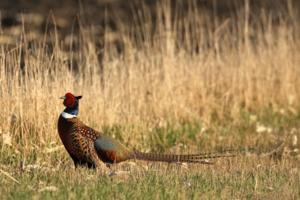
Dennis Anderson: Late to hunting, she's leading a reborn pheasant group
MINNEAPOLIS — With slightly more than 400 residents, Chokio is a farm-country village some travelers might overlook while gallivanting in west-central Minnesota.
Credit bygone Dakota tribes with not making the same mistake. In their language, Chokio means middle, or halfway, and the tiny burg is that: midway between the towns of Morris and ...Read more
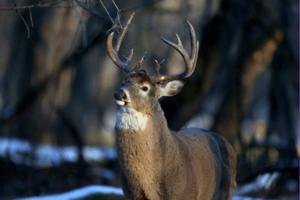
Minnesota bowhunters are taking deer at nearly twice last year's pace
MINNEAPOLIS — Minnesota archery hunters are killing deer at nearly twice the pace of 2025, according to early harvest data, raising the prospect of another record-breaking year.
As of Monday, 7,948 deer had been killed since the archery season began Sept. 19. That’s 88% more than the 4,232 deer killed at this point in the 2025 season, and ...Read more
Best times for anglers
(Table for Oct. 18-Nov. 1)
This table lists top fishing times and days for the coming weeks. For best results, begin fishing one hour before and continue one hour after the times given. Times apply to all time zones.
———
Sunday…..................6:05 p.m...........……….............................................6:30 a.m.
Monday...Read more
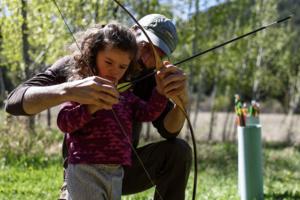
Gregory Scruggs: Camp in rural Washington aims to change perception of what it means to hunt
SEATTLE — The goats come closer, like they are expecting to be fed. Instead Bruce McGlenn shoos the white-furred Kikos to the other end of a fenced enclosure. Seemingly disappointed, the quintet returns to munching weeds, oblivious to the hunting rifle slung over McGlenn’s shoulder.
Moments before, the air had been filled with chatter as ...Read more
Best times for anglers
(Table for Oct. 11-Oct. 25)
This table lists top fishing times and days for the coming weeks. For best results, begin fishing one hour before and continue one hour after the times given. Times apply to all time zones.
———
Sunday……..............12:20 p.m................…………….................................12:45 a.m.
...Read more
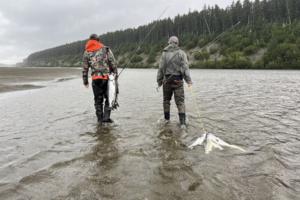
Dennis Anderson: In rainy Alaska, anglers gather where rivers and salmon run wild
SOUTHEAST ALASKA — Peering into low-hanging clouds for an airplane to land on the sandbar where we were holed up, I listened intently for a motor, but heard none.
The tide was coming in, and the sandbar was giving way to the rising river, whose width and depth expanded by the minute.
The trick in the fading light of this late August ...Read more
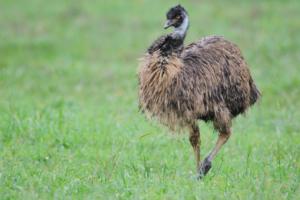
A Minnesota bird hunter and his dog flushed ... an emu?
MINNEAPOLIS — A Minnesota hunter and his dog got a lot more bird than they were seeking when they came across an emu in the woods recently.
The story got more bizarre — and even tense at times — when the bird wouldn’t stop following the man and even pecked at his shotgun.
In the meantime, the emu, apparently one of two captive birds to...Read more
Dennis Anderson: On the duck opener, some Minnesota hunters see ducks, others only rain
MINNEAPOLIS — Rain poured on Saturday morning in the backwaters of the Minnesota River near Sacred Heart. Teal, mallard and wood duck sightings were spotty on Minnesota’s first day of duck hunting.
But Anthony Thompson, 16, relished his initial outing in a duck blind, and waterfowling gained a new convert.
“Honestly, I could stay out ...Read more
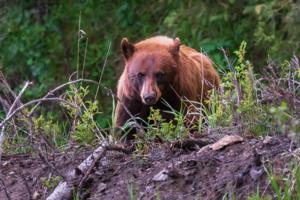
Pooch gives life trying to save California couple during bear attack
LOS ANGELES — A heroic French bulldog sacrificed itself to save its owners during a bear attack in Northern California earlier this month.
The couple were severely injured, but survived the Sept. 19 attack. However, their beloved dog Cassie was injured and died two days later.
The couple — identified as Trinity County residents Mallory and...Read more
Rifle or shotgun? Minnesota deer hunters face a new map this fall.
MINNEAPOLIS — For decades, when it came to shooting a deer in Minnesota, your gun of choice — shotgun or rifle — was determined by where you hunted.
A squiggly line slanting across the state’s midsection demarcated a “shotgun-only” zone to the south and west, where muzzleloaders and handguns were also allowed but rifles were banned,...Read more
Best times for anglers
(Table for Oct. 4-Oct. 18)
This table lists top fishing times and days for the coming weeks. For best results, begin fishing one hour before and continue one hour after the times given. Times apply to all time zones.
———
Sunday…................6:40 a.m.........……….……….......................................7:10 p.m.
Monday...Read more
How common is chronic wasting disease in Minnesota deer? The DNR aims to find out.
MINNEAPOLIS — For the first time since Minnesota found chronic wasting disease in one of its wild deer in 2010, the state is changing how it monitors the fatal neurological condition.
The new plan by the Department of Natural Resources effectively started last weekend, the beginning of the archery hunting season.
The shift comes as Minnesota...Read more
Retired Army general files federal lawsuit against Virginia sheriff in hunting dispute
NORFOLK, Va. — A retired general is suing the Gloucester (Va.) County sheriff in federal court alleging that by allowing hunters and their dogs to enter his property without penalty despite “no trespassing” signage, the sheriff is violating the Fifth and 14th amendments.
The complaint filed this month in the Eastern District of Virginia ...Read more
Dennis Anderson: Bow hunting for deer begins, but with fear that a tradition is being lost
MINNEAPOLIS — When Nick Amunrud finally climbs into a tree this fall with his compound bow, his family’s soybeans and corn will be harvested, and his field work will be done for another season.
That will be more than a month after this weekend’s opening of Minnesota’s archery season for deer. But that’s OK. The peak of the whitetail ...Read more
Best times for anglers
(Table for Sept. 27-Oct. 11)
This table lists top fishing times and days for the coming weeks. For best results, begin fishing one hour before and continue one hour after the times given. Times apply to all time zones.
———
Sunday………..........12:10 a.m.......…...…….……......................................12:30 p.m.
...Read more
Popular Stories
- Gavin Feek: How hikers and hunters can coexist on Washington public lands this season
- Dennis Anderson: Conservation council would help save what Minnesotans love most
- How nearly 1,000 public comments sank the DNR's proposed change to duck hunting rules
- Best times for anglers
- A Minnesota bird hunter and his dog flushed ... an emu?
Comics