Dennis Anderson: In rainy Alaska, anglers gather where rivers and salmon run wild
Published in Outdoors
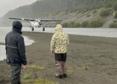
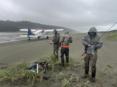
SOUTHEAST ALASKA — Peering into low-hanging clouds for an airplane to land on the sandbar where we were holed up, I listened intently for a motor, but heard none.
The tide was coming in, and the sandbar was giving way to the rising river, whose width and depth expanded by the minute.
The trick in the fading light of this late August afternoon would be for the plane to arrive and take off with us before the sandbar disappeared completely beneath the river’s braided currents.
This was a do-it-yourself trip for silver salmon, or cohos, as they’re also called. My sons, Trevor, 33, and Cole, 31, were along, as was Max Kelley, 31, a buddy of theirs from Stillwater.
The four of us had been dropped off that morning alongside one of the many wild rivers and streams that tumble from the glaciated St. Elias Mountains before spilling through countless miles of western hemlock and Sitka spruce and emptying into the Gulf of Alaska.
In Yakutat, a small village with a population that rises with each pulse of anadromous fish breaching the region’s rivers to spawn, we rented a compact cabin whose online advertisement featured a mother grizzly bear and a cub wandering in its yard.
A lure for ecotourists, perhaps, but less so for the four of us, who would end each day smelling like fish.
Doing so, we would follow in the footsteps of the Eyak, the Athabaskans, the Ahtna, the Tutchone and most recently the Tlingit, the region’s dominant Indigenous people.
Trevor, Cole and Max first fly fished with me as grade schoolers, when they’d cast Pheasant Tails and other nymphs, and Hendricksons and other dries, into the Whitewater and the South Branch of the Root and other Southeast Minnesota rivers.
In addition to brown and rainbow trout, these outings featured Big Macs purchased through drive-up windows and Peanut Buster Parfaits for dessert.
Afterward, the boys slept, while I drove home.
Now the tables were turned.
Max is a chemical engineer, Cole is a lawyer and Trevor owns an outfitting business. Each attended college in Montana and each worked as a fly-fishing guide while in school.
Each also casts tight loops and can slog up and down a river faster than I can.
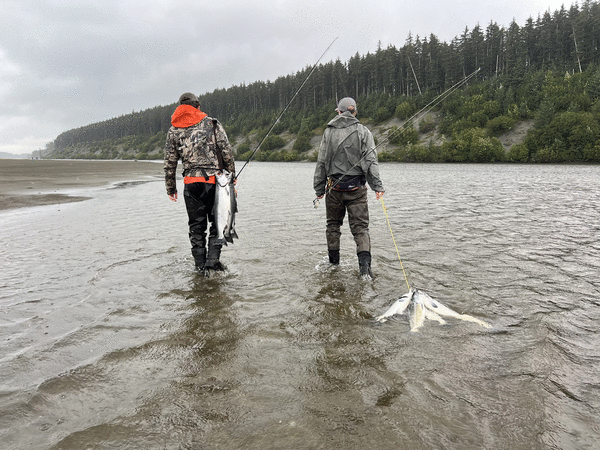
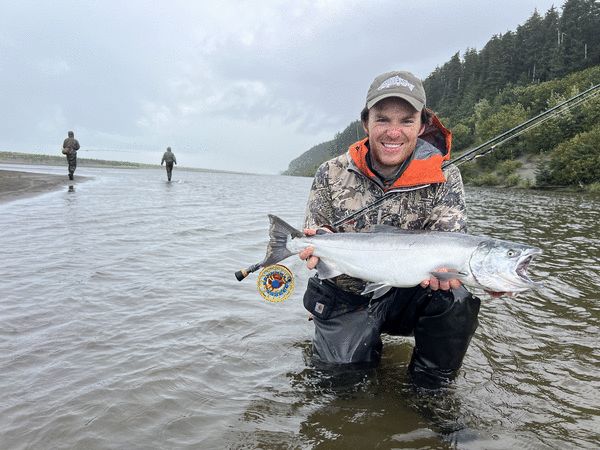
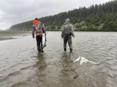
On this day, we sent hundreds of flies airborne to cohos that sometimes rose and splashed as they migrated upstream to start new lives, while ending theirs.
When we hooked up, our lines tightened as the fish scurried toward faster water, bending our rods nearly in half.
Bulked up from years of plumbing the world’s coldest oceans, some of the cohos took our reels into their backings. Others broke free, head-tossing our flies and coiling our slackened lines on the river’s surface.
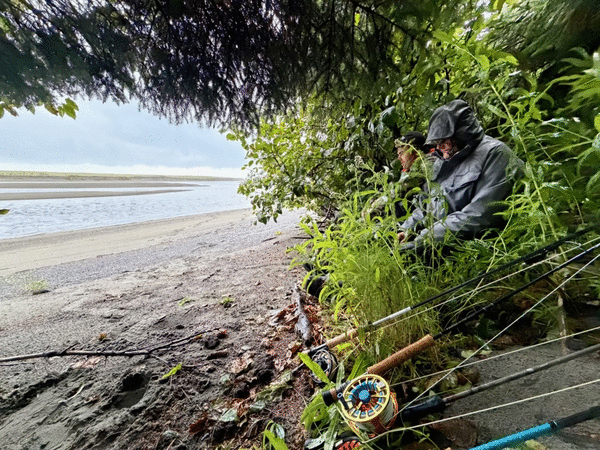
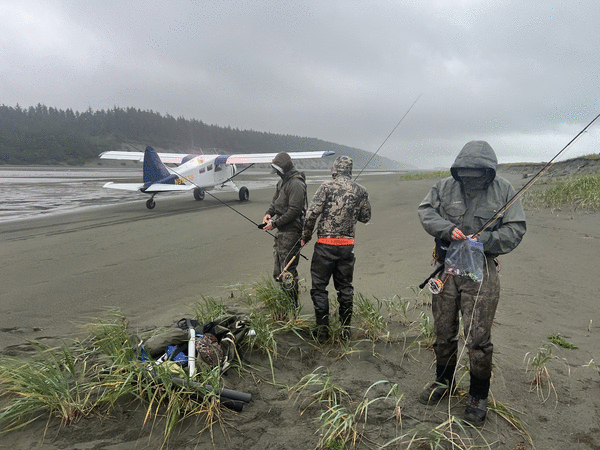
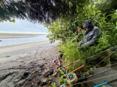
At midday, we huddled beneath long tree limbs, eating sandwiches and drinking coffee while dodging the incessant rain as best we could.
Now it was day’s end, and we waited on the disappearing sandbar for the flight back to Yakutat.
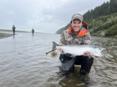
Already we had cased our 9-weight fly rods and piled our 16 cohos, four apiece, into two large duffels.
Weighing between 8 and 11 pounds each, the fish were as beautiful as they were mysterious. Chrome colored, they were returning to their birth rivers, answering a primeval call upon which everything in Southeast Alaska depends.
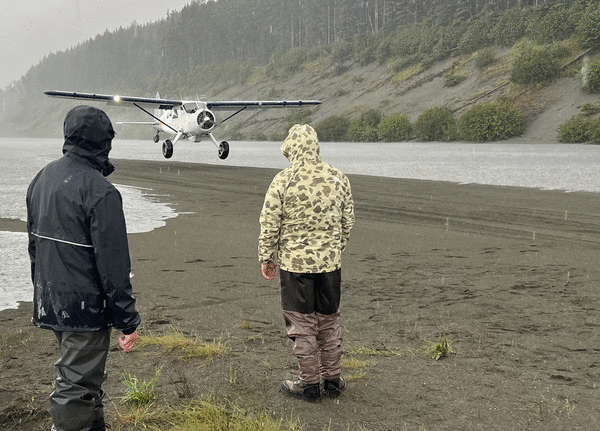
When the plane — a 1950s-era de Havilland Beaver outfitted with balloon tires — finally lands, one duffel of fish will be stuffed into its belly hold. The other will be bunched beneath the feet of anglers squeezed between the plane’s narrow fuselage.
Had we the luxury of a campfire and a shot of tanglefoot, time would have passed more quickly while we waited.
Instead, our heads buried in our hooded jackets, and our reddened hands warming in our pockets, we appeared like hitchhikers in a rainforest.
Which in a way we were.
“Here he comes,” Cole said finally, nodding toward a faint light descending toward us in the distance.
Landing, the pilot turned the plane quickly in our direction, killed the engine and jumped out.
“Have a good day?” he asked.
The answer lay in our hefty duffels.
“Yes, great,” Max said.
There was a hitch.
A soaked but otherwise congenial fellow left over from another group joined us when the plane landed, and there weren’t enough seats for everyone.
Indicating he would never again spend a day in such a downpour, fish or no fish, the guy wanted out.
“I’m loaded pretty heavy already,’’ the pilot said. “I can’t take everyone. There’ll be another plane in a while.’’
“I’ll stay behind,’’ I said.
Our same bunch, minus Cole, who was still in law school at the time, hunted caribou in northern Alaska a few years back, halfway between Fairbanks and the Brooks Range.
This was also a do-it-yourself affair, and along with our tents, sleeping bags, food, rifles, ammunition and other gear, we were dropped off one-by-one by a pilot flying a Super Cub.
The only thing my wife liked about this adventure, in addition to the caribou meat we brought home, was that we wouldn’t all be in the same bush plane at the same time.
So we couldn’t all crash at the same time.
“Bring everyone home, or ...” she said.
“Don’t come home?”
“Something like that.”
Now, if only by happenstance, Trevor, Cole and Max were in one plane, and I would be in another — a good thing, apparently.
Taxiing to the end of the sandbar, the boys’ pilot turned the plane into the wind.
The engine howled as he used up 1,000 feet of sand before rotating the plane’s nose into the air and fading into the distance.
My getaway plane landed on a dramatically shortened sandbar.
Five Ohio anglers who had fished a different stretch of the river would be on this flight with me, as would their fish.
Together with whatever fuel the plane carried, and the pilot and me, the plane would be near its maximum payload.
“We’ve got to hurry,” the pilot said. We loaded quickly.
Buying as much runway as he could, the pilot spun the plane’s tail wheel into the river as he pointed us into the wind. Then he gunned it, shooting us ahead.
But a couple of hundred feet down the sandbar, as he lifted the tail wheel to reduce the plane’s drag, a crosswind blew us into the river.
Backing off the engine immediately, the pilot just as quickly powered us through the water and back onto the sandbar.
Racing downwind, this time he immersed all three of the plane’s wheels in the river as he turned windward, gaining still more runway. Then he let it rip, arrowing us toward 60 miles an hour, the plane’s liftoff speed.
Just as the sandbar gave way to the rising tide, we were in the air.
Banking the plane toward Yakutat, the pilot smiled, kind of.
Towering in the distance were the snow-capped St. Elias Mountains, while below wove rivers to which coho and other Pacific salmon returned every fall.
The Tlingit depended on these fish, as did, before them, the Eyak, the Athabaskans, the Ahtna and the Tutchone.
In ways similar and different, we did, too.
____
©2026 The Minnesota Star Tribune. Visit startribune.com. Distributed by Tribune Content Agency, LLC






Comments