Gavin Feek: How hikers and hunters can coexist on Washington public lands this season
Published in Outdoors
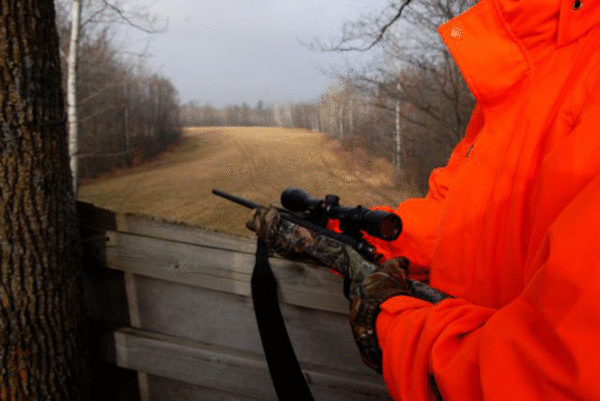
TACOMA, Wash. — In 2008, Concrete, Wash., resident Tyler Kales, 14, was hunting bear with his brother in rural Skagit County, north of Seattle. One hundred-twenty yards away, Pamela Almli, a 54-year-old woman from Oso, Wash., was hiking nearby with a friend on the Sauk Mountain Trail. Kales shot her in the head while she was leaning over to stow a jacket in her backpack.
It was foggy that day, and Kales said later he mistook her for a bear. Almli died instantly.
Kales was found guilty of second-degree manslaughter. He spent 30 days in juvenile detention and completed 120 hours of community service, including four hours of hunter safety education.
“You ignored and broke all the rules,” Almli’s sister Gail Blacker said at the sentencing. “You have special responsibilities when you handle a gun, and you didn’t follow through.”
This incident was 18 years ago, but hunting accidents happen in Washington State nearly every year.
So, what can hikers do to protect themselves during hunting season? We caught up with representatives from the Washington Department of Fish and Wildlife (WDFW) and the Department of Natural Resources (DNR) to find out.
Hunting’s most active time of year
As fall progresses, so does hunting in the Pacific Northwest. Hikers and hunters will coexist on Washington’s public lands more so than at any other time of year.
Bowhunting for deer started in September, and waterfowl hunting did, too. Hunting starts for modern firearm folks in Pierce County this weekend and runs through the middle of November. After that, you’ll see folks hunting pheasants, geese, ducks and quail through January.
You can find all seasons, dates and regulations on the Washington Department of Fish and Wildlife website.
Armed hunters on public lands carry the risk of accidents. The WDFW categorizes hunting accidents into three categories: hunter to self (when a firearm accidentally goes off and the hunter is hit), hunter to hunter (when hunters fire at a target and accidentally shoot each other), and hunter to public (when an animal is missed and the bullet continues and hits a bystander).
According to the WDFW, hunting accidents in Washington state are extremely rare, and most hunting accidents are non-fatal.
“There’s usually three to four hunting incidents in Washington throughout the year,” Kristopher Thorson, WDFW hunter education specialist, told the News Tribune recently. “I’d rather see zero, but three is better than 15.”
In order to obtain a Washington State Hunting License, hopeful hunters born after Jan. 1, 1972 must complete a state-approved hunter education course. Thorson says this has been the case for adults and children alike in Washington State since Jan. 1, 1995.
“If we look back to before hunter education was required in the U.S., there were hundreds upon hundreds of incidents,” Thorson said.
Thorson says most hunting incidents reported today are hunter-to-hunter or hunter-to-self. They rarely involve a hunter and the public, but that does happen. A couple of years ago, a hunter missed an elk and his bullet crossed over a field, entered a private home, and lodged in a homeowner’s knee.
“That was exceedingly rare,” Thorson emphasized. “In one of the Star Trek movies, Scotty said something about how beaming onto the Enterprise was like trying to hit a bullet with a smaller bullet while riding on a horse blindfolded. That was like that.”
But it does happen.
Hunting areas in Washington are split into Game Management Units (GMUs), which include public lands with many hiking trails and campgrounds. Pierce County, for example, has three different GMUs that overlap. How to stay safe this season
Thorson says hunter-education classes make safety for all paramount.
“When we’re teaching hunter education, we teach hunters to identify their target with binoculars before the scope,” he says. “Really make sure you know your target, what’s in front of your target and what’s beyond your target.”
Hunters must also wear “hunter orange” during modern-firearm season when it overlaps deer or elk, and during upland bird seasons like pheasant and quail.
“Because the birds are flying every which way,” he says. “Hunters have to know where people are.”
When asked about non-hunters, just minding their own business, possibly camping or hiking near hunters on public land, Thorson relayed another story.
“A couple of years ago, I was hunting at one of the release sites in Thurston County, and we had a family walk through without hunter orange on. And there were 150 hunters out there hunting pheasants. Orange is the thing that stops us in our tracks and tells us, OK, that’s a person.”
Hikers aren’t required to wear orange while hiking, but Thorson said it’s not a bad idea if you’re hiking in game-populated places this time of year.
“Bright colors are the tip of the iceberg,” Courtney James, communications manager for the Washington State Department of Natural Resources, told The News Tribune on Tuesday.
“I think it’s also important to make noise. If you worry that hunters are around, start talking to your dog or your buddy louder. Just make your presence known. If you see other people out there, give them a wave.”
Being loud on the trail might seem counterintuitive when you're escaping the city for nature. Still, it’s good practice when hiking in bear country, or mountain biking on trails popular with hikers (many cyclists attach bells to their bikes). During hunting season, hunters are just another factor to consider when enjoying public lands.
“You may think the trail you're headed for is just a recreation trail and there might not be many folks out there, but knowing if there’s a hunting season can prepare you to be loud, wear brighter colors, and be more aware of your surroundings,” James continued.
James emphasized that hikers don’t always have to wear bright colors and walk loudly down a trail. But she thinks hikers should know when and where Washington’s hunting seasons are so they can decide whether to dress appropriately or avoid certain areas entirely.
“More information is always better,” she said. Washington state’s fall hunting seasons and maps are available on the WDFW website.
Of course, there’s no exact “here’s how you will be safe” when a person steps onto public lands, or even out their front door, James says. Whether it’s cliffs, waterfalls, wild animals or hunters, you need to consider all of it before heading into the backcountry. “It’s up to everyone to be informed. It’s up to the hunters, and it’s up to the hikers.”
Hunting is not allowed in Washington's national or state parks. So, if you’d like to avoid hunters altogether this time of year, those are good places to go.
Thorson no longer hunts because his family doesn’t eat wild game, and he won’t shoot an animal unless it will be consumed. While he doesn’t use public lands much these days, plenty of other WDFW staff hunt, hike, camp, and fish year-round, and he says they like seeing all kinds of outdoor people out there.
“Camping, hiking and hunting are synonymous in my opinion,” Thorson says. “We as hunters and anglers understand that everyone wants to enjoy the animals. Public lands are a resource that’s there for everybody. And they’re there for our mental health. We all get to enjoy them.”
© 2026 The News Tribune (Tacoma, Wash.). Visit www.TheNewsTribune.com. Distributed by Tribune Content Agency, LLC.




Comments