Sports
/ArcaMax
A Summer Olympics economic windfall is headed for SoCal, a new analysis says
LOS ANGELES — The 2028 Summer Olympic Games in Los Angeles will deliver a bounty to Southern California in more ways than one, generating a surge of up to $40.6 billion in increased economic output and adding as many as 224,000 jobs, according to an economic analysis released Tuesday.
Those projections were at the high end of the economic ...Read more
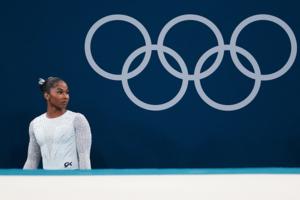
Jordan Chiles announces gymnastics return, will train for LA28 Olympics
LOS ANGELES — That Girl is back.
Olympic gold medalist Jordan Chiles announced her intention to train for the L.A. Olympics on Wednesday, publicly beginning her attempt for a third Olympic Games in a video narrated by NBA legend Michael Jordan.
"Why again?" says Jordan, whom Chiles is named after. "Because the dream is still there."
Chiles ...Read more
LA28 has sold more than 6 million Olympic tickets. Here's how you can still get yours.
LOS ANGELES — Past the halfway mark of the Olympic quadrennial, LA28 has passed its own halfway point for ticket sales.
LA28 announced Friday it sold more than 6 million tickets during its first two drops, accounting for more than half of the expected Olympic ticket availability.
The remainder of an estimated 10.5 million Olympic tickets ...Read more
LA reaches deal on cost recovery for 2028 Olympics, amid warnings about financial risk
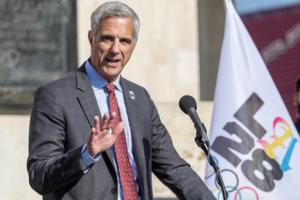
LOS ANGELES — A divided Los Angeles City Council finalized a deal with organizers of the 2028 Summer Olympic Games aimed at controlling the city's costs during the global event, amid complaints that the protections don't go far enough.
On a 10-4 vote, the council approved the Enhanced City Resources Master Agreement, which lays out the ...Read more
So you didn't get a 2028 Olympic ticket time slot? There's still hope.
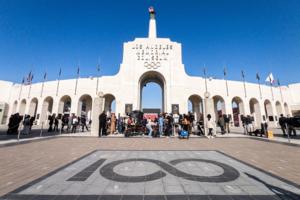
LOS ANGELES — Forget high prices or website glitches. With more than 12 million people registering for 2028 Olympics tickets, even getting a chance to browse the ticket shelves was hard to come by.
If you're still stuck on the outside looking in after two unsuccessful ticket lottery drawings, there is hope.
LA28 said in a statement Friday ...Read more

The World Cup was an LA public transit success. The Olympics will be a much bigger test
LOS ANGELES — Two years from now, the Olympics will have just wrapped up with the Paralympics on the horizon. Spectators will know which countries dominated, what athletes made history and, perhaps the biggest question of all, how everyone handled the traffic.
Local leaders have pointed to the success of public transit in Los Angeles during ...Read more
Q&A: Everything you need to know about the second LA28 Olympics ticket drop
LOS ANGELES — After 4 million tickets sold and maybe a million more headaches, the Olympic ticket booth opens again this week.
LA28 sold a record number of tickets during its first drop in April, signaling unprecedented interest in the Olympics as they return to Southern California for the first time since 1984. High prices, service fees and ...Read more
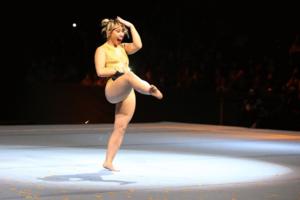
'I want to have fun with it.' Katelyn Ohashi chasing joyful LA Olympic dream at 29.
LOS ANGELES — The bubbly laugh. The megawatt smile.
The queen of joyful gymnastics is back.
Seven years after gaining fame as UCLA's "perfect 10 gymnast" and 13 years since last competing at an elite level, Katelyn Ohashi has returned to gymnastics with new goals and the same outlook.
"I want to have fun with it," Ohashi said on a video ...Read more

Warner Bros. Ranch selected for TV broadcast base during LA 2028 Olympics
LOS ANGELES — The Warner Bros. Ranch in Burbank will serve as broadcast headquarters during the Los Angeles Olympics and Paralympic Games in two years.
LA28 and Warner Bros. Discovery on Thursday jointly announced that the 30-acre Hollywood Way campus would play a pivotal role in the Games. Constructing an efficient TV nerve center — the ...Read more

LAPD weighs canceling academy classes to get more cops on streets for Olympics
LOS ANGELES — The LAPD is considering whether to shut down its police academy for part of 2028 in order to put hundreds of officers back to work on the streets in time for the Olympic and Paralympic Games, according to four department sources.
The sources, who requested anonymity because they were not authorized to publicly discuss internal ...Read more
IOC provisionally lifts suspension of Russian Olympic Committee
The International Olympic Committee provisionally lifted the suspension of the Russian Olympic Committee, saying as the qualification period of the 2028 Los Angeles Games had started all athletes needed to be offered equal access to the competition.
The suspension had been in effect since October 2023 after the Kremlin’s invasion of Ukraine ...Read more

LA finally reaches a deal for recovering its Olympic costs
LOS ANGELES — Los Angeles officials have reached a tentative agreement with organizers of the 2028 Olympic Games laying out the process for reimbursing the city for potentially hundreds of millions of dollars in public services.
The agreement, which still needs approval from Mayor Karen Bass and the City Council, would require the privately ...Read more
Popular Stories
- A Summer Olympics economic windfall is headed for SoCal, a new analysis says
- LA28 has sold more than 6 million Olympic tickets. Here's how you can still get yours.
- Warner Bros. Ranch selected for TV broadcast base during LA 2028 Olympics
- The World Cup was an LA public transit success. The Olympics will be a much bigger test
- Q&A: Everything you need to know about the second LA28 Olympics ticket drop
Comics