Sports
/ArcaMax
Adam Minter: The PGA Tour should welcome prodigal son Jon Rahm home
Three years ago, Jon Rahm was on top of the golf world. He had two major championships, a stint as the No. 1-ranked player in the world and star power. LIV, the Saudi-backed upstart challenging the PGA Tour, noticed. It needed a superstar to boost its credibility, and Rahm was the obvious prize. For a deal reportedly worth over $300 million, LIV...Read more
Phil Mickelson entered treatment center for family trauma and addiction earlier this year
Golfer Phil Mickelson checked himself into a facility earlier this year "seeking treatment for family trauma and addiction," a representative for the six-time major championship winner said in a statement to news outlets on Wednesday.
Mickelson, 56, reportedly is no longer at the facility. No information about the specifics of his stay or ...Read more
Gary Woodland embraces role as captain's assistant at Presidents Cup
There was growing speculation late in the recently-completed PGA Tour season that 42-year-old former Kansas golfer Gary Woodland would be offered a playing role in the 2026 Presidents Cup.
Instead, despite one tour victory (Houston Open) and five top-10 finishes during the 2026 campaign, he was called upon by U.S. captain Brandt Snedeker to be ...Read more
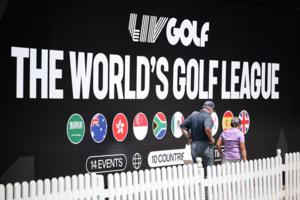
LIV Golf files bankruptcy with post-Saudi Future uncertain
LIV Golf filed for bankruptcy protection Tuesday, a dramatic fall for the Saudi-backed league that had big ambitions to challenge the supremacy of the PGA Tour.
Saudi Arabia’s Public Investment Fund, its main benefactor that earlier this year pulled its financing, has agreed to provide $49.6 million in debtor-in-possession financing. The ...Read more

Top executives out at Good Good Golf after ad criticized for making light of violence toward women
LOS ANGELES — A pair of top executives are out at Good Good Golf less than two weeks after the content creator and apparel brand posted, then deleted, an ad that has been highly criticized for making light of violence toward women.
Good Good chief executive officer Matt Kendrick and president Joe Flannery have left the company, multiple media...Read more
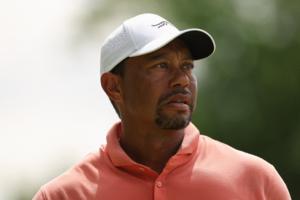
Tiger Woods pleads guilty to reckless driving, loses driver's license for 5 years
Tiger Woods was suspended from driving for five years and fined after reaching a plea deal at a Florida court Wednesday in connection with a rollover crash in March.
The golf legend pleaded guilty to reckless driving and refusal to submit to a lawful urinalysis test. The agreement also includes a $1,000 fine.
Woods, 50, initially pleaded not ...Read more
Marcus Hayes: Violence against women in a Good Good ad stains slow responders: PGA Tour, Callaway, Golf Galaxy, Golf Channel
PHILADELPHIA — The only thing more disappointing about the slow and weak response by the principals in the Good Good Golf YouTube channel scandal was its utter predictability.
There should have been immediate distancing and disassociation from Callaway Golf and Good Good Golf after they aired an outrageous commercial that endorsed violence ...Read more
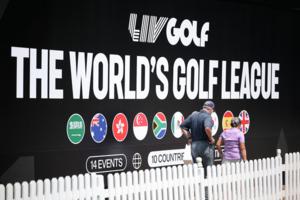
LIV Golf players to become majority owners after mystery investor steps in to keep league afloat
One day after a players-only LIV Golf meeting failed to produce a resolution, CEO Scott O'Neil announced Wednesday that a lead investor plans to fund the tour beyond this season and that the golfers will become the majority equity holders in the league.
The LIV Golf board of directors approved the term sheet, O'Neill said, giving the league new...Read more

Tony Paul: With Rocket Classic in the books, here are 8 favorite memories
DETROIT — The Rocket Classic's run came to an end Sunday, when Michael Thorbjornsen made himself the answer to a future bar-trivia question as the final champion of Detroit's first and only annual PGA Tour tournament.
In eight years of the event, I think I missed one day of coverage during tournament week (Tuesday through Sunday), maybe two. ...Read more
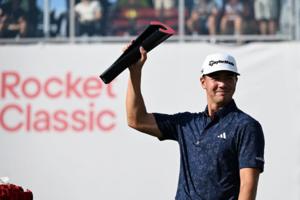
Michael Thorbjornsen wins final Rocket Classic for first PGA Tour victory
DETROIT — It's a first for the last.
Michael Thorbjornsen won his first tournament on the PGA Tour when he stormed the back nine to claim the title at the last Rocket Classic on what turned out to be a sunny Sunday, after all, at Detroit Golf Club.
Thorbjornsen shot a final-round 63 to finish at 18 under for a two-shot victory. He shot 5 ...Read more
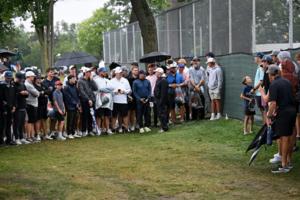
Golf fans sad to lose Detroit's Rocket Classic
DETROIT — The Rocket Classic wrapped up its eighth and final playing at Detroit Golf Club this week, marking the end of the first and only annual PGA Tour stop played within Detroit's city limits.
Fans who turned out for the tournament's closing weekend said they will miss it.
Patrick Linehan of Kalamazoo, 24, whose parents are members of ...Read more
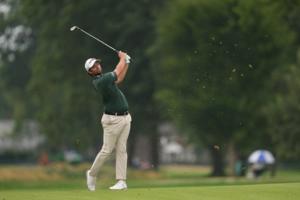
Rocket Classic leader Davis Riley may channel Eminem for 'mojo' before final round
DETROIT — It's been a tough season for Davis Riley, but he's in Detroit now, and we all know Detroit loves a comeback.
Detroit also loves some Eminem. Speaking of which ...
"I love some Eminem," Riley said after taking the lead at the Rocket Classic at Detroit Golf Club. "I do love some Eminem. I may have to blare some Eminem on the way over...Read more
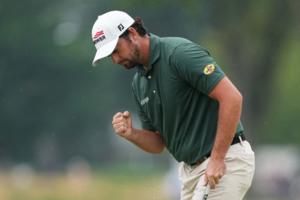
Rocket Classic is down to its final 18 holes. Will there be an epic ending?
DETROIT — The Rocket Classic is down to its final 18 holes, for 2026 and perhaps forever.
Davis Riley surged to the top of the leaderboard with a 7-under 63 in Saturday's third round and is at 15 under, a shot ahead of birdie machine Michael Brennan, and three shots clear of the people's choice, Rickie Fowler.
And Cameron Young and Xander ...Read more
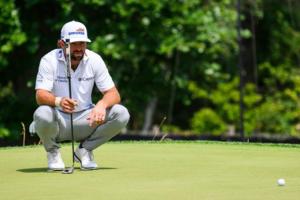
Highest-ranked player at Rocket Classic goes super-low in Round 2
DETROIT — The highest-ranked player at the Rocket Classic went low on Friday.
Cameron Young, No. 3 in the Official World Golf Ranking, came out blazing in the second round and shot a 9-under 61 to tie the course record and vault to the top of the leaderboard halfway through the tournament at Detroit Golf Club, setting the weekend up for a ...Read more

Torrey Pines golf tournament will be among PGA's Championship Series events in 2028
SAN DIEGO — As anticipated, The Sentry at Torrey Pines will be part of the PGA Tour Championship Series in 2028, placing the tournament among the most prestigious events on the tour schedule.
Sentry Insurance, the PGA Tour and the Century Club of San Diego announced the news Wednesday morning in a joint statement. Few other details, like ...Read more
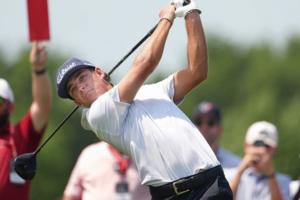
Patrick Reusse: Thank you, Scottie Scheffler. And look out for Jackson Koivun.
MINNEAPOLIS — A senior tour event had been part of the Minnesota golf scene for 26 years, starting in 1993 as the Burnet Senior Classic at Bunker Hills, and becoming the 3M Championship in 2001 at the new TPC Twin Cities next door in Blaine.
Earnest fellows, those seniors, and appreciative of all the low numbers in the open spaces of this ...Read more
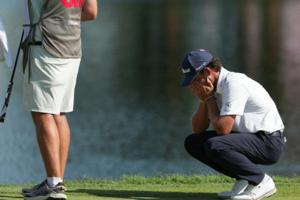
Rookie Jackson Koivun, with Scottie Scheffler lurking in the rear view mirror, wins 3M Open
BLAINE, Minn. — If Jackson Koivun becomes a major star on the PGA Tour, fans in Minnesota will be able to say “we knew him when.”
In only his third Tour tournament since turning pro, the 21-year-old won the 3M Open at the TPC Twin Cities on Sunday.
Koivun closed with a 5-under 66 and was -25 for the tournament. He rolled to a three-shot ...Read more
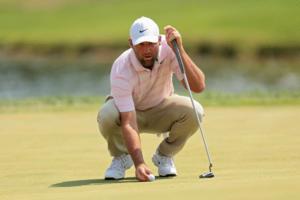
Scottie Scheffler among those trying to keep up with the kids at the 3M Open
BLAINE, Minn. — Moving day at the 3M Open in Blaine saw Michael Kim come down to earth, Jackson Koivun shoot over the moon and Scottie Scheffler awaken from a 27-hole slumber with a back-nine 29 to lurk inside the top 10 and cast a World No. 1-sized shadow on the leaderboard heading into Sunday’s final round at the TPC of the Twin Cities.
�...Read more
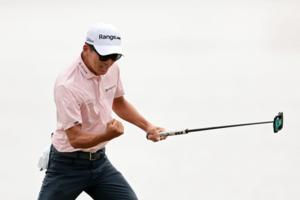
Michael Kim shoots tournament record 59 at 3M Open
BLAINE, Minn. — A funny thing happened while every eye in the state has been fixed on Scottie Scheffler’s Minnesota debut.
Historically funny.
Not funny, ha-ha. Funny, wow-WOW!
Michael Kim, a 33-year-old with one career victory, became the 15th person to shoot a sub-60 round in a PGA Tour event, carding a tournament record 12-under-par 59...Read more
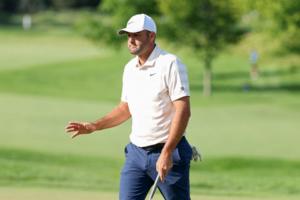
Scottie Scheffler, fueled by hot putter, shoots bogey-free 65 in first round of 3M Open
BLAINE, Minn. — Not only did world No. 1 Scottie Scheffler show up in Minnesota as scheduled, his putter finally showed up, too.
A week after ranking 144th in strokes gained putting at the British Open, where he tied for fourth, Scheffler and his resurgent putter shot a bogey-free 6-under 65 in Thursday morning’s opening round of the 3M ...Read more
Popular Stories
- Adam Minter: The PGA Tour should welcome prodigal son Jon Rahm home
- Tiger Woods pleads guilty to reckless driving, loses driver's license for 5 years
- Phil Mickelson entered treatment center for family trauma and addiction earlier this year
- Gary Woodland embraces role as captain's assistant at Presidents Cup
- Golf fans sad to lose Detroit's Rocket Classic
Comics