Gerry Dulac: The NFL trade deadline is busier than ever before. Why?
Published in Football
PITTSBURGH — Blockbuster deals before the NFL’s trade deadline are nothing new. In the late 1980s, seismic trades involving star running backs Herschel Walker and Eric Dickerson stunned the NFL.
But the frequency with which in-season trades are occurring in today’s NFL is unlike anything we have seen before.
There is so much wheeling and dealing the league is starting to look like the floor of the New York Stock Exchange. Or, at the very least, the NBA or MLB.
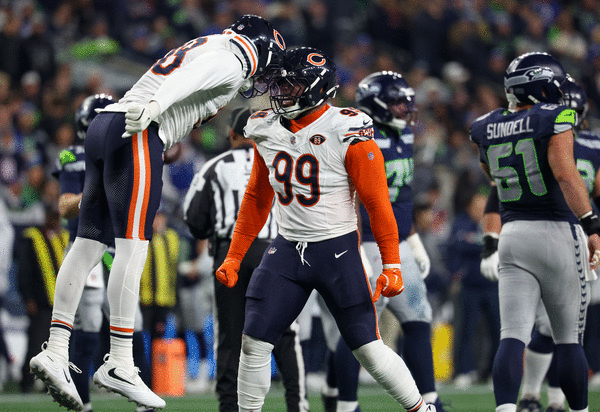
In the past two weeks, we saw marquee players Quenton Nelson, DeForest Buckner and Jeffery Simmons get dealt to Super Bowl hopefuls. And it might develop into an all-out frenzy before Tuesday’s 4 p.m. trade deadline.
Since 2022, there have been six trades made each year on deadline day.
Last year, two All-Pros were traded, both by the New York Jets. They got two first-round draft picks from the Indianapolis Colts for cornerback Sauce Gardner. And they received first- and second-round picks from the Dallas Cowboys for defensive tackle Quinnen Williams.
There are any number of reasons for the increased flurry of trade activity.
In 2012, the trade deadline was moved from Week 6 to Week 8, giving teams an additional two weeks to evaluate their team and its position in the standings. Two years ago, the league adopted a proposal by the Steelers to move the deadline back to Week 9, giving teams even more time to analyze their needs.
The salary cap has rapidly escalated to $301.2 million, up from $200 million just four years ago. That allows teams more freedom to spend money. It took the league 15 years to increase the cap from $100 million to $200 million.
And then there is the new wave of young general managers. Faced with the pressure to win now, they are more willing to acquire players than hold on to draft capital.
“There’s been a generational change in general managers,” former NFL GM Bill Polian said. “They are much more attuned to getting something in return other than a compensatory pick from a player whose contract is ending.”
Polian said his approach when he was a general manager from 1986-2009 was to keep his players under contract as best he could. And if they left in free agency, the team would receive a compensatory pick.
Now, because a third-round compensatory pick is placed at the end of the round, effectively serving as a fourth-rounder, a lot of general managers aren’t concerned with that.
“The question today is: Can I get something better than a four?” Polian said the other day. “And that [pick] will be discounted because it will be used a year from now, not this coming draft.”
According to ESPN research, there have been 60 trades made from January through October in 2026, the fourth most since at least 1990 and nearly double the annual average between 2007-16.
The biggest last week involved a pair of All-Pros. Nelson went from one of Polian’s former teams, the Colts, to the defending Super Bowl champion Seattle Seahawks. And Tennessee traded Simmons to Chicago.
After trading Simmons for two first-round picks, Titans general manager Mike Borgonzi said NFL front offices “have to be real with where you’re at” in the short term and make tough decisions with the future in mind.
“You’re always looking at a three-year window with a roster in terms of guys under contract,” Borgonzi said. “We felt like this was the best decision moving forward for us — as hard at it is — to really accelerate that process.”
Simmons signed a three-year, $105.8 million contract extension before the season. Nelson and Buckner were both in the final years of their contracts.
Historically, the Steelers have never been active before the trade deadline.
The closest they came was 2013, when they traded a conditional draft pick for Arizona Cardinals offensive tackle Levi Brown. The Steelers brought in Brown to replace the struggling Mike Adams, a former second-round draft pick.
But Brown never played a snap for the Steelers. Before his first game with Pittsburgh, he sustained a torn triceps muscle in pregame warmups and was placed on injured reserve.
That was an abnormal situation, but it is just one example of the risk involved with in-season trades — and that applies to both buyers and sellers.
Polian said the Colts, who were buyers last season and are sellers now, are “Exhibit A.”
“You lose two really good players, and the existing players say, ‘Oh, boy, we just lessened our chances to win,’ ” Polian said. “On the other hand, you may make a trade where you bring a player in and it doesn’t pan out.”
That is what happened to the Colts last year. They added Gardner to their 7-2 team, then their playoff hopes fizzled like a bad firework, in part because starting quarterback Daniel Jones tore his Achilles.
“If you follow baseball, very few of the acquisitions that are heralded at the time they’re made really pan out,” Polian said. “When you look at them in October, they don’t look anywhere near as good as they looked on July 31.”
He added: “Most fans believe that especially good teams are one player away. You’re never one player away.”
© 2026 the Pittsburgh Post-Gazette. Visit www.post-gazette.com. Distributed by Tribune Content Agency, LLC.




Comments