Sports
/ArcaMax
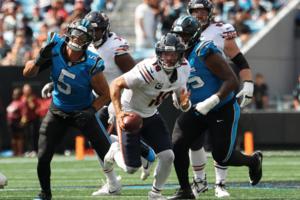
Ben Johnson 'could kind of tell' Caleb Williams was locked in before Bears' 59-point outburst
CHARLOTTE, N.C. — Ben Johnson slept well Saturday night. Better than he normally does the night before a game.
That’s because his quarterback was as prepared as he ever has been.
“I could kind of tell last night,” Johnson said after Sunday’s 59-37 win over the Carolina Panthers. “We do our quarterback meeting one last time, and he ...Read more
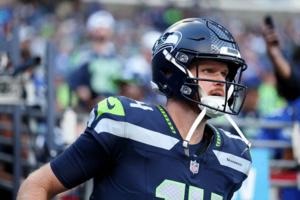
Seahawks QB Sam Darnold dealing with glute injury, expected to miss Week 2, reports say
SEATTLE — Seahawks quarterback Sam Darnold is expected to miss next week’s game at Arizona, according to reports from both the NFL Network and FOX Sports during their pregame shows Sunday morning.
But each report stated there’s a chance Darnold could return for a Week 3 game at Washington on Sept. 27.
Both reports also clarified that ...Read more
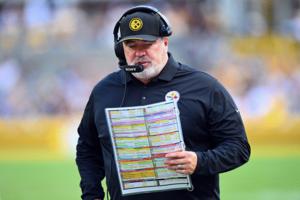
Noah Hiles: A win is a win, but the first game of the McCarthy era felt unfortunately familiar
PITTSBURGH — There are no easy wins in the NFL. Every victory should be celebrated, even the ugly ones.
But it’s hard to ignore the way the Steelers ground their way to a 20-13 win against the Atlanta Falcons on Sunday at Acrisure Stadium. Their Week 1 win felt rather … familiar.
On a day that marked the beginning of a new era, the ...Read more
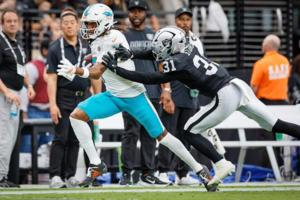
Greg Cote: Dolphins lose opener as search for reasons to hope begins
MIAMI — This 61st Miami Dolphins season that kicked off Sunday is going to be all about seeing the positives, and sometimes having to look hard for them. It will be about divining hope that may not be obviously there.
This will not come in winning streaks, or playoff hunts. It will come in plays, in moments.
Up here, there are no 77-7 games,...Read more
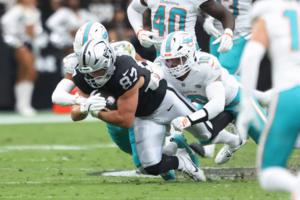
Kirk Cousins, Ashton Jeanty push Raiders past Dolphins for Week 1 win
LAS VEGAS — Kirk Cousins has 301 touchdown passes in his 15-year NFL career, his first three Sunday for the Las Vegas Raiders sparking their Week 1 victory.
The Raiders rolled to a 27-13 win over the Miami Dolphins at Allegiant Stadium, enthralling a raucous capacity crowd. Cousins completed 21 of 30 passes for 160 yards and first-half ...Read more
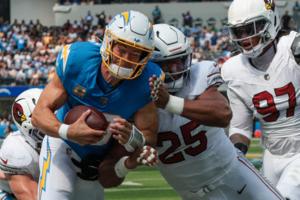
New-look Chargers offense sputters in mistake-filled loss to Cardinals
LOS ANGELES — The Chargers are trying to find their sea legs with their new offense.
More pre-snap motion. Imbalanced formations. A dizzying array of plays.
They unveiled the new scheme Sunday and mostly came away queasy, losing to the Arizona Cardinals 26-14 in what proved to be Jim Harbaugh’s first Week 1 defeat as an NFL head coach.
...Read more
Eagles hang on for 24-22 win after two-point stop; Jalen Hurts throws three TDs to open new offensive era
PHILADELPHIA — During training camp, Vic Fangio asserted that Howie Roseman ought to save some money for 25-year-old defensive tackle Moro Ojomo, who was headed into a contract year.
In Week 1 against the Washington Commanders, Ojomo reminded the NFL why he is going to command a hefty pay raise when the season concludes.
His stuff of ...Read more
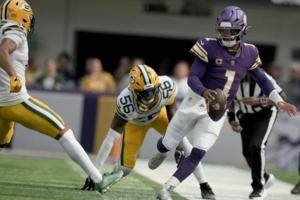
Kyler Murray injury doesn't stop Vikings from beating Packers behind Carson Wentz
MINNEAPOLIS — After Kyler Murray beat J.J. McCarthy out for the Minnesota Vikings’ starting quarterback job, coach Kevin O’Connell went with veteran Carson Wentz as the team’s No. 2 QB over the 23-year-old.
It meant that just over a year after he led the Vikings to a double-digit comeback over a division rival in his first NFL start, ...Read more
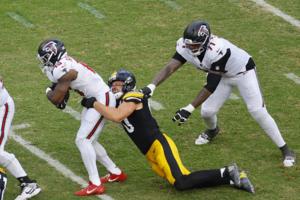
T.J. Watt's dominant day helps the Steelers begin the Mike McCarthy era with a win
PITTSBURGH — It wasn’t pretty, to be sure, but the Steelers began the Mike McCarthy era with a 20-13 victory against the Atlanta Falcons on Sunday at Acrisure Stadium.
And they saw the dominating return of a familiar face along the way.
Outside linebacker T.J. Watt looked like his old self in a five-play span in the second half, during ...Read more
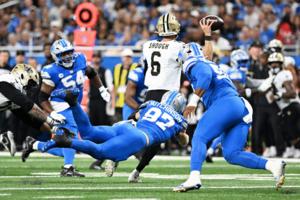
Lions blow lead, but survive OT thriller vs. Saints in opener
DETROIT — When Amon-Ra St. Brown caught a 19-yard touchdown pass from Jared Goff to go up 21-0 with 8:59 left in the third quarter, it seemed the party had officially begun in the season opener at Ford Field.
And eventually, it did — but not until the Detroit Lions held off a go-ahead two-point attempt on the final play of overtime to steal...Read more
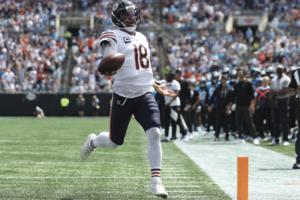
Bears pull away for a 59-37 opening win behind a dominant ground game
CHARLOTTE, N.C. — The Chicago Bears surpassed 50 points for the first time since 2012 and won a 59-37 shootout in Sunday’s season opener against the Carolina Panthers.
Quarterback Caleb Williams accounted for four touchdowns — two passing and two rushing. He finished 21-for-29 passing for 269 yards and ran for 65 yards.
The Bears rushed ...Read more
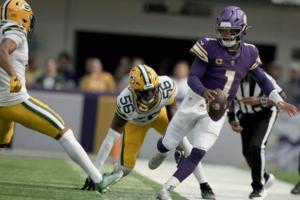
Kyler Murray ruled out for remainder of Vikings opener after leaving with concussion
MINNEAPOLIS — The Vikings made it just three drives into the 2026 season before losing their starting quarterback.
Kyler Murray left the game to be evaluated for a concussion after being hit by Green Bay Packers safety Javon Bullard as he slid on a third-down scramble with 6:16 left in the first quarter and the Vikings trailing 3-0. Murray ...Read more
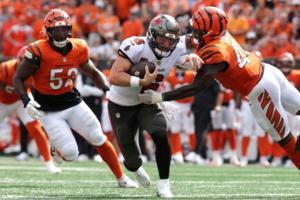
John Romano: Buccaneers stumble, bumble and fumble their way to a season-opening loss to Bengals
The final score was at least respectable. The performance was not.
The Tampa Bay Buccaneers began the 2026 season by giving the Bengals a 33-27 win in Cincinnati. And we do mean the Bucs gave the game away.
For the first time in a dozen years, the Bucs lost four fumbles in a game. The Bengals took advantage by converting the four turnovers ...Read more
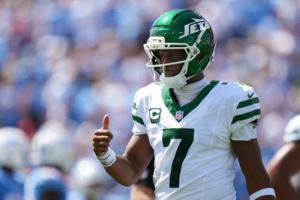
Geno Smith, Jets dominate Titans in season-opening dominant win over Titans
NASHVILLE, Tenn. — Geno Smith waited 3,612 days for another start in a New York Jets uniform.
He made it worth the wait.
Smith completed 19 of 24 passes for 215 yards, providing the steady hand the Jets (1-0) envisioned in a dominant 23-10 season-opening victory over the Tennessee Titans (0-1) at Nissan Stadium.
After a cautious first half ...Read more
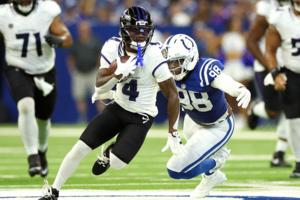
Ravens start fast and pound Colts, 41-23, in Jesse Minter's debut
INDIANAPOLIS — Explosive was the word of the summer among Baltimore Ravens players and coaches. There was mystery about how exactly it would manifest once they got to the regular season.
It didn’t take long to find out.
On Baltimore’s first offensive play of the game, Lamar Jackson faked a handoff to Derrick Henry, rolled back to his ...Read more
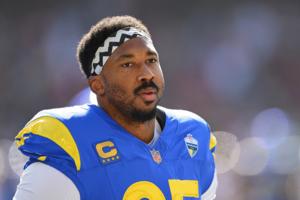
Rams star Myles Garrett to undergo knee surgery, will be placed on injured reserve
LOS ANGELES — The Rams, already reeling from an embarrassing season-opening defeat in Australia, suffered another major loss Sunday.
Star edge rusher Myles Garrett will have surgery on his left knee and be placed on injured reserve, a team official said.
Garrett must sit out a minimum of four games. The Rams' next four opponents are the New ...Read more
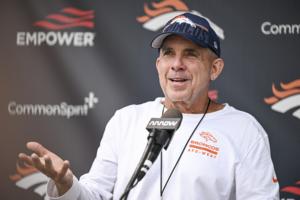
Sean Payton translator: Decoding some of the Broncos coach's most common phrases
DENVER — Sean Payton is heading into his fourth season as the Broncos' head coach.
He has helped restore the franchise to regular contention in the AFC and has led the Broncos to the postseason in each of the past two seasons.
The Broncos have built a deep roster, have an apparent franchise quarterback in Bo Nix and stability atop their ...Read more
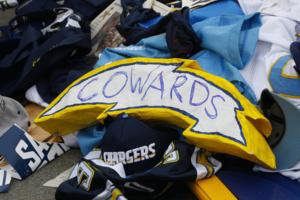
Nearly 10 years after the Chargers left, one former fan has no team -- and no regrets
SAN DIEGO — It was dark on Jan. 11, 2017 when reports began spreading the news San Diego had spent years fearing: The Chargers were leaving for Los Angeles.
Dan Wellington was already out filming a video when he heard it on the radio.
By then, Wellington had built a sizable internet following making public prank videos, a hobby he had turned...Read more
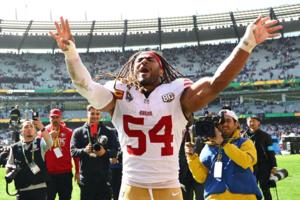
Dieter Kurtenbach: 49ers DC Raheem Morris stole the Rams' secret sauce and broke Sean McVay
NFL coaches are petty, ruthless thieves.
It’s a shameless, desperate profession, particularly at the highest level.
All of that worked out wonderfully for the San Francisco 49ers on Thursday (U.S. time) when new defensive coordinator Raheem Morris took the Los Angeles Rams’ special sauce and turned it right back on them.
Morris didn’t ...Read more
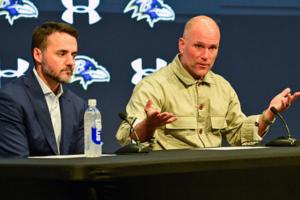
Josh Tolentino: DeCosta's Ravens roster reflects lessons learned
BALTIMORE — Eric DeCosta descended from his second-floor office at the Castle in Owings Mills on Friday morning and made his way toward practice.
Rap music blared from the speakers as the Ravens’ general manager stepped onto the grass wearing a dark gray long-sleeved shirt, black shorts and sunglasses. DeCosta observed the roster he ...Read more
Popular Stories
- Josh Tolentino: DeCosta's Ravens roster reflects lessons learned
- Sean Payton translator: Decoding some of the Broncos coach's most common phrases
- Nearly 10 years after the Chargers left, one former fan has no team -- and no regrets
- John Romano: He's barely 22, but the Buccaneers have been waiting decades for Rueben Bain Jr.
- Fantasy football Week 1: Start and sit
Comics