NHC ups chances for tropical wave as Fay devolves into post-tropical cyclone
Published in Weather News
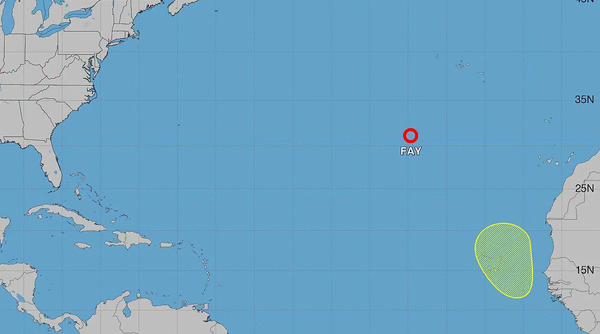
ORLANDO, Fla. — Tropical Storm Fay diminished into a post-tropical cyclone on Tuesday as the National Hurricane Center continued tracking a forecast tropical wave and increased the odds it could develop into the season’s next depression or storm.
The NHC issued its final advisory on Fay at 5 p.m. Eastern time, saying the system’s center was located about 685 miles southwest of the Azores moving west-southwest at 9 mph with maximum sustained winds of 35 mph.
Fay had reached a max intensity of 65 mph on Monday but as of Tuesday morning had devolved into a tropical depression and by evening into a remnant area of low pressure.
“A gradual turn toward the west is expected during the next few days,” forecasters said. “The remnant low is expected to gradually weaken.”
It is no threat to land.
As of its 8 p.m. advisory, the NHC continued to forecast that a tropical wave would move off the western coast of Africa late Tuesday night or Wednesday.
“Although upper-level winds are not very conducive for development, a tropical depression could form while it moves generally northwestward across the far eastern Atlantic,” forecasters said. “Interests in the Cape Verde Islands should monitor the progress of this system as gusty winds and areas of heavy rain are possible there by the end of the week.”
The NHC gave it a 20% chance to develop within two days and 40% in the next seven, up from 30% earlier Tuesday.
If it were to become strong enough, it could become Tropical Storm Gonzalo.
Fay became the sixth named storm of this slow Atlantic hurricane season. So far the hurricane season has yet to produce an actual hurricane, though, but has seen the formation of tropical storms Arthur, Bertha, Cristobal, Dolly and Edouard.
Edouard made landfall in Louisiana with the NHC’s last advisory coming on Sept. 3 as it moved inland over Texas.
It’s been quiet in the tropics since then.
Hurricane season began June 1 and runs through Nov. 30, but the height of hurricane season runs from mid-August through mid-October.
The National Oceanic and Atmospheric Administration last month updated its seasonal forecast and now expects between seven and 13 named storms this year. Of those, two to six would become hurricanes. It also predicted that there might not be any major hurricanes this year, or at most two.
Already, 2026 was forecast to have lower-than-average storm generation, and that has been reduced even further with the latest forecasts from the NOAA and other weather groups.
An average year would see 14 named storms and seven hurricanes, with three of those growing to Category 3 strength or higher.
-------------
©2026 Orlando Sentinel. Visit at orlandosentinel.com. Distributed by Tribune Content Agency, LLC.






Comments