Va. Gov. Spanberger pitches Hampton as future home for US Space Academy
Published in Science & Technology News
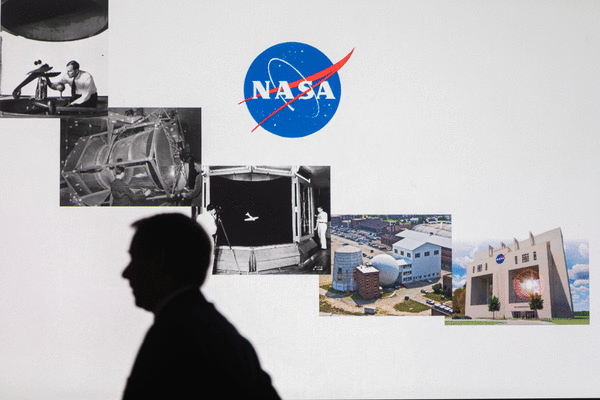
NORFOLK, Va. — NASA is looking for a place to create a U.S. Space Academy. And Virginia Gov. Abigail Spanberger said there’s no place like Hampton to train the next generation of explorers.
President Donald Trump ordered NASA to establish the civilian academy in August for the purpose of developing a workforce “prepared to advance American interests within the space domain.”
NASA issued a request for information in September to accept proposals from states looking to host and sponsor the Space Academy, envisioned as similar to the military’s five existing service academies.
Spanberger announced Monday that Virginia submitted a bid to host the future academy. Virginia’s proposal includes a more than 600-acre campus primarily located in Hampton, with a satellite campus at the Virginia Spaceport Authority’s Mid-Atlantic Regional Spaceport at NASA’s Wallops Flight Facility. NASA Langley would provide the academy’s research and applicable science opportunities, while Fort Monroe would help support residential life and other classes.
Monday was the deadline to submit a proposal, and Virginia is one of several states to announce intentions. Maryland, Nevada and Pennsylvania also submitted bids. The newly established Presidential Commission on the United States Space Academy will use the responses to inform the path forward to selecting a location.
NASA Administrator Jared Isaacman is still determining the academy’s governance, curriculum, service commitments, partnerships and implementation with input from a commission including Defense Secretary Pete Hegseth, National Economic Council Director Kevin Hassett and Air Force Secretary Troy Meink.
According to NASA’s request, the academy’s student body will consist of “future scientists, engineers, astronauts, pilots, operators, entrepreneurs, civil servants, warfighters and other leaders” in the aerospace sector.
Spanberger said in a statement Monday no place is better suited to advance space exploration like the region that’s been doing it at facilities like Langley for decades.
“With our unparalleled defense footprint and world-class research assets, including NASA Langley Research Center, I am confident Virginia can meet the federal government’s ambitious goal and begin training the first class of cadets by 2028,” Spanberger said.
The last time the U.S. established a military service academy was in 1955 with the Air Force Academy. This solicitation calls for construction to begin in 2027 on a permanent U.S. Space Academy campus, with an inaugural class of 300 students to arrive by 2028. The request also asks for that permanent campus to be completed by 2031 and have room to expand to roughly 4,000 students.
Virginia’s proposal envisions a consortium led by Virginia Tech that also would include Hampton University, Old Dominion University and Christopher Newport University to support the academy’s curriculum.
Virginia’s full congressional delegation has voiced support for the proposal and sent a joint letter Friday to Isaacman urging him to choose Virginia. Lawmakers said the commonwealth has the resources and the plan to make the Space Academy a success for NASA and the region.
“Virginia is the strongest choice for the United State Space Academy, bringing together the research, operational experience and academic expertise cadets need, with a credible plan to welcome them in 2028 and support the academy’s growth for decades to come,” the letter read.
________
©2026 The Virginian-Pilot. Visit at pilotonline.com. Distributed by Tribune Content Agency, LLC.






Comments