Pentagon rocket provider hit by failure while SpaceX soars
Published in Science & Technology News
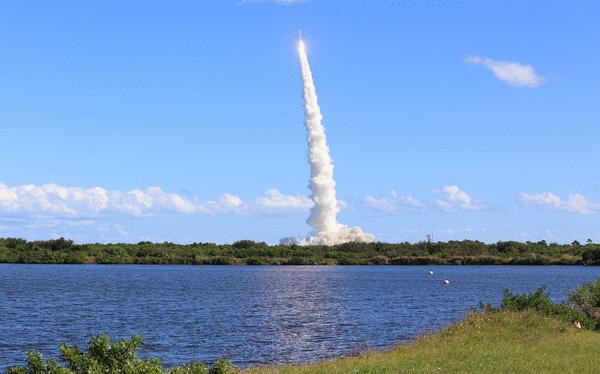
United Launch Alliance’s rare midflight failure is a major setback for a company already losing market share to Elon Musk’s SpaceX — and for a space industry struggling to meet soaring demand for rockets.
ULA’s Vulcan rocket suffered an unexplained problem about 10 minutes into a mission to carry 40 Amazon.com Inc. satellites into orbit on Sunday, resulting in the loss of the payload. The failure abruptly ended the rocket’s long-awaited return to flight after a setback earlier this year and threatens to delay ULA’s plans to accelerate launches.
It also tarnishes the virtually unblemished record of the Boeing Co. and Lockheed Martin Corp. venture, one of the most reliable launch providers in history.
“This is a huge setback for ULA,” said Todd Harrison, a senior fellow at the American Enterprise Institute. “The launch market is already tight with demand starting to exceed supply, and this mishap only makes that worse.”
“For Amazon, the loss of 40 satellites is less of a concern than the delay this will cause in future ULA launches of their satellites,” Harrison added. Amazon has booked 38 Vulcan missions.
SpaceX also stands to benefit. Amazon’s Leo satellite network is designed to compete with Musk’s Starlink, and Sunday’s failure complicates its effort to challenge the dominant service. The mission was critical to Amazon’s push to begin commercial operations by yearend and serve customers including Delta Air Lines Inc. and AT&T Inc.
The failure stands in stark contrast to SpaceX’s Starship mission this weekend. Musk’s company returned the spacecraft from orbit and caught it midair using giant mechanical arms at a Texas launch site. The maneuver was a first-of-its-kind engineering feat that one witness likened to watching science fiction come to life.
“We will work closely with our customer and other appropriate organizations to find the cause, determine the appropriate corrective action and return to flight as quickly as possible,” ULA said in a statement on Sunday. The company said it didn’t yet have enough data to determine what went wrong.
Amazon didn’t immediately respond to a request for comment.
Until Sunday, ULA had never suffered a total mission loss since its formation in 2006. Its Atlas and Delta rockets have been the backbone of national security launches for the Pentagon. Vulcan, which debuted in 2024 after nearly a decade of development, is central to ULA’s efforts to retain its position as a major military launch provider while expanding its commercial and civil business.
SpaceX has steadily eroded ULA’s onetime monopoly as the US government’s ride to orbit. The two companies now split most Pentagon launch contracts, with Jeff Bezos’ Blue Origin also threatening to take a share of the market with its New Glenn rocket.
Sunday’s mission was Vulcan’s first flight since February, when a problem with one of its solid rocket boosters grounded the vehicle. That setback derailed plans for more than a dozen missions this year, compounding delays and technical problems that have slowed the rocket’s rollout.
The delays are particularly troubling for an industry grappling with a shortage of rockets to meet booming demand for satellite constellations supporting everything from communications and Earth observation to defense.
SpaceX has indicated it plans to retire Falcon 9, the world’s most-flown rocket, leaving Vulcan among a handful of potential alternatives.
Another rocket, New Glenn from Blue Origin, has been grounded since May after it exploded in a massive fireball during a ground test, damaging the company’s only launch site.
ULA’s Vulcan and New Glenn share the same BE-4 main engine, supplied by Blue Origin, which is working closely with ULA to determine the cause of Sunday’s failure. It remains unclear whether the engine was responsible.
The problem also could have originated in Vulcan’s upper stage, known as Centaur. If that component is implicated, the failure could have repercussions for NASA, which plans to use a version of Centaur in its Space Launch System rocket for future Artemis missions aimed at returning humans to the moon.
____
(With assistance from Loren Grush and Summer Maxwell.)
©2026 Bloomberg L.P. Visit bloomberg.com. Distributed by Tribune Content Agency, LLC.






Comments