Army Corps halts work on Great Lakes invasive carp barrier
Published in Science & Technology News
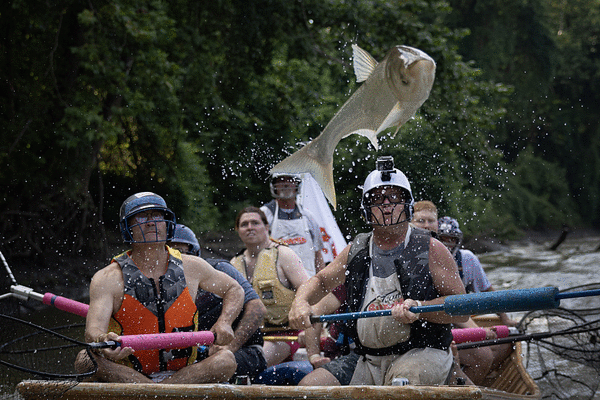
The U.S. Army Corps of Engineers has halted construction at the Brandon Road Lock and Dam complex, a state-federal project in Joliet, Illinois, meant to block invasive carp from reaching the Great Lakes.
"The U.S. Army Corps of Engineers issued the stop work order," Army Corps Public Affairs Officer Gene Pawlik said Wednesday. "The project is under administration review."
Pawlik declined to answer why the order was issued, who was conducting the review or how long the review was expected to last.
Greg McClinchey, director, Policy and Legislative Affairs for the Great Lakes Fishery Commission, said the commission had not been notified of the stop work order.
"If it's true, it's obviously disappointing," he said.
The lock and dam project is "very important" to the commission, McClinchey said.
The Brandon Road Lock and Dam project is designed to prevent invasive carp and other aquatic invasive or nuisance species from moving upstream to the Great Lakes while still allowing people to use the Des Plaines River. The project will have layers of deterrents, like an electric barrier and a bubble curtain.
"The fish aren't going to wait, so we need to move quickly," McClinchey said.
Construction was approved to start on the lock and dam complex in 2024, when Illinois signed on to an agreement with Michigan and the federal government. At the time, the project was estimated to cost more than $1 billion with the Army Corps footing 90% of the cost and the rest split between Michigan and Illinois.
The project had previously been in planning phases for a decade, so the construction start garnered praise and relief from lawmakers and Great Lakes scientists. Former U.S. Sen. Debbie Stabenow described it as "a big win that will protect our Great Lakes for generations to come."
A series of stops and starts for Brandon Road
But the lock and dam complex has been mired in political fights since. Trump threatened to withhold funding from the project in August because Illinois Gov. JB Pritzker hadn't requested funding like Gov. Gretchen Whitmer had, according to Chicago Tribune reporting.
The project was then placed on hold by the Trump administration in December while it was under review.
In April, the U.S. Army Corps of Engineers announced the next phase of work would begin and awarded a $113.8 million contract to a Wisconsin company to build deterrents.
At the same time, Assistant Secretary of the Army for Civil Works Adam Telle announced management of the project would be transferred from the Corps' Rock Island District to the Detroit District. On social media, Telle described Illinois as an "unreliable partner," a claim Pritzker disputed.
In May, the Army Corps awarded another contract for up to $85 million to a Kansas company for architect-engineer support services.
Invasive carp threaten Great Lakes
Four species of carp are considered invasive carp — bighead, silver, black and grass carp. They were imported in the 1970s to the southern U.S. to control algae, weeds and parasites in aquaculture ponds and in wastewater treatment plants. They escaped into the Mississippi River during floods and have since moved upstream toward the Great Lakes.
Invasive carp are voracious eaters that would compete for food against native Great Lakes fish species. Great Lakes fish scientists say they could devastate the lakes' ecosystems and likely would be impossible to get rid of if they were to be established in the lakes.
__________
(Staff Writer Melissa Burke contributed.)
©2026 www.detroitnews.com. Visit at detroitnews.com. Distributed by Tribune Content Agency, LLC.






Comments