Washington tribes, conservation groups sue over Trump endangered species rule
Published in Science & Technology News
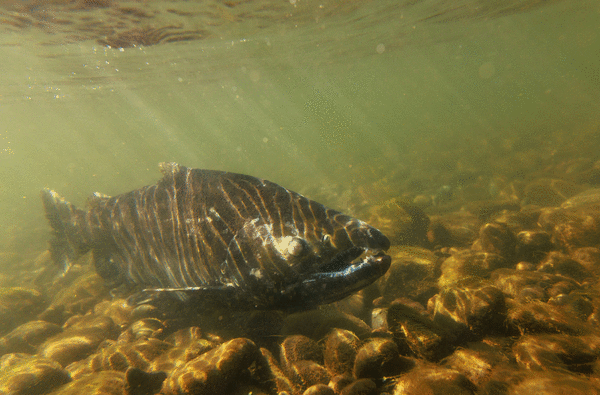
Northwest tribal nations and conservation groups sued the Trump administration Tuesday, challenging a new rule that aims to eliminate habitat protections for imperiled species.
For more than 50 years, degradation or destruction of habitat that impairs, kills or injures threatened species has been prohibited or regulated by the Endangered Species Act, according to two lawsuits filed in federal court in Seattle. The new rule, rescinding the longstanding definition of “harm,” would make it legal to kill and injure ESA-listed species by destroying habitat.
Habitat loss is the leading cause of species loss, and a primary driver of the decline of Puget Sound salmon. Puget Sound Chinook, steelhead, bull trout, marbled murrelet and the southern resident orcas are among the species listed as threatened or endangered here.
In separate complaints, the Swinomish Indian Tribal Community and Squaxin Island Tribe, and conservation groups including the Center for Biological Diversity and Columbia Riverkeeper say the move is illegal. Congress’ intent and the overarching purpose of the law is “‘to provide a means whereby the ecosystems upon which endangered species and threatened species depend may be conserved,’” the conservation groups wrote in their complaint.
In the Northwest, salmon are a heartbeat of Native cultures and of coastal economies, and represent protected property enshrined in treaties. If the changes go into effect, imperiled species will decline, the tribes say.
“According to the United States it will be unlawful for the Tribe to catch a protected fish, but lawful for a developer to drain or degrade all the habitat that same fish needs to survive,” Tandy Wilbur, Swinomish senator and fisheries manager, said in a news release. “This action makes no sense and we are challenging it to ensure that the Swinomish Tribal Community has fish to fish for the next seven generations.”
Salmon and treaty rights have suffered for decades because of habitat loss, Wilbur said.
Over 70% of Puget Sound’s historical tidal wetlands have been lost or damaged through draining, diking and other efforts to clear the way for human development. These actions ultimately limit habitat for young, growing salmon and reduce the number of adult Chinook that return to spawning grounds.
“As descendants of the maritime people who have fished along the shores of the southern inlets of the Salish Sea for thousands of years, the Squaxin people know that habitat protection and restoration is essential to species recovery, said Joe Peters, Squaxin Island Tribe senior natural resources policy representative, harvest manager and tribal member.
Conservation groups say the rule change will have an immediate effect on pending federal project decisions and permits, resulting in inadequate habitat protections for threatened and endangered salmon and steelhead as well as northern spotted owl and marbled murrelet.
When the Endangered Species Act passed in 1973, the tribes wrote in their complaint, Congress recognized the primary driver of species extinction as “economic growth and development untempered by adequate concern and conservation.”
The tribes argue the federal government violated federal law in its failure to consult with tribal nations and conduct a National Environmental Policy Act review of the potential consequences. The agencies received more than 350,000 comments about the proposed rule change, the tribes wrote, overwhelmingly in opposition.
The federal agencies have consistently followed Congress’ direction, the tribes say.
And the Supreme Court in 1995 upheld the U.S. Fish and Wildlife Service’s definition of “harm” to include habitat destruction, explaining that “the broad purpose of the ESA supports” it, the conservation groups wrote in their complaint.
The lawsuits ask a judge to block the change and deem the Trump administration’s actions illegal.
©2026 The Seattle Times. Visit seattletimes.com. Distributed by Tribune Content Agency, LLC.




Comments