How balcony solar can help renters and homeowners save money
Published in Science & Technology News
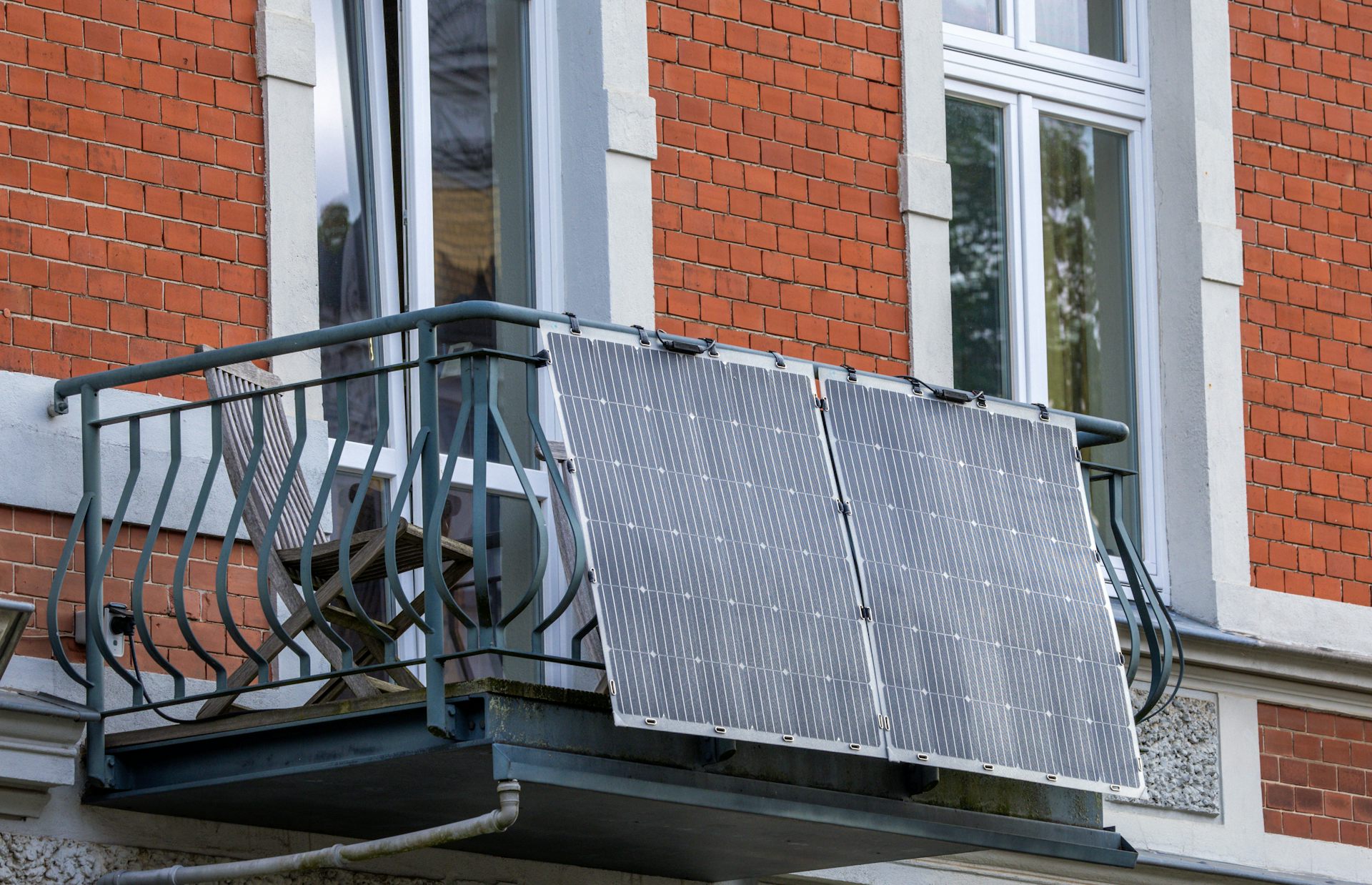
Somewhere between 5% and 7% of U.S. households have rooftop solar panels. Many more Americans want them, but high costs, building locations and landlord restrictions are key obstacles.
As someone who has designed and evaluated a wide range of building energy efficiency technologies, including integrated photovoltaic systems, I know that other options are available elsewhere in the world – and are becoming available in the U.S. Plug-in solar systems, also referred to as balcony solar systems, are alternatives to rooftop panels that still generate electricity from sunlight, but without complex and expensive installations.
Plug-in solar systems are designed to be used without requiring specialized technicians, construction permits or permission from electricity utility companies. A typical system consists of small photovoltaic panels that can be placed on a balcony, in a backyard or on a deck or roof area. They are connected to the home’s electrical system by simply plugging them into a regular power outlet.
In Europe, systems like this have been legal for more than a decade. They are wildly popular, especially for renters who do not have permission to install permanent solar panels on their buildings.
In Germany, the introduction of balcony solar raised the share of households with solar panels to about 10%.
Germans can buy plug-in solar kits in local retail stores and set them up quickly at home, with no help or oversight from technicians or utility companies. Estimates find that with current electricity prices in Germany, the systems generate enough power to pay for themselves in less than three years.
In the U.S., the main barrier to widespread availability and adoption of plug-in solar systems is that current laws and regulations do not distinguish them from larger rooftop panel systems.
In most cases, solar panels on buildings that are connected to the power grid must be installed by professionals, because they typically require additional equipment that prevents too much of the home-generated power from entering the grid. This process also requires a permit from a state or local government.
For balcony solar systems, the grid-protection equipment is built in to what consumers buy at the store. But in most states, the laws don’t recognize a difference and still require permits and professional installation for any solar panels at all.
However, in 2025, Utah passed a law that removes those requirements for plug-in solar panel systems that generate less than 1,200 watts of power. Maine has enacted a similar law, and one in Colorado awaits the governor’s signature. Both are slated to take effect at different points in 2026. The Vermont Senate passed one too, and the state’s General Assembly is considering it now. And lawmakers in 25 other states are considering similar legislation.
In addition, in early 2026, UL Solutions, an independent safety certification company, announced a new standard for plug-in solar systems in the U.S., which can help consumers feel confident they are buying something that is safe for them to use in their homes.
The potential benefits of balcony solar systems vary primarily with the local cost of electricity. Buying these systems can cost between US$1,200 and $2,000, but they can generate enough power to save several hundred dollars in electric bills each year.
They can’t power a whole home, but they can power relatively low loads, like refrigerators, LED lights, laptop computers, phone chargers, televisions and fans, even when a grid power outage occurs.
Depending on their configurations, balcony solar systems can offer additional benefits. Mounting them to movable bases that track the Sun’s path through the sky can boost power generation. Mounting the panels on overhangs can create shade, reducing the need for air conditioning, especially in hot climates.
Adding battery storage to balcony solar systems can also help households store extra energy from the daytime and use it at night, further lowering their utility bills, though buying batteries would raise the costs.
I expect U.S. demand for balcony solar systems to be significant, especially in places with lots of sunlight and high electricity prices. Householders will still need to select their equipment and its location carefully to maximize their power generation and cost savings.
This article is republished from The Conversation, a nonprofit, independent news organization bringing you facts and trustworthy analysis to help you make sense of our complex world. It was written by: Moncef Krarti, University of Colorado Boulder
Read more:
How deregulation made electricity more expensive, not cheaper
Rising electricity prices and an aging grid challenge the nation as data centers demand more power
High electricity prices zapping your budget? Here are 5 ways to save
Moncef Krarti does not work for, consult, own shares in or receive funding from any company or organization that would benefit from this article, and has disclosed no relevant affiliations beyond their academic appointment.







Comments