Science & Technology
/Knowledge
Bain Capital's Gross says to start with business goals and then apply AI
Artificial intelligence is being misapplied by executives who treat it as a technology rollout rather than a fundamental rethink of how businesses operate, Bain Capital Managing Partner David Gross said in a Bloomberg TV interview.
“We are extremely excited about it,” Gross said. “We’re also daunted by it just given the rapid pace of ...Read more

Artemis II astronauts launch on historic moonbound mission
CAPE CANAVERAL, Fla. — NASA on Wednesday sent four astronauts on the most powerful rocket to ever launch humans, flying the Artemis II mission that aims to send them past the moon.
The Space Launch System rocket with the Orion spacecraft named Integrity lifted off from Kennedy Space Center's Launch Pad 39-B at 6:35 p.m. Eastern time.
The SLS...Read more

NASA astronauts bound for moon in landmark return mission
NASA’s four astronauts launched to space Wednesday, kicking off a landmark journey that will take them closer to the lunar surface than anyone has been in more than 50 years.
The crew’s Lockheed Martin Corp.-built Orion capsule, stacked on the shoulders of Boeing Co.’s Space Launch System rocket, thundered off the launchpad at 6:35 p.m. ...Read more

NASA launches humans to moon for first time in half-century
For the first time in more than 50 years, astronauts are on their way to the moon.
NASA’s colossal Space Launch System rocket lifted off at 6:35 p.m. Eastern time from the Kennedy Space Center in Florida on Wednesday, marking the start of the 10-day Artemis II mission.
In the hours and minutes leading up to launch, as the astronauts waited ...Read more

Artemis II astronauts set for historic moonbound mission
CAPE CANAVERAL, Fla. — NASA on Wednesday looks to send four astronauts on the most powerful rocket to ever launch humans, flying the Artemis II mission that will send them past the moon.
The Space Launch System rocket with the Orion spacecraft named Integrity sits on Kennedy Space Center's Launch Pad 39-B awaiting liftoff during a two-hour ...Read more

Oracle lays off thousands in latest sign of tough times for tech industry
Software giant Oracle on Tuesday started laying off workers as it looks to rein in costs and double down on artificial intelligence.
On LinkedIn, Oracle employees, including software engineers, account executives and program managers, shared publicly that they were affected by a mass layoff at the company and were looking for new jobs.
Oracle ...Read more

NASA set to launch astronauts to moon for first time in 50 years
NASA astronauts are poised to lift off Wednesday on a 10-day journey that will slingshot them around the moon, marking humanity’s return to the lunar vicinity for the first time in more than half a century.
The crew’s Lockheed Martin Corp.-built Orion capsule, perched atop the Boeing Co.-made Space Launch System rocket, is set to launch at ...Read more

NASA will attempt to launch astronauts to the moon today. What to know and how to watch
On Wednesday, for the first time since 1972, NASA is attempting to launch astronauts to the moon.
The space agency is targeting a 6:24 p.m. Eastern time launch of the colossal Space Launch System rocket with four astronauts aboard. Once off the ground, the crew will fly past the moon (but not land on the lunar surface or enter its orbit) and ...Read more

Artemis II astronauts set for historic moonbound mission
CAPE CANAVERAL, Fla. — NASA on Wednesday looks to send four astronauts on the most powerful rocket to ever launch humans, flying the Artemis II mission that will send them past the moon.
The Space Launch System rocket with the Orion spacecraft sits on Kennedy Space Center's Launch Pad 39-B awaiting liftoff during a two-hour window that opens ...Read more

You’re not going to be alone in national parks this summer – enjoy the company
On a summer morning a couple of years ago, we went for a hike on the fabled Bright Angel Trail, one of the most popular trails in Grand Canyon National Park.
As scholars of tourism and outdoor recreation, our conversation inevitably turned to the visitor experience at the Grand Canyon and a question that has plagued the parks since ...Read more
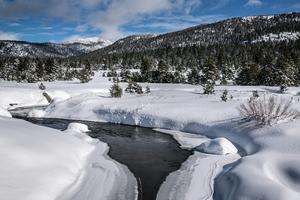
Winter’s alarmingly low snowpack offers a glimpse of the changing rhythm of water in the western US
Winter is more than just a season in the western U.S. – it is a savings account to get farms and homes through the long, dry summer ahead. As the snowpack that accumulates in the mountains through winter slowly melts in late spring and summer, it feeds into rivers and reservoirs that keep communities and ecosystems functioning.
The ...Read more

It's not your imagination. This is a weird rattlesnake season. Here's what's happening
LOS ANGELES – Emily Taylor has lived in California for 20 years and has never gotten as many calls about rattlesnakes as she did last month.
Taylor owns Central Coast Snake Services, a serpent consulting business, directs the Physiological Ecology of Reptiles Laboratory at Cal Poly San Luis Obispo and is part of a network of volunteers who ...Read more

NASA set to launch astronauts to moon for first time in 50 years
NASA astronauts are poised to lift off Wednesday on a 10-day journey that will slingshot them around the moon, marking humanity’s return to the lunar vicinity for the first time in more than half a century.
The crew’s Lockheed Martin Corp.-built Orion capsule, perched atop the Boeing Co.-made Space Launch System rocket, is set to launch at ...Read more

Gadgets: A great audio company
Campfire Audio, based in Portland, Oregon, is an audio company that you need to be familiar with. I’ve tried many of their products over the years, and each impresses me from top to bottom. The last I tried were the Iris and Axion wired earbuds.
A little about Campfire Audio: They have been producing first-class audio products since 2015. ...Read more

Preview: How ‘Pragmata’ changed my mind about its hacking and gunplay
With the “Pragmata” release date moved up to April 17, Capcom is making one last push to cast its new project in the best light. The publisher has offered hints of the gameplay and glimpses of the plot in short play sessions, but there has been little opportunity to experience a satisfying chunk of the campaign.
That changed at a recent ...Read more

Jim Rossman: Technology can be a great help, if you can keep up
I’ve been thinking a lot about aging and technology, and I can’t help but wonder how everyone handles navigating their personal digital lives differently.
“Aging in place” is the term for older people who are still living on their own, and technology can play a really big part in helping people remain independent.
The world revolves ...Read more
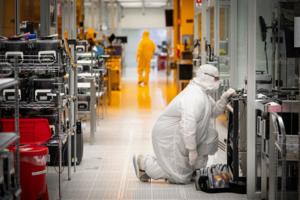
SkyWater CEO says US chip manufacturing poised to grow even faster
The case for domestic manufacturing of semiconductors “has never been stronger,” which means SkyWater Technology will continue to grow, the company’s CEO said.
Tom Sonderman said he outlined his case in an open letter in mid-March to reassure SkyWater’s employees and stakeholders as the company continues to negotiate a $1.8 billion deal...Read more

Why Disney still needs Epic Games
LOS ANGELES — It was just two years ago that Walt Disney Co. placed a massive bet on Epic Games.
At the time, the Burbank media giant announced a “games and entertainment universe” with the “Fortnite” developer to expand the reach of Disney’s franchises, particularly among the young people who play the online game. Disney also made ...Read more

Editorial: Cool it on piling extra energy regulations on new home construction
The Chicago suburb of Naperville already has an extensive system of building codes and inspections, so when it began to consider adding another layer earlier this year, area homebuilders were alarmed.
Adopting a “stretch” energy code that goes beyond existing conservation requirements would add thousands of dollars to the cost of a new home...Read more

An AI agent leaked Instagram and Facebook user data. This San Diego startup is building the fix
You didn’t press send. You didn’t authorize the wire transfer. You didn’t even know it happened. An AI agent did it for you.
They work autonomously by reading files, analyzing photos and sourcing your personal data. But once they’re running, they can multiply and access things they were never meant to, without you even knowing.
...Read more
Popular Stories
- Jim Rossman: Technology can be a great help, if you can keep up
- Gadgets: A great audio company
- You’re not going to be alone in national parks this summer – enjoy the company
- Preview: How ‘Pragmata’ changed my mind about its hacking and gunplay
- Winter’s alarmingly low snowpack offers a glimpse of the changing rhythm of water in the western US
Comics