The humble t-shirt, maybe not so humble?
Published in Fashion Daily News
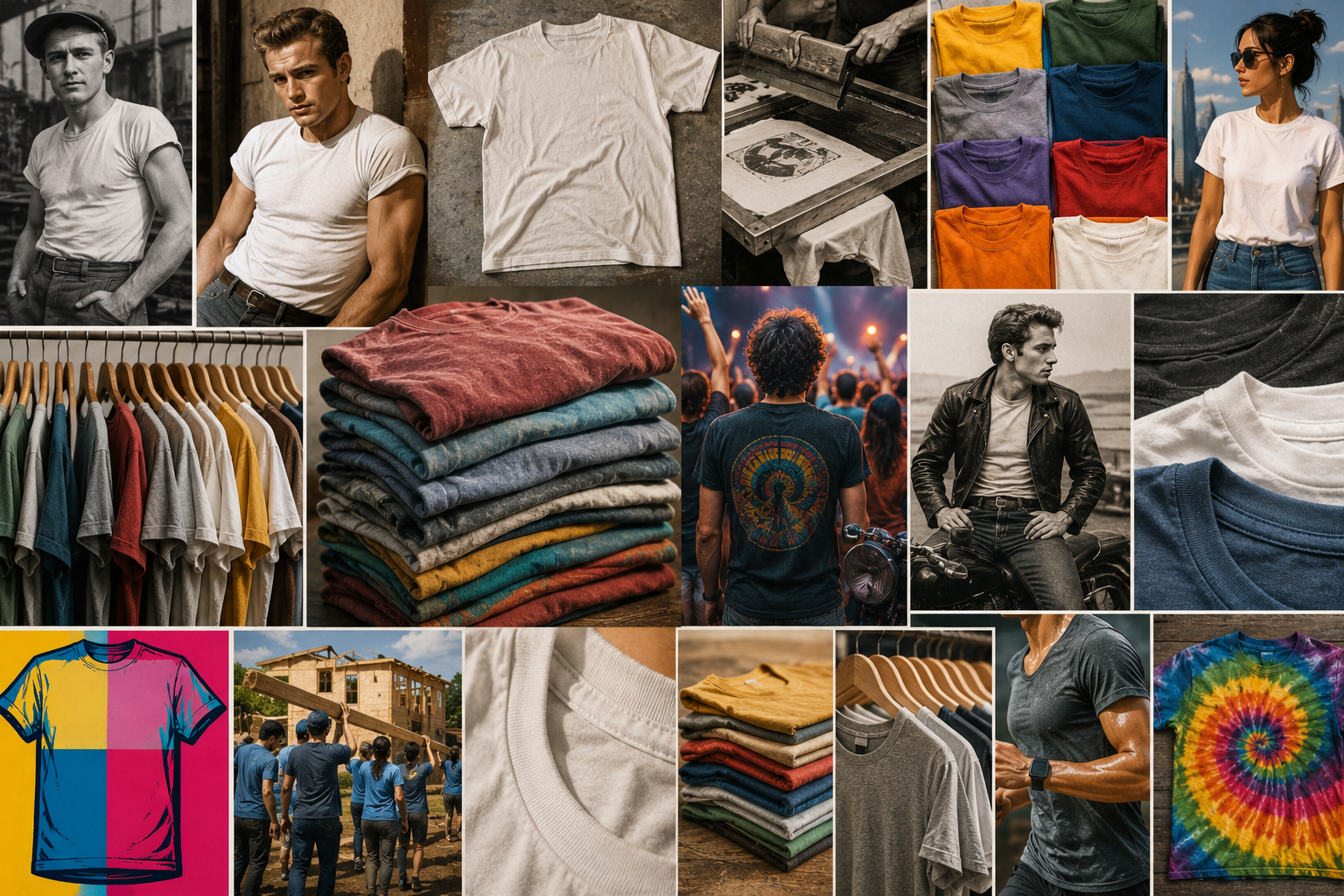
The T-shirt may be the most democratic garment ever created.
It is worn by mechanics and movie stars, toddlers and retirees, soldiers and software engineers. It can serve as underwear, athletic wear, sleepwear, workwear and political billboard. It can be plain white cotton or emblazoned with the logo of a favorite band, a witty slogan or the name of a long-forgotten family reunion.
And despite its everyday familiarity, the T-shirt has had an extraordinary cultural journey. What began as a simple undergarment became one of the most influential articles of clothing in modern history.
From Underwear to Outerwear
The origins of the T-shirt can be traced to the late 19th and early 20th centuries, when workers and military personnel began wearing lightweight cotton undershirts as a practical alternative to wool garments.
The familiar T shape emerged naturally: two sleeves extending from a straight torso, easy to manufacture and comfortable to wear.
The U.S. Navy helped standardize the garment in the early 20th century, issuing white cotton crew-neck shirts to sailors. These shirts were intended to be worn beneath uniforms, but sailors working in hot conditions often wore them alone.
At the time, appearing in public in one’s undershirt was considered informal, even slightly improper.
That would not last.
Hollywood Changes Everything
The T-shirt’s transformation into acceptable outerwear owes much to the movies.
In 1951, Marlon Brando appeared in “A Streetcar Named Desire” wearing a snug white T-shirt that projected raw masculinity and rebellious energy. Four years later, James Dean cemented the look in “Rebel Without a Cause.”
Suddenly, the humble undershirt became a symbol of youthful defiance.
Young men who wanted to project toughness and authenticity adopted the style. Parents may have regarded it as sloppy, but to a new generation, the T-shirt looked modern and cool.
The garment had stepped out from under the dress shirt and into the spotlight.
A Blank Canvas
What truly elevated the T-shirt was its ability to carry a message.
Advances in screen printing in the 1960s and 1970s turned cotton fabric into a mass-produced communication medium. Bands sold concert shirts. Political campaigns printed slogans. Businesses created branded apparel. Tourists bought souvenirs bearing the names of cities and attractions.
The T-shirt became wearable media.
A person could announce support for a candidate, allegiance to a sports team or affection for an obscure science fiction convention without speaking a word.
For many people, a favorite T-shirt serves as autobiography in cotton form.
The Uniform of Everyday Life
The genius of the T-shirt lies in its simplicity.
It is relatively inexpensive, easy to wash, comfortable in almost any setting and endlessly adaptable. It pairs equally well with jeans, shorts, pajama bottoms or even a blazer.
In workplaces where formal dress codes have relaxed, the T-shirt has become standard attire. In homes, it is often the first thing people put on after changing out of work clothes.
Some shirts are crisp and carefully chosen. Others are soft, faded and held together largely by sentimental attachment.
Few garments inspire as much loyalty as a threadbare T-shirt that fits exactly right.
Status Through Simplicity
For an item associated with casual living, the T-shirt can also be surprisingly expensive.
Luxury fashion houses routinely sell plain T-shirts for hundreds of dollars, relying on subtle cuts, premium fabrics and brand prestige to justify the price.
At the same time, countless people remain perfectly satisfied with free shirts acquired at charity walks, software conferences or local hardware stores.
This range is part of the T-shirt’s enduring charm. It can signal wealth, thrift, nostalgia or indifference to fashion.
The same basic garment is worn by billionaires and teenagers mowing lawns.
The Emotional Life of T-Shirts
T-shirts often become repositories of memory.
A shirt from a first concert may survive decades. An old college T-shirt can evoke dorm rooms and late-night conversations. A faded race shirt may represent a hard-earned accomplishment.
Many people maintain drawers full of shirts they no longer wear but cannot bring themselves to discard.
Some are transformed into quilts. Others remain stacked neatly, waiting for a day when they might once again fit, or when their owners are finally ready to part with them.
In this sense, the T-shirt is less disposable than it appears.
Fashion Keeps Reinventing It
Designers have repeatedly reinterpreted the T-shirt through different silhouettes, fabrics and graphics.
There are crew necks, V-necks, fitted cuts, oversized cuts, cropped styles and heavyweight vintage reproductions. Some are meticulously engineered from organic cotton. Others are intentionally distressed to suggest decades of wear.
Yet the core idea remains unchanged.
A soft shirt pulled over the head continues to offer the same fundamental appeal it did a century ago: comfort without complication.
Maybe Not So Humble After All
The T-shirt rarely receives the respect granted to tailored suits or elegant dresses.
It does not require special handling. It is often folded carelessly or draped over a chair. It may spend years as the default answer to the question, “What should I wear today?”
But its cultural significance is difficult to overstate.
The T-shirt helped redefine casual dress, democratized personal expression and blurred the boundary between clothing and communication. It has served as uniform, protest sign, souvenir and treasured keepsake.
That is a remarkable legacy for a garment once hidden beneath other clothes.
The T-shirt may seem humble because it asks for so little.
In return, it has become one of the most versatile and enduring pieces of clothing ever created.
========
Corbin H. Ellsworth writes about everyday objects, design history and the quiet ways ordinary things shape modern life. This article was written, in part, utilizing AI tools.





Comments