Seattle City Council bans 'junk' rental fees
Published in Home and Consumer News
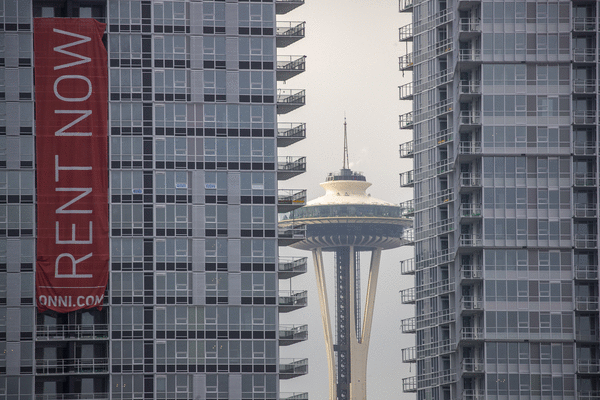
The Seattle City Council voted to ban most types of rental fees this week — a move welcomed by tenants' advocates, who argue that tacked-on charges make housing more expensive and obscure its true costs to renters.
The bill requires landlords to disclose all mandatory and optional fees upfront in home listings or ads. The ordinance will take effect July 1, 2027.
It allows but limits the mandatory fees that landlords can charge to certain application screening fees, move-in fees, utility fees, and security and pet damage deposits, among a handful of others. Also allowed are fees for replacing lost keys or letting locked-out residents back into their homes.
Crucially, the ordinance will prohibit landlords from charging fees deemed unfair or excessive," including for common area access, package collection, and having a pet.
Optional fees would have to be explicitly disclosed as such. Landlords would be prohibited from charging a markup on services provided by third parties.
Cheers and applause rippled through the crowd at City Hall on Tuesday as supporters of the ordinance celebrated its passage.
"We're tired of being nickel-and-dimed," said Carolyn Russell, a renter who lives in Seattle's third district. Russell estimates having paid thousands of dollars over seven years of renting in the form of pet rent.
During public comment and in interviews, tenants described having to pay a range of mandatory fees on top of what’s often known as “base rent,” including amenity fees, package fees, trash service fees, security fees, technology fees and more. Many said that their landlords did not disclose mandatory fees until after they’d already submitted an application or moved in.
Landlord groups were slightly split on the bill.
The Rental Housing Association of Washington, which primarily represents landlords with one or a few properties, took issue mainly with the bill's ban on pet rent.
Currently, landlords can choose to charge pet fees on a tenant-by-tenant basis, meaning people don't have to pay any extra costs if they have no pets, said Kevin Schilling, director of government affairs and advocacy for the association.
Going forward, he predicted that smaller landlords will either raise rents for all tenants to cover the cost of cleaning up after pets, or they may simply ban pets altogether.
City councilmember Bob Kettle on Tuesday introduced an unsuccessful amendment to allow landlords to charge up to $25 per month per dog, plus inflation.
The Washington Multi-Family Housing Association, which represents larger rental companies and property managers, slammed the ordinance.
"The policy itself is problematic for a lot of reasons, not the least of which is that it takes away some of the tools that landlords have to enforce different lease provisions," said Jake Mayson, director of government affairs for the association.
For instance, Mayson cited issues such as tenants not picking up after their pets or cleaning up common areas. Fees are a tool that landlords can use to discourage such actions, he said.
Seattle Mayor Katie Wilson first sent a proposal to ban so-called junk rental fees to the City Council in early July, following months of consultation, including through a renter survey, listening sessions and meetings with stakeholders including landlords and developers.
Over the past decade, add-on fees have proliferated across multiple industries, including the rental property market, said Neale Mahoney, a professor of economics at Stanford University who worked on national junk fees policy under the Biden administration.
Last month, Mahoney flew to Seattle to testify in favor of the proposed rental fee ban.
The ordinance would increase price transparency, making it easier for prospective tenants to compare listings and fostering healthy competition among landlords, he said. "The price you see should be the price you pay.
©2026 The Seattle Times. Visit seattletimes.com. Distributed by Tribune Content Agency, LLC.






Comments