
Eric's Autos: 2026 Lincoln Navigator
Lincoln has always been a luxury brand.
Meaning it isn't a luxury-sport brand, which is what pretty much every other luxury brand has turned into over the past 25 years or so. There was a brief dabbling with the luxury-sport thing back in the mid-to-late '80s and into the '90s, with models like the Mark VII LSC sport coupe and the LS sedan (which even offered a manual transmission for a while). But that was a long time ago, and Lincoln has long since returned to its roots as a luxury-without-compromises brand.
This does not mean Lincolns perform poorly. It means they are not in a hurry. It's a distinction that matters -- and it's why the 2026 Nautilus stands out from the rest.
What It Is
The Nautilus is a midsize, five-passenger crossover that emphasizes luxury rather than "sportiness." This is evident as soon as you sit down in the not-a-sport-bucket driver's seat and see the steering wheel -- which isn't shaped for hand-over-hand high-speed cornering but rather for enjoyable motoring (more about this below).
Prices start at $53,995 for the Premiere trim -- which comes standard with a sweeping, 48-inch curved LCD dash display that extends the width of the upper dashboard area, from windshield pillar to windshield pillar, streaming audio and video, a 10-speaker audio system, synthetic leather seats with heaters (plus a heated steering wheel) and LED adaptive headlights. A 250-horsepower turbocharged engine and all-wheel drive are standard, but you can opt for a more powerful, hybrid-augmented drivetrain as a standalone option for $3,000.
The $63,595 Reserve adds an adaptive suspension, real leather upholstery and real wood trim accents, plus black exterior trim elements unique to this version as well as a roof rack and 21-inch wheels.
A top-of-the-line Black Label ($77,660) gets a 28-speaker Revel Ultima audio system, a panorama sunroof, Venetian Leather seat covers, suede headliner, heated rear seats, ambient interior lighting, massaging front seats and Lincoln's Rejuvenate system, which bundles a scent diffuser with selectable mood lighting, screen visual "themes" and massager functions. The Black Label also comes standard with Lincoln's concierge services that include free pickup and delivery when the vehicle needs service, plus loaner vehicle and free car washes.
What's New for 2026
Changes for the new model year are just a few; they include new entertainment features and new interior/exterior color choices.
What's Good
-- Luxury isn't compromised by "sportiness."
-- One of the few LCD dash layouts that doesn't look like a Pop-Tart erupting from the dashboard.
-- Massaging seats are button activated -- so no need to scroll through menus to find the On and Off to tap/swipe them on and off.
What's Not So Good
-- You can't get the massaging seats with the Premier trim (and they're bundled with an expensive Reserve III package that's extra cost with the Reserve trim).
-- A roster of "driver assistance" tech is standard -- and being parented while driving is at odds with the peace and quiet that ought to come standard with luxury.
-- Can't tow much (max rating is about 1,700 pounds).
Under the Hood
Lincoln offers two drivetrains with the Nautilus.
The standard setup includes a turbocharged, 2.0-liter four that touts 250 horsepower, paired with an eight-speed automatic and standard AWD. This combo can get the Nautilus to 60 mph in about 7.3 seconds and rates 21 mpg city, 29 mpg highway. It's competitive with the standard drivetrains in other luxury-brand crossovers.
You can also opt for a hybrid-augmented drivetrain in any of the three available trims. This is an unusual thing in that it's usually the case that when a hybrid drivetrain is offered, it's a whole separate model and usually comes with other things besides the hybrid drivetrain. In this case, the hybrid drivetrain is a standalone option you can select as you would an upgraded audio system.
It augments the 2.0-liter engine with a pair of electric motors and a battery pack to store the electricity generated by the engine to augment performance when it's needed and to power accessories electrically when the engine isn't running. The combo boosts the total output of the system to 310 horsepower and brings the 0-60 mph time down to about 6.6 seconds -- but the more relevant sell in this context is probably the 600-mile driving range that comes along with the upticked gas mileage (30 mpg city, 30 mpg highway).
Because it's a luxury to not have to stop as often for gas.
The hybrid also uses a continuously variable transmission as opposed to the eight-speed conventional automatic used in nonhybrid versions of this Lincoln.
The max tow rating -- 1,750 pounds -- remains the same.
On the Road
Luxury is not what it used to be -- back when luxury cars were not trying so hard to also be "sporty" cars. Anything that tries to be two very different things often ends up not doing either thing as well as it might have had the focus been on doing the one thing really well.
That's what this Lincoln does.
The engineers gave the Nautilus a quiet, soft ride and easy, almost effortless steering -- which is helped by the leverage you get from the lozenge-shaped steering wheel. You don't have to turn it left or right as much to get the directional response you want.
Of course, this luxury feel comes at the expense of high-G cornering adroitness -- assuming you consider that a cost.
It's kind of strange, when you think about it, to buy a luxury vehicle for the purpose of driving it as if it were a sports car. The reason why this became a thing -- beginning back in the '80s -- was because American luxury car brands, including Lincoln, decided to emulate BMW, which had established a reputation for its "European" blending of luxury and sportiness. That gave BMW its identity and its desirability -- for those who were wanting a car that wasn't traditional luxury-car quiet, with a soft ride and easy, almost effortless steering -- plus a higher cut of amenities and build quality than you got back then, especially from American luxury-brand cars. The car press not only lauded BMWs as the ultimate driving machines, it shamed other luxury brands for not being -- or trying to be -- the same kind of machines.
That's why brands like Cadillac -- and Lincoln -- went BMW. Or tried to, at any rate. You may recall the Cadillac that "zinged" -- advertised to the sounds of Led Zeppelin, even.
Lincoln came out with models such as the Mark VII, which was a great-looking rear-drive sports coupe that was available with the Mustang GT's high-output V8, and also the LS sedan, which for awhile was available with a manual transmission, just like a BMW 5 was (at the time). The car press loved these "sporty" Lincolns, but the trouble -- for Lincoln -- was that they didn't sell very well.
Turns out people who like Lincolns want Lincolns -- not BMWs wearing Lincoln livery.
They enjoy calm and serenity; the pleasure of the drive -- and that's what you're getting here. It is exemplified by the absence of a tachometer display in the sweeping, end-to-end LCD display -- because a luxury cruiser needs a tach like a sports car needs bench seats. There aren't any paddle shifters to facilitate the pretending that you're shifting a manual. Instead, the space is devoted to elegantly displaying relevant info such as fuel remaining, your speed and -- off to the right a bit -- the GPS map, then the audio system info and even a real-time weather report.
One of the small but really big luxuries you'll enjoy, if you get the available massaging seats, is turning them on by simply reaching down and pushing a button on the lower seat cushion. No having to wade -- and scroll through -- menus to tap/swipe them on. And once you've turned them on, they stay on until you turn them off. In most other luxury vehicles that offer massaging seats, the massage automatically cuts off after 10 minutes or so, which then means having to re-wade through the menus and tap/swipe them on again. This very much detracts from the luxury experience, in the same way that someone taking away your blanket when you're just about to fall asleep does.
At the Curb
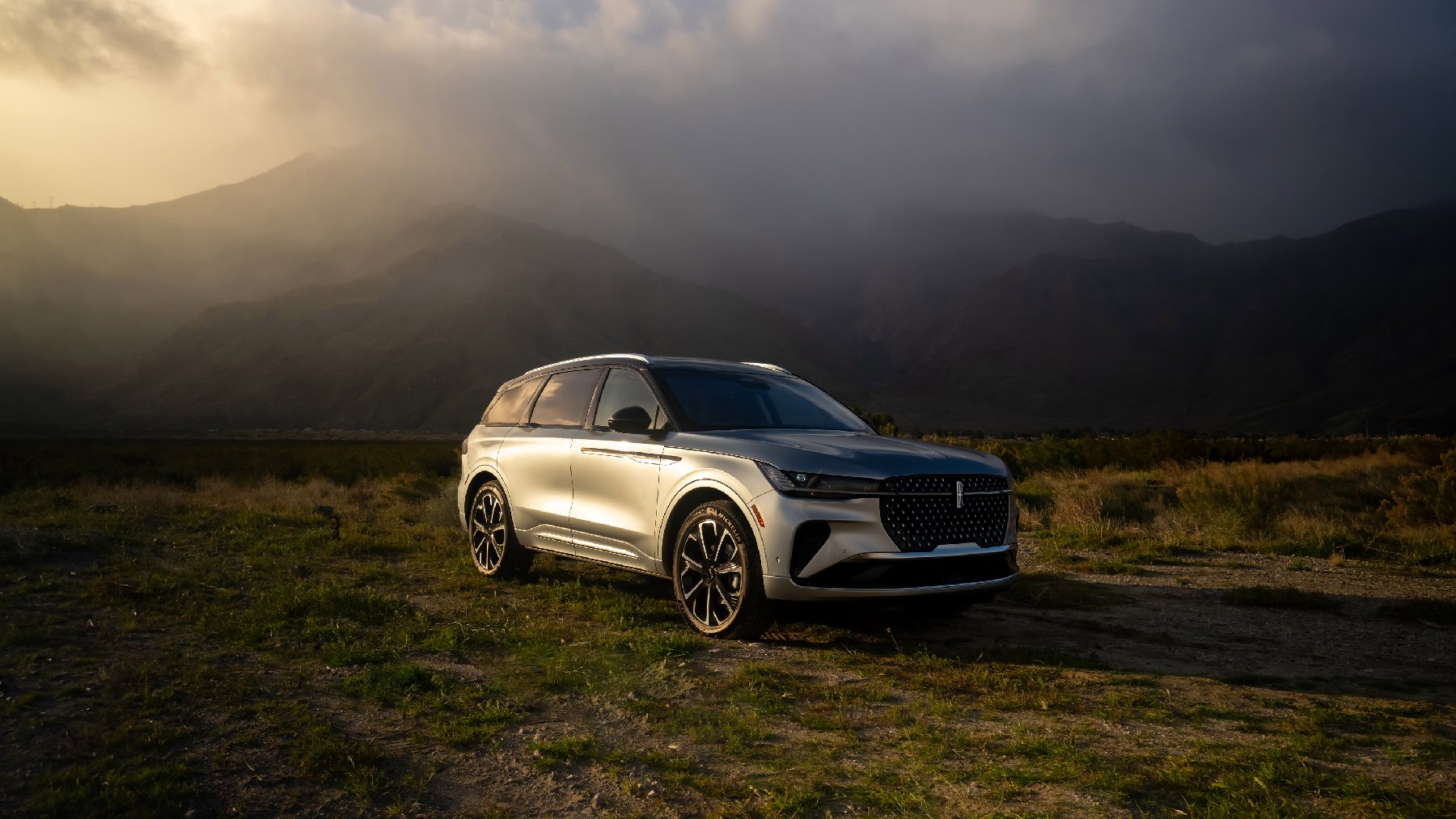
Though classified as a crossover, the Nautilus is shaped more like a luxury wagon -- and that's perhaps the right way to look at it. It is long rather than tall-looking, an effect created via a relatively long hood and windshield that's swept back more than usual; the side glass is generous, which gives you the luxury of being able to see what's coming at you from the side when you're trying to pull out from a side street onto the main road.
The face isn't angry samurai either.
There are stylistically and functionally interesting door pulls that give the appearance of absence -- like the flush-mounted pulls popular among luxury car makers -- but instead of electrically extending from the sheet metal, they flow as part of it. They are mounted toward the top of the doors sills and just blend into the scheme of things. On the inside, there are two-finger pulls on the door panels that electrically release the door locks and open the doors. It's an elegant and functional solution to the problem -- if you want to call it that -- of designing door pulls that are "new" and usually not improved. These are new -- and improved.
Other small but important attention-to-detail things are the USB power points. Lincoln gives you both kinds -- so you can plug in whatever you've got without having to get an adapter.
The scent diffuser may be something you like -- or don't -- depending on your sensitivity to scents. But it's not something you have to get, and it's also something you can turn off, even if you do get it.
The Rest
Lincoln allows buyers to get some of the higher-end options, such as the scent diffuser and Blue Cruise (semi self-driving) with the base Premier trim, but if you want the massaging chairs -- and the superb 28-speaker Revel Ultima audio system -- you've got to spring for the Reserve and then pony up some more cash to get them.
The Bottom Line
Luxury is a pretty rare commodity -- if you're looking for more than just heated seats and leather upholstery.
If that's you, this Lincoln may have just what you've been looking for.
========
Eric's latest book, "Doomed: Good Cars Gone Wrong!" will be available soon. To find out more about Eric and read his past columns, please visit the Creators Syndicate webpage at www.creators.com.
Copyright 2026 Creators Syndicate, Inc.






Comments