Special charges return Stellantis to net loss in third quarter
Published in Automotive News
The maker of Chrysler, Jeep, Dodge and Ram returned to the red in the third quarter, reporting a net loss of more than $500 million (453 million euro) from special charges.
Despite the loss as the company incurred $111 million (0.1 billion euro) in cash outflows related to second-half of 2025 charges, the transatlantic automaker said the results were a 90% improvement year-over-year and reaffirmed its guidance for 2026. Adjusted operating nearly doubled to $285 million (256 million euro), representing a margin of 0.7%, and net revenue increased 1% to $42 billion (37.6 billion euro). The automaker burned through almost $4.5 billion (4 billion euro) in cash flow in the quarter.
Revenue beat Wall Street expectations, and earnings per share were in-line with average analyst estimates, according to Yahoo Finance. Stellantis NV shares were rising 5% in Paris and Milan, and were up that to $4.36 in pre-market trading in New York.
"The challenges are real, but our industrial performance shows that we have a firm grip on the business," CEO Antonio Filosa said on an earnings call. "Our structured, evidence-based recovery is progressing. We are taking decisive action to lower industrial costs and build the foundation for stronger financial performance in 2027."
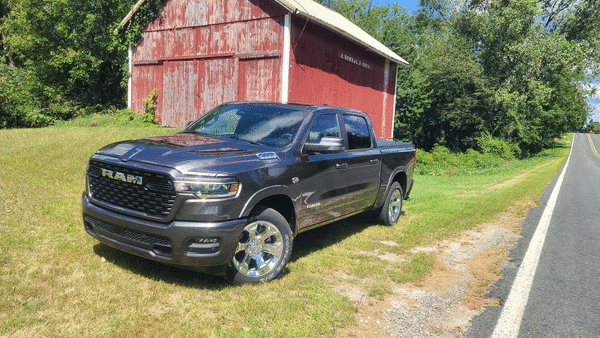
North America suffered a 3% revenue decline, though it reversed an adjusted operating income drop a year ago to $71 million (64 billion euro) in profit. Filosa declared 2026 as the "year of Ram," as the truck brand and its new launches propelled market share growth, and the automaker is managing inventory growth with plant shutdowns.
Stellantis' U.S. inventory led the industry this summer, up 23% year-over-year at the end of September at a hefty 84 days of supply. It's now down 6% from June because of summer idling. Vehicles piling up on dealer lots led to major issues for the automaker just two years ago, including a revolt by its own dealers.
The automaker also has been at an impasse during bargaining with the Canadian autoworkers union, Unifor, over the future of the idled Brampton Assembly Plant. Stellantis is threatening to sell the plant to a defense contractor after moving product planned for there to the United States following the implementation of higher tariffs by the Trump administration. Unifor members recently backed a strike authorization vote, though no strike has been called.
The company's top priorities are launching new models catering to a wider swath of the market, finding billions of dollars worth of cost cuts in several areas including manufacturing under a new "value creation program," as well as improving the carmaker's poor quality reputation.
Some recent Jeep recalls were labeled a headwind compared to a year ago alongside costs from an artificial intelligence boom-induced memory chip shortage. But Stellantis expects savings in the mid-hundreds of millions of euros in the fourth quarter from its cutting efforts, which is approximately double the amount realized in the past three months. That's 40% of the $6.7 billion (6 billion euro) cost savings the company is pushing to implement.
The 5.7-liter Hemi V-8-powered Ram Rumble Bee arrives at dealers in the fourth quarter. The range-extended Grand Wagoneer REV, an electric vehicle with an on-board gas generator, and electric Recon SUV expand the Jeep lineup. A new Gladiator and Wrangler also come next year. Ram ProMaster City also is set to become the only midsize commercial van available in the United States.
"We truly believe that the market in U.S. will stay stable and will stay receptive for our brands, our products," Filosa said. "So we see demand there."
The automaker dropped its full-year net tariff costs estimate to $1.1 billion (1 billion euro) with about 60% of that paid through September.
Stellantis' guidance calls for a modest revenue increase over 2025, adjusted operating income margin in the low-single digits and positive cash flow by 2027.
Europe was the only region to report a negative adjusted operating income in the July-through-September quarter. The region faces increased competition — particularly from Chinese competitors — and Stellantis had negative net pricing and unfavorable mix on the continent.
Formed in 2021, Stellantis had reported its first loss of about $26 billion last year after big write-downs related to unraveling its prior electric vehicle investments made under former CEO Carlos Tavares. The automaker also struggled with sales as it sought to readjust pricing and fill key gaps in vehicle lineups, including in the U.S. market.
Filosa and other executives unveiled the automaker's new $70 billion turnaround plan called FastLane 2030 in May that involves a series of new products, new partnerships in manufacturing and technology, and more disciplined capital allocation. The plan calls for around $6.8 billion worth of reductions by 2028 compared to 2025 levels.
Filosa listed a few examples of cost-saving efforts: reducing lengths of wire harnesses to save on expenses of pricey minerals like copper; using artificial intelligence to catch maintenance needs early in manufacturing plants to reduce downtime and improve productivity; leveraging AI to route more efficiently components and materials coming from suppliers to Stellantis plants and also insourcing stamping work.
More updates on the FastLane plan are expected on Dec. 10 in Italy.
General Motors Co. last week said it was on-track for a record annual adjusted operating profit after recording $3.35 billion in net income in the third quarter. Ford Motor Co. reports earnings Wednesday after the bell.
©2026 www.detroitnews.com. Visit at detroitnews.com. Distributed by Tribune Content Agency, LLC.






Comments