California’s older workforce is growing. Are employers keeping up?
Published in Senior Living Features
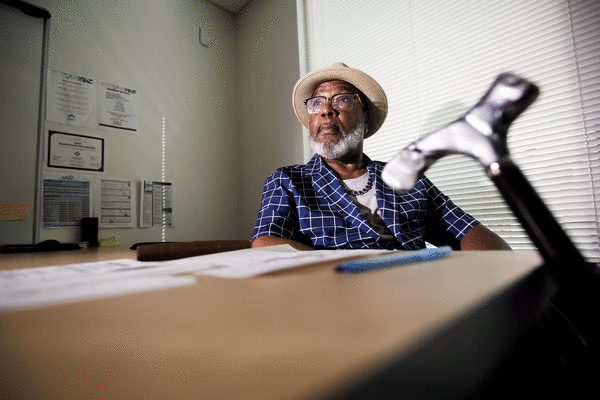
SAN JOSE, Calif. -- At 73, Keith Collins won’t let his age determine whether he should work.
A Navy veteran and former U.S. Department of the Treasury employee, Collins, who lives in San Jose, has spent decades in the workforce and now works as a real estate agent. And while many Americans envision retirement as a time to step away from employment, Collins continues working both because he enjoys it and because he wants to maintain his financial independence, especially as the cost of living rises in the Bay Area.
“I want to have some money in my pocket,” Collins said. “Age has no significance to the economic situation. Young or old, you need some money.”
Collins is among a growing number of older Californians who work well beyond the traditional retirement age, whether out of financial necessity or a desire to remain professionally engaged.
According to an October report from the Public Policy Institute of California, the number of Californians age 65 and older in the workforce increased by more than 750,000 between 2006 and 2024, accounting for roughly 30% of the state’s labor force growth. By 2040, the state’s older labor force is projected to reach 1.8 million, up from approximately 1.3 million in 2024.
As California’s workforce ages, advocates say employers have been slower to recognize the needs and contributions of older workers, who continue to face age-related stereotypes and discrimination in hiring and employment.
To help employers better recruit, retain and support older workers, the California Commission on Aging partnered with researchers behind Age-Inclusive Management Strategies.
“The biggest challenge is ageism,” said Karol Swartzlander, executive director of the California Commission on Aging, one of six state agencies that piloted a new program.
The commission has been concerned about older adults’ place in the workforce for more than two decades, Swartzlander said. While California has invested heavily in workforce development, many employment programs historically focused on younger workers, leaving older adults overlooked.
“Some need to work, some want to,” Swartzlander said. “Regardless, we should be considering this overlooked group.”
The initiative was founded in 2024 by Bryan Kaskie and Karen Brown, who began examining how employers could better accommodate an aging workforce.
When they began asking employers whether they were preparing for an aging workforce, the responses showed there was work to be done.
“A lot of employers aren’t aware how many people aren’t ready to retire,” Kaskie said.
The initiative has since worked with employers across the country to examine hiring practices, workplace policies and ways to retain experienced employees. Kaskie recalled a study the group did with a township near Chicago in which employers reviewed two otherwise identical resumes for a driving position. One applicant was presented as 30 years old, while the other was 70.
The younger applicant was favored, he said, partly because of assumptions that the older applicant didn’t need the income and wouldn’t be as capable behind the wheel.
“The guy assumed he didn’t need the job and also that he wouldn’t drive well,” Kaskie said. “That’s bias.”
Earlier this year, the AIMS initiative brought together six California state agencies for a series of workshops to help departments identify age-related assumptions and develop more inclusive employment practices.
One result was the launch of an aging and caregiving resource webpage by the California Department of Human Resources, or CalHR. Participating agencies also explored ways to make job postings more welcoming to older applicants, including using photographs of older adults in recruitment materials.
Workplace flexibility and caregiving support can be particularly important for retaining older employees, Swartzlander said, as many balance their careers with responsibilities to aging parents, spouses or other relatives.
Kaskie said California could eventually serve as a model for other state governments seeking to recruit and retain older employees. Organizers also hope to expand the effort beyond state agencies.
But for older Californians already navigating the job market, the challenges are more immediate.
Collins, who previously worked for the Treasury Department and served four years in the Navy, said he recognizes that employers sometimes view older applicants as less capable, regardless of their experience.
“Some people look at old people as old and incapable,” he said.
After retiring from federal service, Collins continued seeking opportunities to earn an income, including work gathering signatures for political petitions.
He eventually connected with a workforce development program that became part of the Felton Institute, where he received computer-based training and instruction on workplace communication, professional presentation and navigating employment opportunities. He is now a real estate agent.
Collins said the training helped build confidence. Despite the stereotypes surrounding older workers, he doesn’t see his age as a limitation.
“My 73 is 37,” he said, laughing.







Comments