The God Squad: God and state
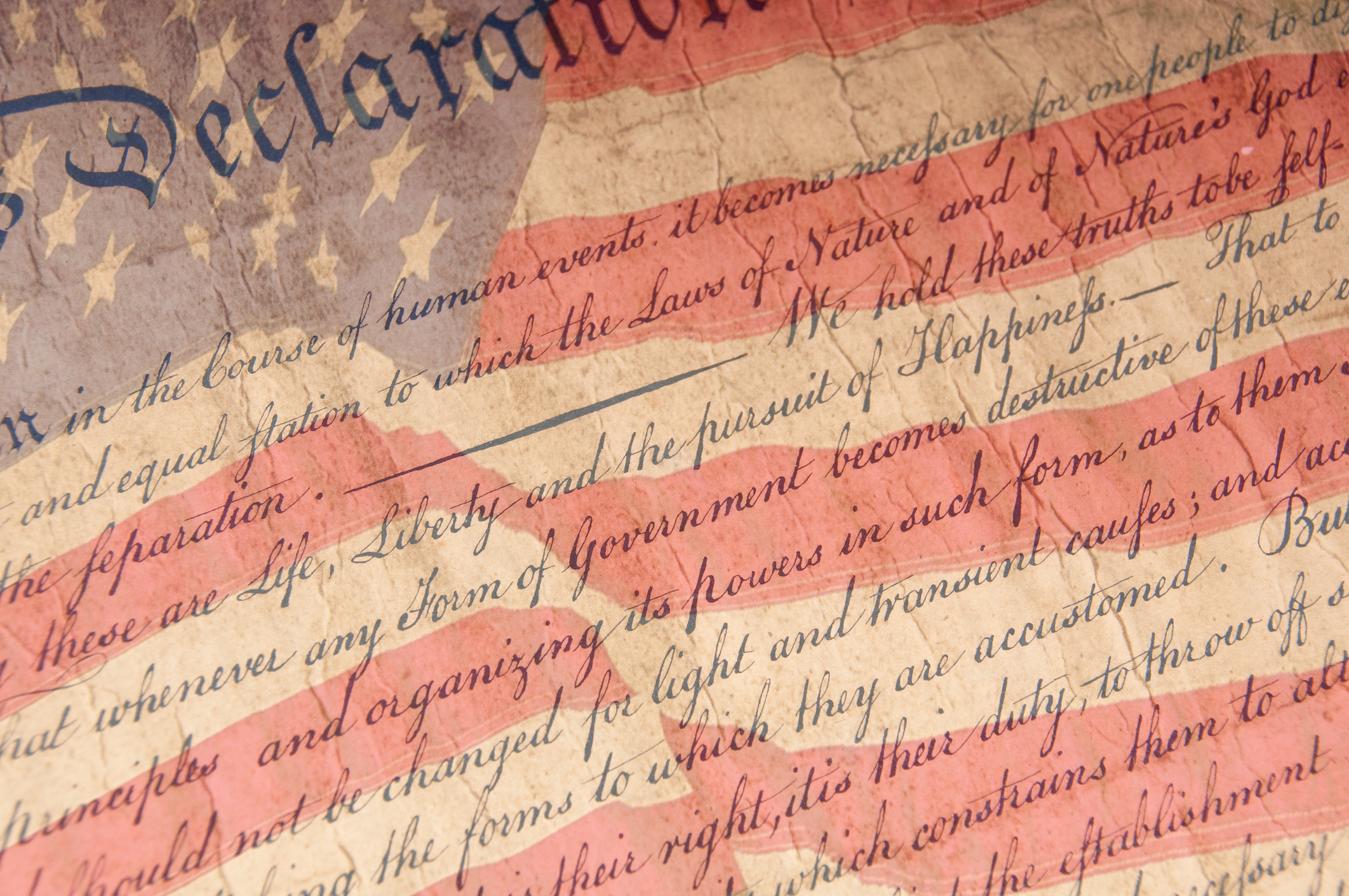
Thanks to those readers who are still thinking about the 250th anniversary of America and the relationship between the faith of our Founders and the politics of our Founders. I told the unfortunately not well-known story of how Jefferson’s first version of the Declaration of Independence included the phrase “We hold these truths to be sacred…” However, those words were crossed out by Ben Franklin and John Adams and replaced with “We hold these truths to be self-evident…” They did leave in the part about being “endowed by our Creator,” which makes the sentence totally incomprehensible since the belief that we are created by God is a religious belief and not a self-evident truth. So, do our rights come from logic and self-evident reason or do they come from the account in Genesis that we are all made in the image of God (Heb: tzelem elohim; latin: imago dei)? -- MG
Q: The deficiency as you see it is remedied by "Creator" a few words later. Given that many of the Founding fathers weren't conventional believers it is remarkable that the sentences went as far as they did. Another thought: Both the Declaration and the Constitution are criticized for not dealing with slavery or recognizing the rights of
American Indians. This makes me think of Noah who the rabbis said was righteous by the standards of his time. So room for growth of morality and understanding later on.
All good wishes. – (from A in S. Setauket, NY)
A: Some of the Founders were religious in convention sectarian faiths and some were deists which is the belief in a universal God of all peoples. The Declaration does not reflect a sectarian view. It is not an affirmation of Methodist or Evangelical theology. It was rather a view that as long as one believed in a single Creator Judeo/Christian God it was fine with them. The key point was that if there was not a God whose creative act gave us all equal holiness and respect and dignity and rights then our rights would have to come from the state and rights bestowed by the state could be revoked by the state. Also, and this is a crucial point, if the Declaration is based on sacred truths then all peoples of all colors and ethnicities and faiths would have equal status in America. Unfortunately, the young America did not have a strong enough cohesion to attack slavery and thus splinter the fragile confederation of states that included southern slave states and all states with native peoples.
Your point about Noah is wonderful. The Hebrew text describes Noah as “A righteous man in his generations.” (Gen 6:9). The rabbis interpreted this to mean that while Noah was righteous in his generation, if he had been born in another generation he might not have been considered righteous at all. As you thought. Morality is absolute but it must be judged according to the context of the times.
Q: In a recent column, you wrote concerning the inscriptions on the Liberty Bell that “the work of liberty is never done.” As usual, I believe you have hit the nail on the head. Your comment reminds me of two very different statements about our fragile democracy. In 1816 our famous naval hero, Stephen Decatur, said, “Our country! May she always be in the right; but our country, right or wrong.” That kind of super-patriotism discomforts me. A different statement, not so well known, was made in 1871 by U.S. Senator Carl Schurz, who proposed: “Our country right or wrong. When right, to be kept right; when wrong, to be put right.” I believe that Sen. Schurz has properly captured the love of country that acknowledges a need to recognize changing and unpredictable national and world events and a readiness to practice continuing vigilance and adaptability.
Thank you for your thoughtful column. – (From P in Port Washington, NY)
A: Thanks for your kind words, dear P. I agree with you that Decatur’s uber patriotism is just too extreme and too vulnerable to countries that betray their founding values and God’s creation of all people. I also agree with you and Senator Schurz that we have the right and indeed the obligation to correct our country when it goes off the rails. The problem from my point of view is that knowing what constitutes a correction and what constitutes a distortion of the nation’s values is not an easy call. The missing element in the public square must be humility and respect for others who have different views. I am hopeful that such public modesty will rise up and temper the loud and discordant views that threaten our nation's unity and vision.
(Send ALL QUESTIONS AND COMMENTS to The God Squad via email at godsquadquestion@aol.com. Rabbi Gellman is the author of several books, including “Religion for Dummies,” co-written with Fr. Tom Hartman. Also, the new God Squad podcast is now available.)
©2026 The God Squad. Distributed by Tribune Content Agency, LLC.
(c) 2026 THE GOD SQUAD DISTRIBUTED BY TRIBUNE MEDIA SERVICES, INC.





Comments