Trump turns the tide to score early wins in defamation lawsuits
Published in News & Features
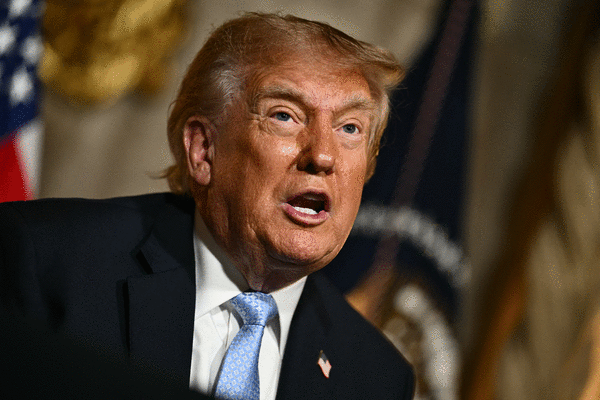
President Donald Trump’s poor track record in court in his defamation lawsuits against the press over the years is starting to turn around — at least for now.
In recent weeks, Trump has defied attempts by the New York Times and the British Broadcasting Corp. to dismiss the president’s claims against them. And the longer the cases go on, the more intrusive and expensive they become for the news outlets as they review and turn over troves of documents tied to their editorial decisions.
However, the rulings at this stage are still early. Judges weighing dismissal generally accept allegations as true, as long as they’re laid out in enough detail, and draw common sense conclusions in the plaintiff’s favor. Should the cases proceed to a trial, a more stringent standard of evidence is required.
“He’s got a better record than he did before in terms of surviving dismissal,” said Seth Stern, chief of advocacy at the nonprofit Freedom of the Press Foundation. Even so, “he has still never actually won a case on the merits against the news media.”
Trump’s earlier suits against the Des Moines Register and CNN failed on First Amendment grounds. His losing record stretches back to his 2020 presidential campaign, which sued the Washington Post, CNN and the Times over opinion pieces concerning Russian election interference. Judges dismissed all three.
‘Actual malice’
Trump has intensified his crusade against the free press in his second term, drawing scorn from First Amendment experts who argue he brings meritless claims to silence the media, an allegation he denies.
At the heart of the rulings is a legal standard established by the Supreme Court in 1964. It requires public figures suing for defamation to show a news outlet acted with “actual malice,” meaning it knew its reporting was false or recklessly disregarded whether it was false. The high bar is intended to give the press room to criticize powerful people without the threat of litigation.
Free speech experts have long claimed that Trump files suits even when they have no chance of overcoming the actual malice standard.
“Trump epitomizes someone who uses expensive lawsuits, I believe, to try and shut down negative coverage,” said Katherine Fallow, an attorney at the Knight First Amendment Institute at Columbia University. “Even if he ultimately were to lose on these cases,” she said, “he knows the costs that it imposes.”
Trump has long argued that his lawsuits are justified because the press treats him unfairly and publishes false information about him.
“The recent wins by President Donald J. Trump, in front of multiple courts, further confirm the strength of the president’s powerful lawsuits, which hold accountable those who traffic in defamation, deception, and fake news,” a spokesman for Trump’s legal team said in a statement.
Overcoming a motion to dismiss is different from actually proving defamation. The distinction was made clear in a $3.8 billion suit filed against the Washington Post by the owner of Trump’s Truth Social platform.
The 2023 suit survived dismissal only to fail at summary judgment in July, following months of extensive discovery and depositions. The judge ultimately determined the company, represented by Trump’s personal lawyer, lacked sufficient evidence. Trump’s team has appealed.
The recent rulings in Trump’s personal lawsuits suggest some of them are gaining traction.
A judge last week allowed Trump to proceed with a narrowed $15 billion suit against the New York Times, which also named publisher Penguin Random House LLC as a defendant. Trump accused them of tarnishing his reputation with false stories about his business acumen before the 2024 presidential election.
In the ruling, U.S. District Judge Steven Merryday in Tampa held that Trump plausibly alleged actual malice by claiming Times reporters engaged in a “purposeful avoidance of the truth” in an article and book accusing him of serious financial crimes. In his view, the reporters did not sufficiently corroborate the allegations with expert analysis.
Failing to get an expert to sufficiently weigh in is “a fine example of the purposeful avoidance of the truth, a knowing failure that remains actionable,” Merryday said.
Stern said that finding creates “an arbitrary standard out of the blue.” Under Merryday’s reasoning, he said, judges could determine whether reporters used the right experts and whether their analysis was sufficient.
“A judge doesn’t get to insert himself into the newsroom and say ‘maybe you should have consulted one more expert, maybe you should have done X, Y, Z differently,’” Stern said.
In the BBC case, Trump sued over a misleading edit of a speech he gave before his supporters attacked the Capitol on Jan. 6, 2021, making it appear he’d made a direct call for violence. U.S. District Judge Jeffrey Kuntz in Miami ruled Trump plausibly alleged actual malice because the edit had the effect of “creating something different than what was stated.”
David McGowan, a professor at the University of San Diego School of Law, said Trump will still need to prove that the BBC’s edit was materially false. The BBC has argued Trump must prove he did not foment the riot in order to win his lawsuit.
“The BBC acknowledged editing the president’s Jan. 6, 2021 speech, so there is no question that the edits were intentional,” McGowan said. “If the case tries, jurors presumably will decide whether the edits created a false impression of what the president said and whether that impression harmed him.”
Other successes
Trump has had a few other recent successes. His defamation suit against Pulitzer Prize board members is proceeding after surviving a motion to dismiss. He also got multimillion-dollar settlements from ABC, which lost a motion to dismiss, and CBS around the time he retook the White House.
Trump’s $10 billion suit against the Wall Street Journal was tossed out last month, but the president has appealed, keeping the newspaper tied up in court.
For now, the Times and BBC both say they will continue to defend themselves. A judge ordered Trump to sit for a mandatory sworn deposition with the BBC’s lawyers by Jan. 22 after an earlier delay.
It’s unclear if Trump’s recent wins mean his suits are getting stronger or reflect the unusual facts in the cases. Either way, most experts still expect both lawsuits to ultimately fail.
Marc Randazza, a self-described right-wing lawyer who said the BBC case appears legitimate, believes that the president’s defamation lawsuits are nevertheless bad for free speech given his immense power.
“These kinds of lawsuits are corrosive to a robust free speech environment,” Randazza said. “I don’t think a sitting president should be allowed to sue for defamation.”
©2026 Bloomberg L.P. Visit bloomberg.com. Distributed by Tribune Content Agency, LLC.





Comments