NC's Mecklenburg County faces scrutiny about dozens of rejected ballots from 2026 election
Published in News & Features
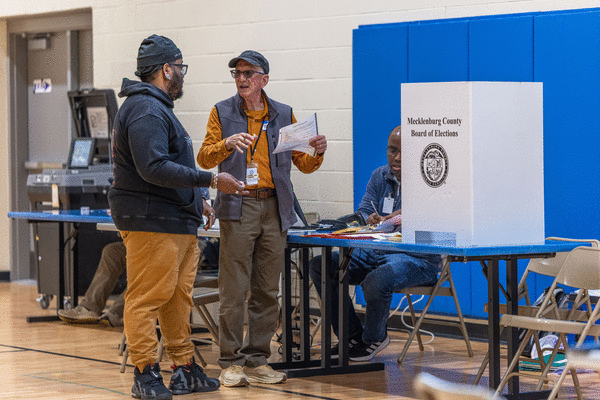
CHARLOTTE, N.C. — North Carolina voting rights advocates are raising questions about the Mecklenburg County Board of Elections’ handling of dozens of ballots during the 2026 midterms.
Longtime North Carolina elections watchdog Bob Hall asked the State Board of Elections on Friday to direct the Mecklenburg board to reevaluate 42 provisional ballots he says were not counted. Hall contends the county board overreached when ruling on voters who did not present an acceptable photo ID when casting their ballots.
Other advocacy groups raised concerns, too.
Provisional ballots are used when a voter does not or cannot present a photo ID or when there are questions about a voter’s eligibility to cast a ballot. The provisional ballots are assessed by election officials, and county election board members make the call about whether to count them.
In North Carolina, voters who are given a provisional ballot because they don’t have an acceptable photo ID can fill out an exception form. “Reasonable impediments” include “disability or illness” or a lost, stolen or misplaced ID. Voters also have the option to check “other” and list different reasons for lacking ID. The forms must be signed and note that lying on them “is a Class I felony” under state law.
State guidance says county elections boards reviewing a voter’s completed exception form “shall find that the provisional ballot is valid unless the county board has grounds to believe” the form was falsified.
County boards should not “second-guess the reasonableness” of voters’ given reason for not showing photo ID, State Board of Elections guidance says. “Instead, the board is only concerned with the truth or falsity of the assertion on the Form,” according to the guidance.
State guidance goes on to say a county board’s ruling that a form is false must be unanimous, that a voter accused of lying must be notified and given a chance to address the board and that the board “must substantiate any finding of falsity with grounds recorded in a written decision.”
Hall, the retired executive director of Democracy North Carolina, contends that the Mecklenburg board considered “reasonableness” when ruling on provisional ballots. Mecklenburg’s board is made up of three Republicans and two Democrats.
“The law is very plain in the language that you can only reject a voter’s exception form if you believe the voter is lying,” he told the Charlotte Observer.
Hall said affected voters include an 18-year-old high school student who doesn’t have a driver’s license yet and a woman with a disability who has been unable to renew her expired ID card due to health and transportation issues.
“They’ve abused their authority,” Hall said of the county board.
The League of Women Voters of North Carolina and Southern Coalition for Social Justice also contacted the State Board of Elections about Mecklenburg’s handling of provisional ballots, according to emails shared by Hall.
League 2nd Vice President Regan Aduddell told the state she attended the Mecklenburg board’s meeting about provisional ballots and that “discussion focused on the Board members’ personal assessments of the reasons provided rather than whether the voters had been truthful in completing their affidavits.”
County board spokeswoman Kristin Mavromatis told the Observer that Mecklenburg was “awaiting guidance” from the state when asked about the situation.
Asked to provide the written decisions for the provisional ballots in question, Mavromatis said the board “did not reject for falsity.” She told the Observer six voters “had no exception form” and did not come to the board office in time to address their issue, 22 voters “provided an out-of-state license,” five voters provided an expired ID and two voters had issues related to the Help America Vote Act, a federal elections law passed in 2002.
A spokesperson for the State Board of Elections directed an Observer reporter to the state statutes and guidance that outline how provisional ballots should be handled when asked about the situation in Mecklenburg and whether ballots in question would be reconsidered.
“We rely on the judgement of the local elections official to apply the law to each individual provisional. It is our position otherwise that the law and rule are clear on what IDs and exceptions are permitted to be presented,” spokesman Jason Tyson said.
Acceptable photo IDs under North Carolina law include a North Carolina driver’s license, a “non-operator ID” from the North Carolina Department of Motor Vehicles, a U.S. passport, a North Carolina voter photo ID card issued by a county board of election, a military ID or certain student or employee IDs. Those IDs are acceptable if “unexpired, or expired for one year or less,” though voters 65 or older “may use an expired form of acceptable ID if the ID was unexpired on their 65th birthday,” according to the state board’s website.
A driver’s license or non-driver ID from another state, the District of Columbia or a U.S. territory is also acceptable if the voter registered in North Carolina within 90 days of the election.
The Mecklenburg issue surfaced briefly during Tuesday’s State Board of Elections meeting, where officials certified North Carolina’s midterm election results.
Board member Siobhan O’Duffy Millen asked when the “appropriate time to talk about Mecklenburg” would be during the meeting ahead of the certification vote, and others said the discussion seemed like it could wait until after the canvass.
“I am not going to object to the canvass, and we can certainly have an after-action review and talk about things in private session. That’s absolutely fine,” Millen said. “But I do think we need to owe it to the public to discuss it publicly if there’s some question.”
The board suggested they would return to the Mecklenburg County discussion later in the meeting or in a closed session but then adjourned without revisiting the topic.
_____
©2026 The Charlotte Observer. Visit at charlotteobserver.com. Distributed by Tribune Content Agency, LLC.





Comments