María Elvira Salazar calls on Musk to ban former Colombian President Petro from X
Published in News & Features
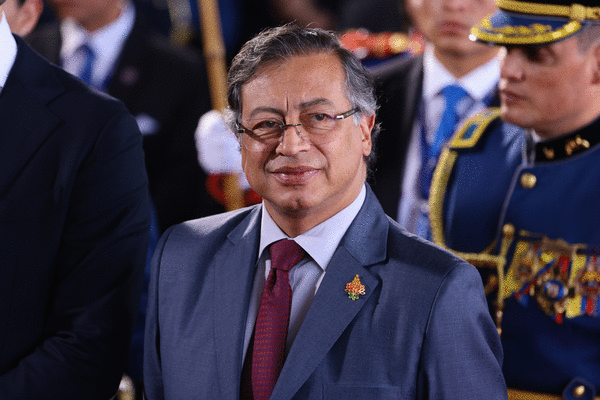
MIAMI — U.S. Rep. Maria Elvira Salazar of Miami published a letter Monday addressed to Elon Musk, CEO of social media platform X, asking him to “remove” former Colombian President Gustavo Petro’s account over politically inflammatory comments.
Her request came a day after the Colombian Ministry of Information petitioned X to block Petro’s account, accusing him of “inciting violence” by calling on Colombians to take to the streets to demand the resignation of President Abelardo de la Espriella.
Opposition figures have denounced Salazar’s intervention in Colombian domestic politics, while experts warn it carries risks for the traditionally close bilateral relationship with the U.S.
“Gustavo Petro is a threat to the continued existence of democracy in the country of Colombia,” Salazar said in the letter to Musk, which she shared on social media Monday morning. “Please do the right thing and remove his account from your platform.”
On Saturday, Petro posted a clip from a speech he delivered during nationwide protests last Thursday in which he called on citizens “to immediately demand Abelardo’s resignation.
“An illegitimate government that acts against the interests of the Colombian people must go now,” said Petro, who was elected in 2022 as the country’s first ever leftist president.
De la Espriella’s government denounced the post, with Colombia’s Ministry of Information, Technologies and Communications sending a letter to X’s public affairs team on Sunday calling for Petro’s account to be suspended.
In a communiqué, the ministry accused the former president of implying the government was illegitimate and suggesting the path to democracy was through mass mobilizations.
It argued that Colombia’s history of violent protests, most recently the mass anti-government demonstrations in 2021, set a dangerous precedent.
“This social media platform must not be allowed to become the main tool for promoting an anti-democratic and destabilizing agenda,” the ministry wrote.
It also noted previous comments by Petro on X questioning the integrity of June’s presidential election, in which de la Espriella narrowly defeated Petro’s preferred candidate, Sen. Ivan Cepeda.
“It is legitimate to question whether Petro is following X’s policies on harassment or violence,” said Sergio Guzman, director at Colombia Risk Analysis, a political risk consultancy.
But he also noted that de la Espriella’s use of official channels to call for Petro’s account to be shut down raises questions about “whether the government is going to sufficiently respect freedom of speech for other people, particularly government critics.”
Despite leaving office in August, Petro remains president of the Historic Pact party, which leads the opposition to de la Espriella and has the most seats in Congress.
Concerns about Salazar’s intervention
Salazar’s involvement in the domestic political spat has raised concerns among analysts and opposition figures.
“A U.S. congresswoman should not interfere in Colombia’s democratic debate by calling for the censorship of an opposition leader,” said Maria del Mar Pizarro, a lower house representative from Petro’s Historic Pact party.
Neither Salazar not her communications director responded to a request for comment to this story.
She argued Petro’s comments had been mischaracterized as violent by the government.
“Demanding the resignation of a leader or organizing a peaceful protest does not, in itself, constitute incitement to violence,” Pizarro told the Miami Herald.
Colombia Risk Analysis’s Guzman suggested Salazar’s backing for de la Espriella was a “tit for tat” response to his endorsement of her in her midterm congressional race earlier this month.
In October, de la Espriella appeared in a video describing the congresswoman as “Colombia’s best friend in the United States Congress.”
“She will support anything and everything that Abelardo Dele Espriella does because of his overt support for her,” said Guzman.
But these types of bilateral political friendships could undermine ties between Washington and Bogota, experts warn.
“I think this is not helpful for repairing the U.S.-Colombia relationship,” said Gimena Sanchez-Gardoli, Andes director at the Washington Office on Latin America.
The ideological differences between Petro and President Donald Trump led to major diplomatic clashes, including the White House sanctioning the former Colombian leader.
Though Trump’s close ties with de la Espriella have begun to mend the relationship, there are fears in Colombia that the Colomban president’s allegiance to the Republican Party could be counterproductive, especially since the Democrats’ midterm sweep.
Sanchez-Gardoli argued that the two nations would be best to return to a tradition of close bipartisan ties.
The relationship “was bipartisan for many, many years and it’s important for both sides in the U.S. and Colombia to focus on how to work together to improve security, human rights and peace and not fuel more polarization,” she said.
_____
©2026 Miami Herald. Visit miamiherald.com. Distributed by Tribune Content Agency, LLC.





Comments