Alaska's 2026 midterm election turnout is the highest in state history
Published in News & Features
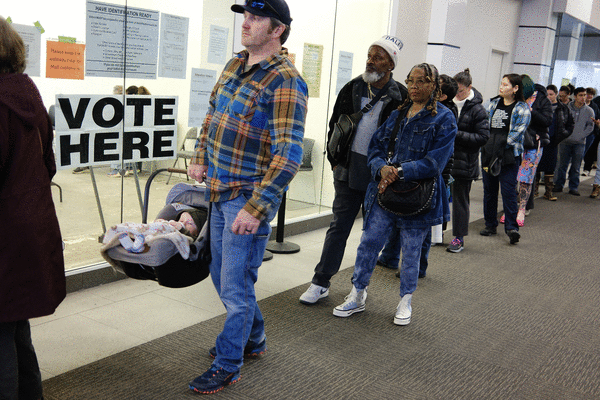
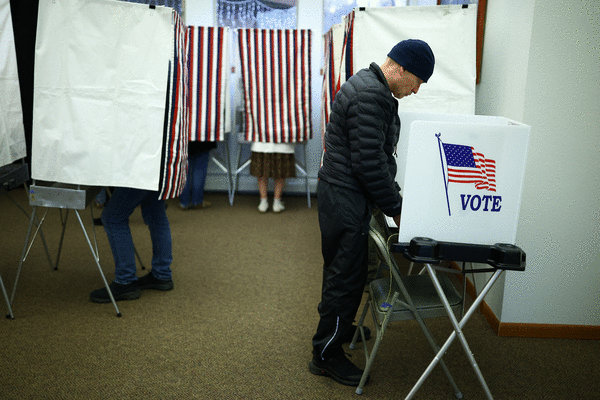


JUNEAU, Alaska — In an election cycle marked by multiple high-stakes races on the Nov. 3 ballot and record political spending, Alaska saw the highest voter turnout recorded in state history for a midterm election.
The total of 290,323 ballots cast tops the previous record, set during Alaska’s 2014 midterm election, by roughly 5,000 votes. That year had multiple high-profile issues on the ballot before voters, including a closely watched U.S. Senate race and the ballot measure legalizing marijuana for recreational use in Alaska.
The record turnout for a midterm election in November follows high participation in the August primary, which drew more than 160,000 voters and one of the highest turnouts for a primary in more than a decade.
Turnout for midterm elections typically falls tens of thousands of votes below turnout for presidential election years, which hit a peak in 2020 with more than 360,000 ballots cast in Alaska.
There were three statewide races on the ballot this year that likely bolstered voter participation. Democrat Jonathan Kreiss-Tomkins will succeed Republican Gov. Mike Dunleavy, who is barred by term limits from seeking reelection, after besting three GOP opponents in the general election.
In Alaska’s U.S. Senate race, Democratic former U.S. Rep. Mary Peltola claimed victory over two-term Republican incumbent Sen. Dan Sullivan after launching her bid in early 2026. The race was the most expensive on record in Alaska’s history, attracting more than $150 million in campaign spending from candidates and independent political action committees.
Leading up to the election, the race was considered one of a few nationwide that could determine control of the chamber, and was one of several that flipped out of Republican control across the country to give the Democrats a 56-seat majority in a historic rout of the GOP.
In the race for Alaska’s lone U.S. House seat, Republican incumbent U.S. Rep. Nick Begich defeated independent challenger Bill Hill, a commercial fisherman and retired educator who mounted a well-funded challenge with financial support and the endorsement of the Democratic Party.
The ballots cast in the general election represented 48% of the state’s 605,433 registered voters. Because of how the state maintains its voter rolls, how many Alaskans automatically register to vote when applying for the Permanent Fund dividend, and the fact that Alaska has experienced persistent outmigration in recent years, the state has more registered voters than Alaskans eligible to vote. That means the percentage of registered voters who cast ballots may understate the participation rate in this year’s election.
Peltola, who is a Yup’ik from Bethel, is slated to become the first Alaska Native senator in history. She was one of two Alaska Native candidates who were leading contenders in the state’s congressional races this year, alongside Hill, a Dena’ina Athabascan from Naknek in Bristol Bay.
The highest and lowest voter turnout among state House districts was recorded by districts in Anchorage. A South Anchorage district that includes Girdwood and Whittier, and is among Alaska’s wealthiest, saw turnout of 66.4%. That’s nearly three times higher than the district that includes Government Hill and Joint Base Elmendorf-Richardson, at 22.8%.
The precinct in Klukwan, a village in Southeast Alaska near Haines, had the highest precinct-level turnout, at more than 70%. Fifty of the village’s 70 registered voters cast a ballot, KHNS reported.
Higher turnout in Klukwan and other predominantly Alaska Native communities was driven in part by organized efforts to encourage voting, along with extensive campaigning by Democrats in rural Alaska this cycle. Get Out the Native Vote, a statewide initiative aimed at boosting Alaska Native voter turnout, ran a program educating voters in rural regions across the state and coordinating efforts to get voters to the polls.
The Alaska Federation of Natives also planned its annual conference to take place a week later than usual so hundreds of conventiongoers who traveled from villages across the state could vote early.
In other predominantly Native communities across northern, Western and Southwest Alaska, voter turnout is up from the last midterm election, though the district turnout levels still fell below the state average. These districts broke heavily for Peltola, in many cases choosing her by more than a 2-1 margin.
In Southwest Alaska, the state House district representing the Aleutian Islands, Bristol Bay and the Lake and Peninsula Borough saw turnout of 43.2%, nearly 10 points higher than in 2022.
The district representing Bethel, Peltola’s hometown, and much of the Yukon-Kuskokwim Delta saw only slightly higher turnout, at 36.6% up from 34.2% in 2022.
Farther north, in the district representing Nome and the Norton Sound region, turnout was up from 35.3% in 2022 to 41.7% in 2026.
In the district that covers the North Slope Borough and communities including Utqiaġvik and Kotzebue, 34.1% of registered voters cast a ballot in 2026, up from 28.7% in 2022.
The rise in turnout came amid longstanding challenges to voting in rural Alaska.
In late October, the Alaska Democratic Party and another progressive group sued the Division of Elections, alleging the state failed to open dozens of absentee in-person voting locations in rural Alaska ahead of Election Day.
The Democratic Party struck a deal with the division to recruit poll workers to be certified to open rural voting locations the weekend before the election.
Rural polling places have failed to open in recent elections due to severe weather, unreliable transportation and difficulties recruiting poll workers, drawing criticism from Alaska Native groups.
_____
©2026 Anchorage Daily News. Visit at adn.com. Distributed by Tribune Content Agency, LLC.





Comments