Maine senators at odds over credit for earmarks
Published in News & Features
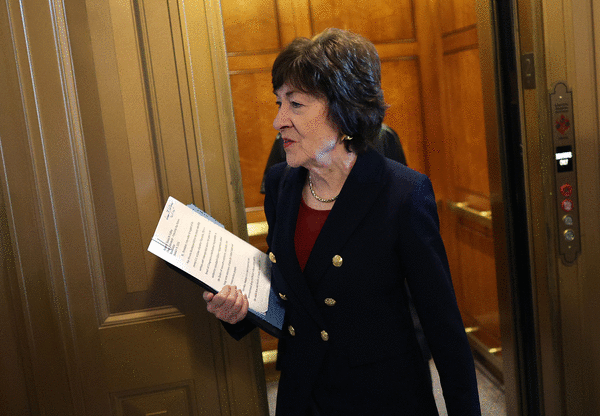
WASHINGTON — After a bruising reelection defeat, Senate Appropriations Chair Susan Collins, R-Maine, is ready to play hardball.
Eager to show how much she's delivered for her constituents, Collins took the lion's share of credit in her committee's fiscal 2027 spending bills for Maine earmarks — at the expense of her delegation colleague, independent Angus King, who caucuses with Democrats.
The amount of earmarks King secured fell dramatically compared to his previous year's total in Senate Appropriations Committee bills, as Collins took sole credit for most earmarks both senators had requested.
The power play has instigated a dispute over how to award credit for "congressionally directed spending," better known as earmarks. It has also raised questions about a Senate rule that requires committee leaders to disclose the name of each senator who requested projects to be included in a spending bill before it can move on the floor.
It’s undeniable that as the chair of the spending panel, Collins has more influence over which projects reach the final bills than her delegation mate. Collins spokesperson Phoebe Keller said that since available earmark funding is split into separate pots for the majority and minority to dole out, the bills reflect which of those funding sources was tapped to provide money to the relevant projects.
Keller said that Collins deserves sole credit for the contested projects, as listed in the reports accompanying the bills.
"When only Collins is listed, it reflects only she chose to fund the project,” Keller said.
King is credited with approximately $54 million in fiscal 2027 earmarks in the bills Collins released this month, including joint projects with Collins. That's down from around $231 million in the Senate's fiscal 2026 bills, according to a CQ Roll Call analysis.
Last year, King and Collins were both listed on 75 of the 77 projects that both requested that were included in the Senate bills, with just two carrying only Collins’ name. This year, Collins claimed sole responsibility for over $125 million in projects that both she and King requested, approximately two-thirds of the joint requests.
While King’s overall requests fell by more than $200 million this year versus last, his success in securing requested funds plummeted at a far greater rate with less credit for overlapping projects.
The joint requests for which Collins claimed sole credit include five for the Maine Department of Transportation in the Transportation-HUD bill, including $10.7 million for northern freight rail improvements; $9.6 million for Route 26 reconstruction in Oxford; and $7.2 million for improvements in Rockport, among others.
In the Labor-HHS-Education bill, projects Collins took sole credit for include $4 million for the University of Maine for biology laboratory equipment and just over $4 million for the creation of a modern emergency helipad at Lincoln Hospital.
And the Interior-Environment bill features $4 million each for wastewater improvements in Limestone and Kennebec that both Collins and King asked for but are only attributed to Collins, among others.
Similarly, the Agriculture, Commerce-Justice-Science and Homeland Security bills all include a project requested by both senators that only Collins is listed as securing in the bill.
The outgoing Appropriations chair’s ability to fuel billions of dollars in federal funding for her state during her career was the centerpiece of her ultimately unsuccessful campaign for reelection, which she lost to Democrat Troy Jackson.
Rule compliance
As written, the draft bills appear to risk running afoul of a Senate rule that requires the committee’s chair to identify each senator who requested projects in a bill online at least 48 hours before a vote to advance the legislation on the floor.
The relevant rule, Senate Rule 44, states that it is out of order to vote on a motion to proceed to consider a bill unless the chairman of the committee certifies that “each congressionally directed spending item . . . has been identified through lists, charts, or other similar means including the name of each Senator who submitted a request to the committee for each item so identified.”
That information must be “available on a publicly accessible congressional website in a searchable format at least 48 hours before such vote.”
A King spokesman called on the spending panel to add his name to the relevant requests.
“We believe this must have been an oversight and assume the committee will update the requests —per Senate rules — once it’s called to their attention,” King spokesman Matthew Felling said.
The bills released by Collins are drafts, and no floor action on final fiscal 2027 spending bills is expected this Congress. There’s limited time left before the Dec. 11 spending deadline, when all current funding is set to expire, and Democrats want to wait to negotiate final bills until they retake majorities in both chambers next year.
But to comply with the rule, before the bills reach the floor the reports accompanying the bills, that includes the earmark tables, may have to be rewritten to list King on the contested projects, or the committee may need to disclose the information elsewhere online.
Both chambers unveiled stricter ethics guidelines surrounding earmarks in 2021 when the practice returned after a decade-long ban.
_____
(Peter Cohn contributed to this report.)
_____
©2026 CQ-Roll Call, Inc. Visit at rollcall.com. Distributed by Tribune Content Agency, LLC.






Comments